
Handling Guide
Charging LiFePO4 Correctly And What Ruins A Pack
Charge voltages, the 0 degrees rule, why an equalisation stage trips the BMS, and how to store a pack that will sit idle.
Almost every field failure we see traces back to charging rather than to the pack. Four rules cover most of it.
Rule One: Use A LiFePO4 Profile
A lead-acid charger with a fixed equalisation stage will push the pack above the BMS threshold and trip it. Some chargers have a lithium setting; some do not. Tell us the charger model with your enquiry and we will confirm before the pack ships rather than after it stops working.
Rule Two: Never Charge Below Freezing Without Heating
Discharging a LiFePO4 pack in the cold is fine. Charging it below 0 degrees Celsius plates metallic lithium on the anode and permanently removes capacity. This is why heating is an option on several of our packs and why it should be specified for cold-climate vehicles and unheated cabinets.
Rule Three: Respect The Charge Current
Our packs accept 0.5C to 1C, which is what makes a one to two hour recharge possible. That is a ceiling, not a target - and in a vehicle it means a DC-DC charger between the alternator and the pack, because a lithium battery will draw everything an alternator can produce and overheat it.
Rule Four: Store At Partial Charge
A pack going into storage for months should sit around half charge rather than full or empty, somewhere that does not freeze. LiFePO4 self-discharges slowly, so a pack stored correctly will still be usable the following season.
| Mistake | What happens | Fix |
|---|---|---|
| Lead-acid charger with equalisation | BMS trips, pack appears dead | Charger with a LiFePO4 profile |
| Charging below 0 degrees Celsius | Permanent capacity loss | Heating option, or wait for the pack to warm |
| Alternator connected directly | Alternator overheats, pack charge uncontrolled | DC-DC charger sized for the alternator |
| Stored fully discharged | Cells drift, pack may not wake | Store around half charge |
| Mixing old and new packs in parallel | Circulating current between packs | Match model and state of charge before connecting |
Bluetooth monitoring on the deep cycle range shows exactly what the charger is doing. Ten minutes with the app at commissioning prevents most of the problems on this page.
FAQ
Questions On This Guide
What voltage should my charger end at?
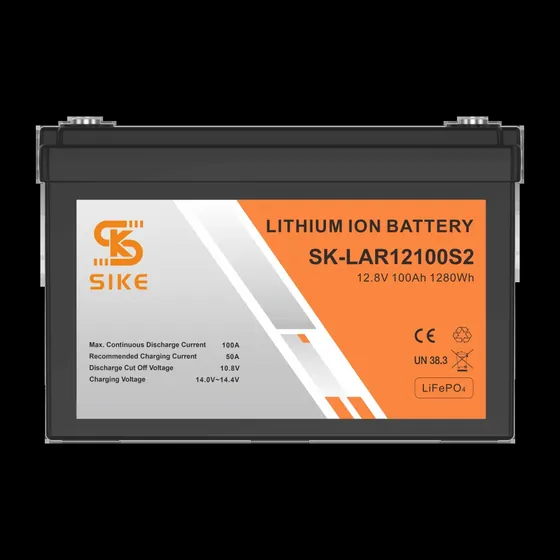
It depends on pack voltage and the BMS thresholds for the model. We provide the charge parameters with the specification sheet - use those rather than a generic lithium figure.
Can I leave the charger connected permanently?
With a proper LiFePO4 profile that stops rather than floats indefinitely at a high voltage, yes. Check the charger's behaviour at the end of charge, because that is where the differences show.
Is fast charging bad for the pack?
Within the published 0.5C to 1C acceptance, no. Beyond it, heat becomes the limiting factor and cycle life suffers.
How do I wake a pack that has gone flat?
Contact us with the model before trying anything. Some BMS units need a specific procedure, and the wrong approach on a deeply discharged pack can make it worse.
Related products
Packs Referenced In This Guide
Product groups
Groups This Guide Covers
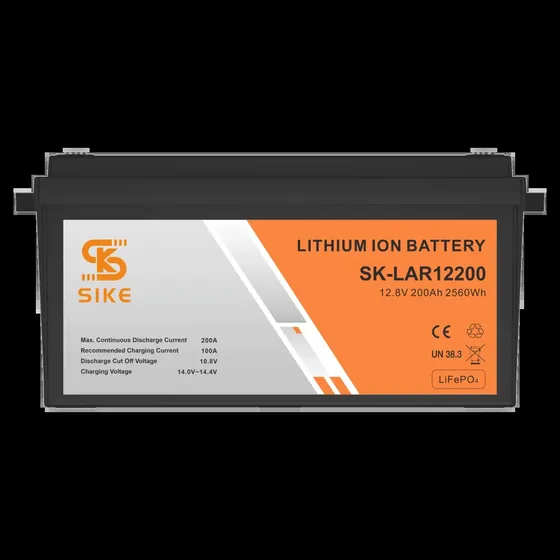
12V And 24V Lithium Batteries
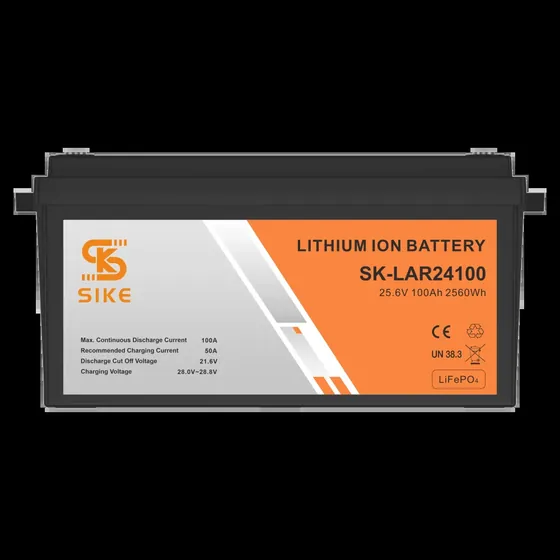
Drop-in LiFePO4 replacements for lead-acid, from an 8Ah UPS block to a 400Ah house bank, with IP65 cases and Bluetooth monitoring.
Lithium Golf Cart Batteries
48V and 72V packs at 100Ah, IP67, 3500+ cycles, 65-85 km on a full charge, drop-in for lead-acid and AGM.
Turn This Into A Specification
Send us the application and we will translate it into a model, a capacity, a BMS rating and a delivery plan.