
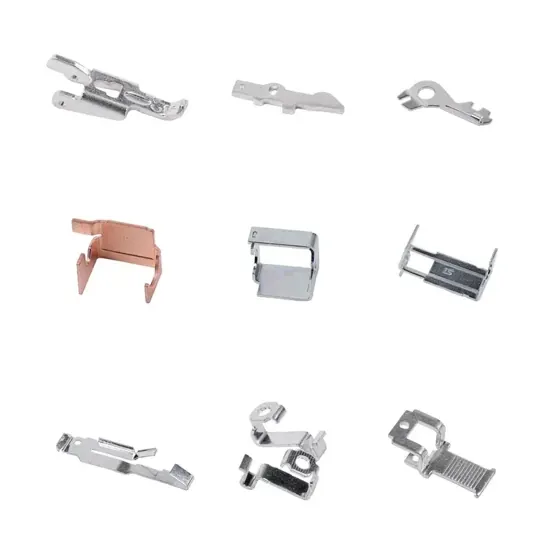
Metal Stamping Parts
Deep Drawn Components
Deep drawing radially draws a sheet metal blank into a forming die, turning it into a cavity, cylinder or cup.
Product Overview
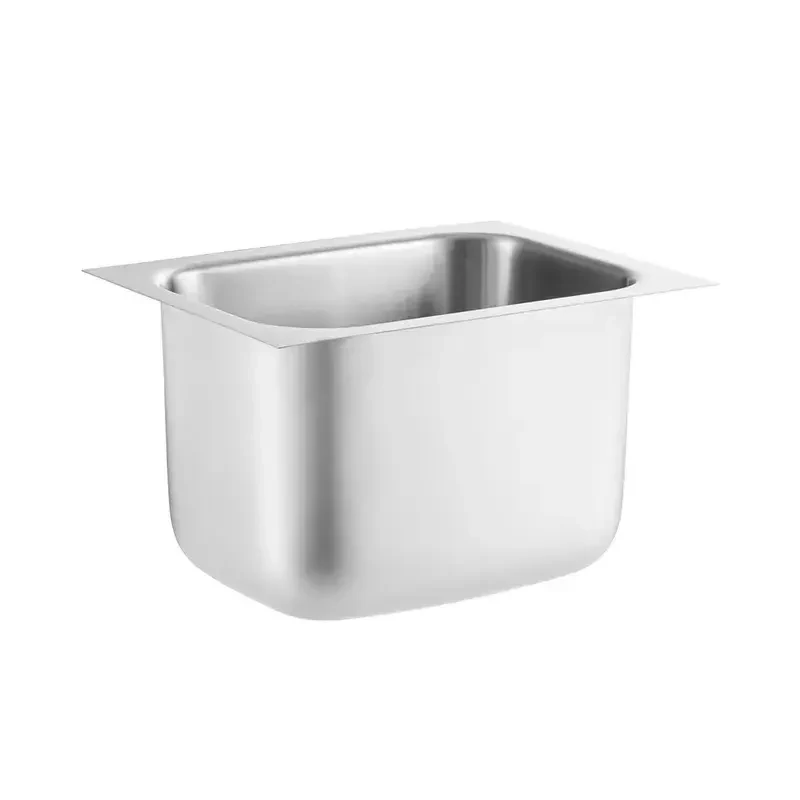
Deep drawing radially draws a sheet metal blank into a forming die, turning it into a cavity, cylinder or cup. It produces intricate and precise components with high repeatability, which is why it is used for fuel tanks and body parts, cooking pots, sinks and bathtubs, beverage cans and plumbing fixtures. Materials include aluminium, brass, stainless steel and titanium, with welding and assembly available where the drawn part is one component of a larger item.
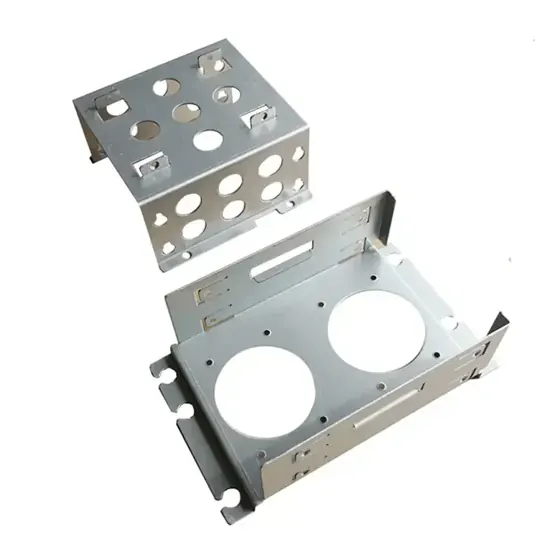
Key benefits
Why Buyers Choose This Specification
Seamless Vessels Without Welding
A drawn cup has no seam, so there is nothing to leak and nothing to fail in a pressure or hygiene application. That is the whole reason to draw rather than to roll and weld.
Repeatability Across Long Runs
The die defines the geometry, so part one thousand matches part one. This is why the process is used for packaging and automotive work at volume.
Four Material Families
Aluminium, brass, stainless steel and titanium are all drawn here, so the material follows the corrosion, weight or strength requirement.
Tooling Designed Around the Material
Material behaviour and its limitations are considered at design stage, because draw ratio and work hardening decide whether a part is possible at all.
Application scenarios
Where It Is Used
- Automotive fuel tanks, body parts and related components
- Household cooking pots, sinks and bathtubs
- Packaging including soda and beer cans
- Construction faucets and fixtures
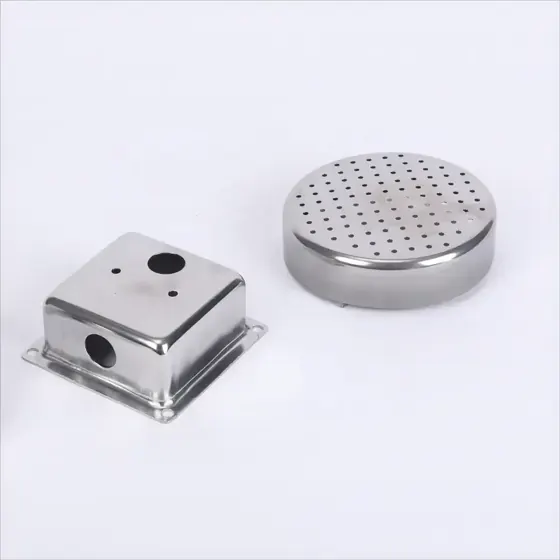
- Enclosures and housings needing a seamless wall
- Specialised components for industrial equipment
Who it is for
The Buyers This Product Suits
Automotive Suppliers
Fuel tanks and body parts are the classic deep drawn application and need both repeatability and volume.
Housewares Manufacturers
Cooking pots, sinks and bathtubs are drawn because a seamless vessel is both stronger and easier to clean.
Packaging Producers
Soda and beer cans depend entirely on the repeatability of the drawing process at very high volume.
Problems it solves
What It Fixes
Leaking Welded Seams
A drawn part has no seam in the wall, which removes the most common failure point in a vessel.
Tearing and Wrinkling in Production
Material considerations are paramount at design stage, because draw ratio and material limitations decide whether the part forms or fails.
Geometry Too Intricate to Machine Economically
Deep drawing produces intricate, precise components with high repeatability at a piece cost machining cannot approach in volume.
Specifications
Published Figures For This Product
Every value below comes from our own product specification. Where a figure is not published we leave it out rather than estimating it.
| Process | Deep drawing, radially drawing a blank into a forming die |
|---|---|
| Resulting Forms | Cavity, cylinder or cup |
| Materials | Aluminium, brass, stainless steel, titanium |
| Automotive Applications | Fuel tanks, body parts and other components |
| Household Applications | Cooking pots, sinks, bathtubs |
| Packaging Applications | Soda and beer cans |
| Construction Applications | Faucets and fixtures |
| Secondary Processes | Welding, assembly |
| Grade | Custom tooling |
Packing and documents
How It Ships And What Comes With It
Packing And Loading
Shipping volume for this item depends on the configuration and capacity you select, so no fixed container figure is published. Confirm the specification and the destination and a loading plan is issued with the quotation, rather than a figure we cannot support.
Documentation On File
- Precision Machining and Fabrication · Metal Stamping Parts Specification Sheet11.4 KB
- Catalogue · Full Product Catalogue154.0 KB
Sourcing And Inspection
This product is supplied through TrueGlow Imaging, working with manufacturing partners whose facilities are visited and verified rather than taken on trust. In-process quality control and delivery supervision are available so goods are inspected before the container is sealed. Certifications quoted on this page are those stated on the product specification and belong to that product range rather than to our trading entity, so ask for the certificate covering your specific item.
Handling guide
Getting It Right First Time
Step 1
Send the part geometry early so draw ratio and the number of draw stages can be assessed.
Step 2
State the material and temper, since formability changes with both.
Step 3
Discuss corner and bottom radii, because these are usually what limits the draw.
Step 4
Confirm whether intermediate annealing is acceptable in your cost model.
Step 5
Plan for tooling lead time separately from production lead time.
Comparison
How It Compares In Our Range
Deep drawing against the alternatives for a cup or cylinder.
| Deep Drawing | Seamless wall, high repeatability, low piece cost in volume. Requires tooling and has material and geometry limits. |
|---|---|
| Rolled and Welded Fabrication | No tooling cost and no geometric limit, but a seam in the wall and a much higher piece cost at volume. |
FAQ
Deep Drawn Components Questions
What is deep drawing?
A metal forming process that radially draws a sheet metal blank into a forming die, transforming it into a cavity, cylinder or cup.
Which materials can be drawn?
Aluminium, brass, stainless steel and titanium, among others.
What are the limitations?
Material behaviour sets the limit. Draw ratio, corner radii and work hardening decide how deep a part can be drawn and in how many stages.
What products use this process?
Automotive fuel tanks and body parts, cooking pots, sinks and bathtubs, soda and beer cans, and faucets and fixtures.
Do we pay for tooling?
Deep drawing requires dies, which are quoted separately from the piece price. Confirm your annual volume so the tooling cost can be amortised sensibly.
Can the drawn part be welded into an assembly?
Yes. Welding and assembly are available, so a drawn component can be supplied as part of a finished item.
Related products
Other Products Buyers Look At
Industries
Sectors That Use This Product
Metal Fabrication and Machine Shops
Custom parts, tooling and the cranes that move them around the shop.
Food Packaging Lines
Depalletizing to palletizing, balanced against the filler in the middle.
Power and Transformer Manufacturing
Winding conductor and core steel specified by conductivity and loss, not by weight.
Quote Deep Drawn Components
Send the capacity or size you need, the quantity and the destination, and we will confirm the configuration, the lead time and a loading plan.