
Selection Guide
Choosing an Overhead Crane Light Build or Winch Build
Most crane enquiries name a tonnage. The two questions that actually decide the crane are whether the hook pulls as well as lifts, and how many lifts it makes per shift.
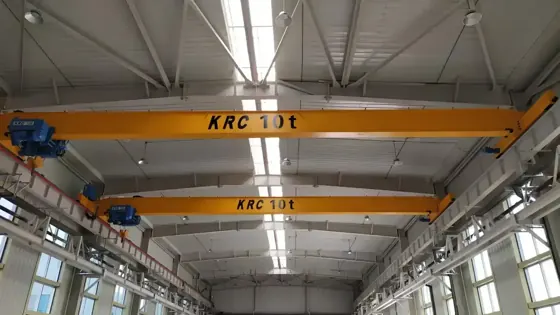
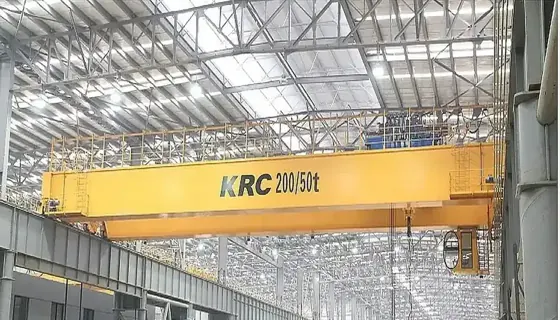
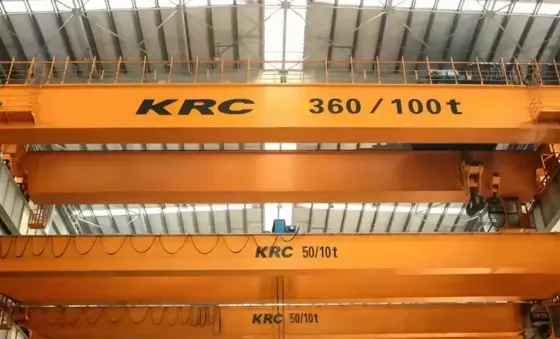
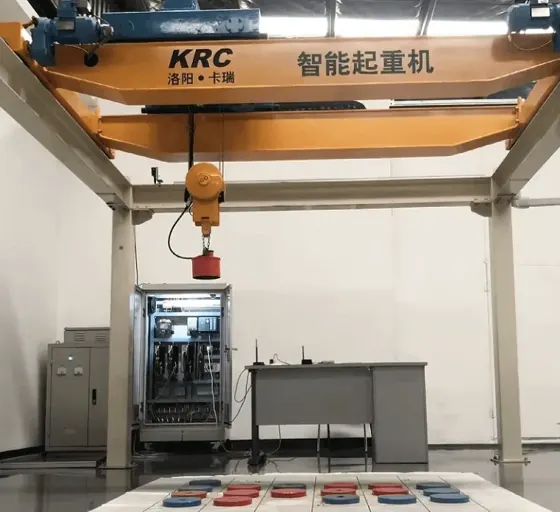
Every overhead crane in this range is offered in two builds at the same nominal capacity. The light double beam build lifts 5 to 100 tons at 0.4 to 16 m/min. The winch double beam build lifts 5 to 360 tons at 0.4 to 20 m/min. Both span 0 to 49 metres and lift 30 or 40 metres. On paper they look like the same crane with a different price.
The Question Is Duty Not Tonnage
The winch build exists for two situations: a hook that runs most of the shift, and a hook that pulls loads horizontally as well as lifting them. If neither applies, the light build is the correct specification and the winch build is money spent on capability you will never use.
This matters because winch duty is specified far more often than it is needed. A machine shop lifting a dozen weldments a day onto a bed is light duty at any tonnage. A steel plant feeding a furnace continuously is winch duty at 20 tons.
Span Is Measured Not Chosen
Girders are cut anywhere inside 0 to 49 metres, so the span follows your measured rail-to-rail centres rather than stepping up to the next catalogue size. Measure it before enquiring, along with the clear height from floor to the underside of the roof steel, because that is what limits achievable hook height rather than the crane's 30 or 40 metre rating.
Why Frequency Converter Drive Matters
Single-speed contactor control makes a load swing every time it stops, and somebody then steadies the hook by hand. A frequency converter ramps the hoist through its speed range so the load settles where it is put. On machine installation and die changes, that is the difference between a crane that positions and a crane that only lifts.
Travel Speed Decides Cycle Time
In a long bay, most of the cycle is spent crossing the building rather than lifting. Long travelling runs to 90 m/min and cross travelling to 40 m/min, and those two figures usually govern throughput more than the lifting speed does. Both are published, so a handling cycle can be timed on paper before the order.
Where the Building Cannot Take a Runway
If the roof steel will not carry a top-running runway, an under-slung EOT crane hangs from the existing structure instead, which often avoids a structural rebuild. If there is no building at all, a gantry crane carries up to 320 tons over spans to 50 metres on its own legs.
Certification to Ask For
CE and ISO are held across the standard range. The EOT crane range additionally holds ISO 9001:2015, ISO 14001 and ISO 45001:2018, which together cover quality, environmental and occupational safety management. Corporate audits usually want all four rather than a CE mark alone, so ask for the certificates at quotation rather than at delivery.
What to Send With an Enquiry
Span, clear height, the heaviest routine lift, lifts per shift, whether loads are pulled horizontally, and your preferred control format. Those six answers produce a crane specification. A tonnage alone produces a price for the wrong crane.
FAQ
Questions On This Guide
Is a bigger crane always safer?
No. An over-specified crane costs more to buy, puts higher wheel loads into the runway and delivers no operational benefit if the duty never approaches its rating.
Can we upgrade capacity later?
The light family runs to 100 tons and the winch family to 360 tons, so growth within the same design is a change rather than a replacement.
Which control format should we choose?
Wireless remote where the operator needs to see the load from the floor, cab control on long runways, handheld pendant for simple duty near the operating position.
How long is the warranty?
One year on the crane ranges that publish it. Agree the start date at commissioning rather than at despatch.
Related products
Products Referenced In This Guide
Product groups
Groups This Guide Covers
Overhead Cranes
10 to 200 tons on double beam bridges spanning up to 49 metres, in light and winch builds.
Hoists And Lifting Gear
Electric to 50 tons, pneumatic to 25 tons, manual to 5 tons, plus explosion-proof builds.
Turn This Into A Specification
Send us the application and we will translate it into a machine, a configuration, a material grade and a delivery plan.