
Process Guide
Pasteurisation Versus UHT for Liquid Dairy
Three thermal profiles, three different machines and three different distribution models. Which one your plant needs is decided by shelf life and cold chain, not by capacity.
Three machines in this range apply heat to liquid dairy, and they are not interchangeable. Each runs a published thermal profile, and each produces a product with a different shelf life and a different distribution requirement.
HTST Pasteurisation at 85 Degrees for 15 Seconds
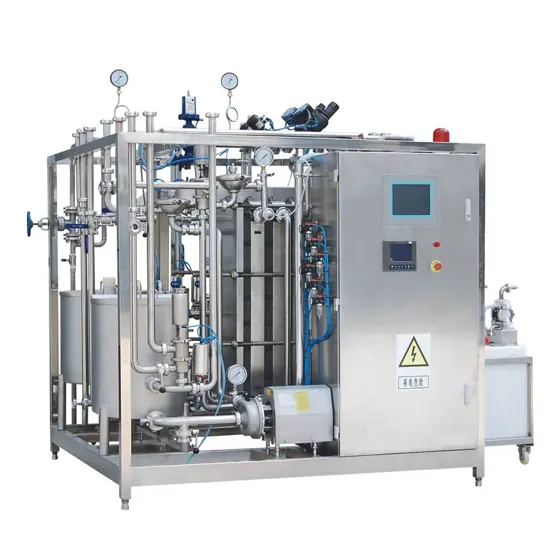
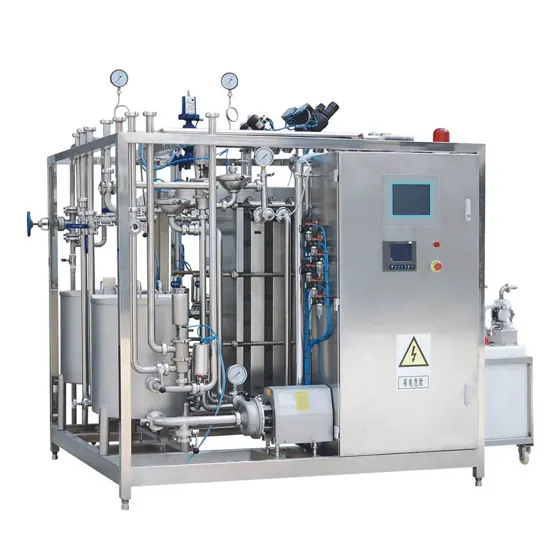
The plate pasteuriser takes product in at 5 degrees C, homogenises at 65, pasteurises at 85 degrees C for 15 seconds and delivers at 5 degrees C. This is standard high temperature short time treatment. It produces chilled product with a refrigerated shelf life, and it is the most energy-efficient of the three per litre because the plate pack recovers heat between the incoming and outgoing streams.
Yogurt at 90 to 95 Degrees for 300 Seconds
The yogurt pasteuriser holds 90 to 95 degrees C for 300 seconds and delivers product at 43 degrees C. That is twenty times the holding time of the HTST profile, and it is not about safety. The extended hold denatures whey proteins, which is what builds yogurt body and texture. Running a yogurt recipe through a milk pasteuriser produces a thin product, and no amount of culture corrects it.
The 43 degree outlet is deliberate: it is the inoculation temperature, so the base goes straight to the fermentation tank without a separate cooling and holding step.
UHT at 137 Degrees
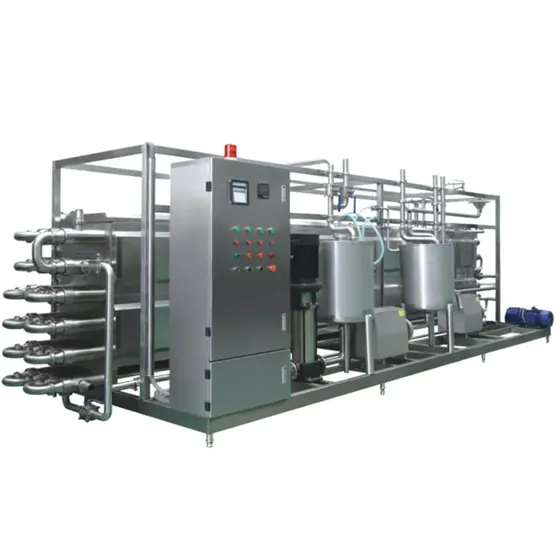
The tubular UHT steriliser takes product in at 5 degrees C, homogenises at 65 and sterilises at 137 degrees C. The product is then commercially sterile and, filled aseptically, has an ambient shelf life. That removes refrigerated distribution entirely, which for most dairy businesses is a larger cost change than anything happening inside the plant.
What UHT Demands in Return
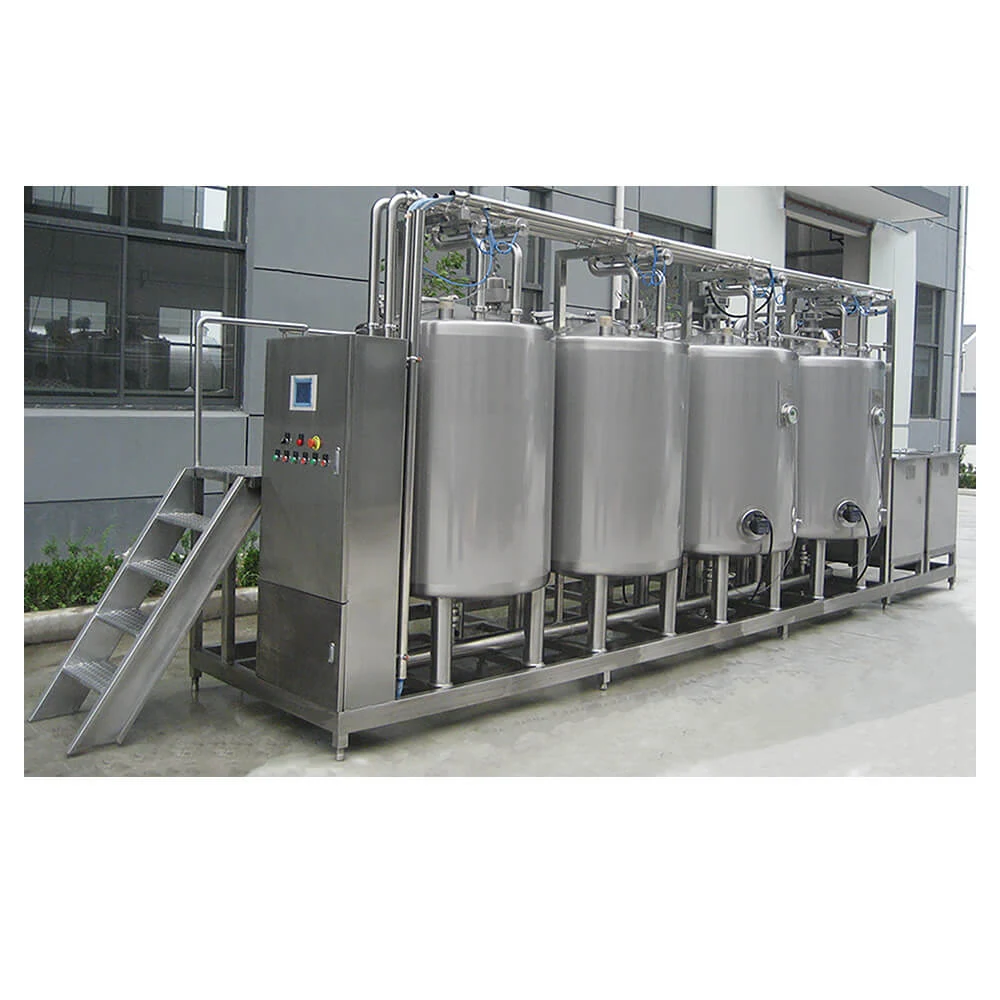
Everything downstream has to stay sterile. That means an aseptic tank to buffer between the steriliser and the filler, aseptic filling, and a steriliser that self-sterilises and records that it did. The tubular unit runs automatic CIP and SIP under PLC control with the whole cleaning process, pipe sterilisation and product sterilisation recorded, because on an aseptic line that record is the product's release documentation.
The Protection That Matters Most
Low temperature reflux. If sterilisation temperature drops, product is diverted and recirculated rather than passed forward to the filler. Combined with a high temperature alarm, that single function is what separates a UHT plant from a heater with a thermometer attached to it.
Choosing
If you have a cold chain and a local market, HTST is cheaper to run and cheaper to buy. If you are shipping distance or selling into ambient retail, UHT changes the business model and pays for the extra equipment. If you are making yogurt, neither of the other two profiles will do.
FAQ
Questions On This Guide
Can one machine do all three profiles?
No. The holding times and outlet temperatures are structurally different, and the yogurt and UHT profiles need equipment built for them.
What capacity range is available?
500 to 20,000 L/H on the pasteurisers and 1000 to 15,000 L/H on the tubular UHT steriliser.
Do we need an aseptic tank with UHT?
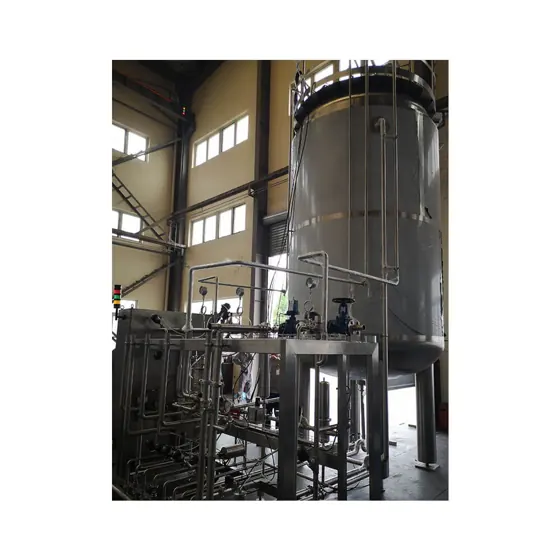
In practice yes, because it decouples a continuous steriliser from an intermittent filler. Sizes run from 10 T to 30 T.
How do we validate the process?
Run a data logger through the process at commissioning, record the trace and keep it for the process file. The published profile is what you validate against.
Related products
Products Referenced In This Guide
Product groups
Groups This Guide Covers
Plate Pasteurizers
HTST and yogurt thermal profiles on complete skids with pumps, hot water set, balance tank and PLC control.
Tubular UHT Sterilizers
Continuous UHT for thin liquids at 137 degrees C and for viscous products at 95 to 121 degrees C.
Dairy Processing Machinery
Tanks, separation, heat treatment and filling for every stage between the milking parlour and the pallet.
Turn This Into A Specification
Send us the application and we will translate it into a machine, a configuration, a material grade and a delivery plan.