
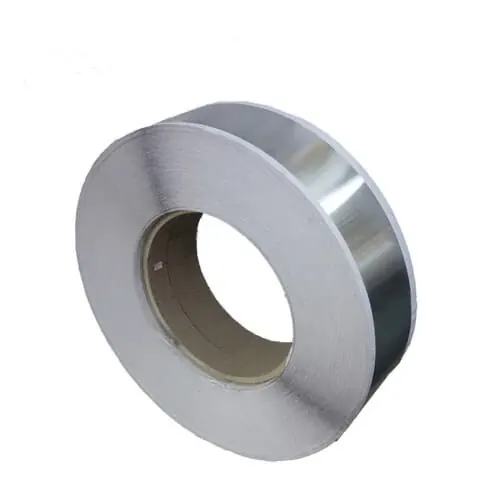
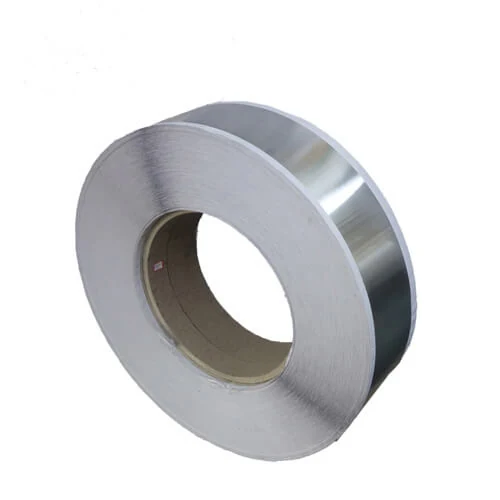
Aluminium Foil and Strip
1050 1060 and 1070 alloys at 63% IACS for lighter transformer windings.
Aluminium foil and strip for transformer windings in alloys 1050, 1060 and 1070, from 0.2 to 3.00 mm thick and 20 to 1500 mm wide, on inner diameters of 150 to 500 mm or customised. Aluminium content is 99.6% or higher, conductivity 63% IACS or better and tensile strength above 74 MPa.
The range
All 1 Products In This Group
The problem
What This Group Is Built To Solve
Aluminium winding is chosen for weight and cost, and rejected when nobody can put a number on the conductivity penalty. With conductivity published at 63% IACS and tensile above 74 MPa, the trade-off against copper becomes an arithmetic exercise at design stage rather than a matter of preference.
Who buys these
Who This Range Is For
Transformer Manufacturers
Foil winding requires strip matched to coil height, thickness and conductivity, and all three are specified across a wide dimensional range.
Transformer Repair Shops
Rewinding needs the same alloy and dimensions as the original, available in small quantities.
Buyers Comparing Aluminium With Copper
Published conductivity and tensile figures for both materials make the comparison a calculation rather than an argument.
Why these
What Makes This Range Different
Width Range of 20 to 1500 mm
Foil winding wants the strip width to equal the coil height exactly. This range covers a small dry-type unit through to a large distribution transformer.
Three Alloys in the 1000 Series
1050, 1060 and 1070 differ in purity and therefore in conductivity and softness, so the winding machine and the electrical design can both be satisfied.
Conductivity Guaranteed at 63% IACS
Winding losses are a direct function of conductivity, and a published minimum is what lets them be calculated rather than assumed.
Five Standard Inner Diameters
150, 200, 300, 400 and 500 mm or custom, so the coil fits the winding mandrel you already run.
Application
Where These Products Are Used
- Foil winding for dry-type distribution transformers
- Low voltage windings in oil-immersed transformers
- Replacing copper foil where weight and cost matter
- Transformer repair and rewinding
- Busbar and electrical connection applications
- Coil manufacture requiring specific strip widths
Documentation
Downloads Covering This Group
Specification sheet PDFs already on file for products in this range.
Industries
Sectors That Specify This Group
Power and Transformer Manufacturing
Winding conductor and core steel specified by conductivity and loss, not by weight.
Metal Fabrication and Machine Shops
Custom parts, tooling and the cranes that move them around the shop.
Warehousing and Heavy Industry
Lifting from 250 kg to 360 tons, indoors on a runway or outdoors on legs.
Further reading
Guides Related To This Group
Copper or Aluminium for Transformer Windings
63% IACS against 99% IACS. With both figures published, the choice between aluminium and copper foil becomes arithmetic at design stage rather than a matter of preference.
FAQ
Aluminium Foil and Strip Questions
Which alloys do you supply?
1050, 1060 and 1070.
What thickness and width range?
0.2 to 3.00 mm thick and 20 to 1500 mm wide.
What conductivity can you guarantee?
63% IACS or better, with aluminium content of 99.6% or higher and tensile strength above 74 MPa.
Which thickness should we use?
It should be specified according to the transformer design. Commonly used thicknesses run from 0.2 mm to 3 mm.
How does it compare with copper?
63% IACS against copper's 99%, so a larger conductor section for the same current, at lower weight and cost.
What inner diameters are available?
150, 200, 300, 400 and 500 mm, or customised to your winding mandrel.
Get A Quotation On Aluminium Foil and Strip
Send the capacity you need, the products it will handle and the destination, and we will confirm configuration, materials and a container plan.