
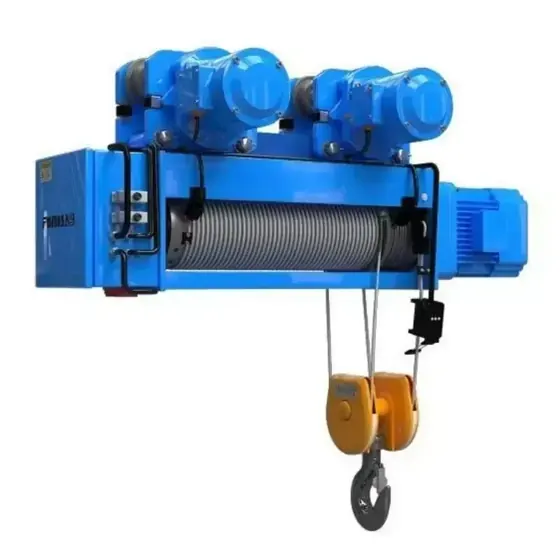
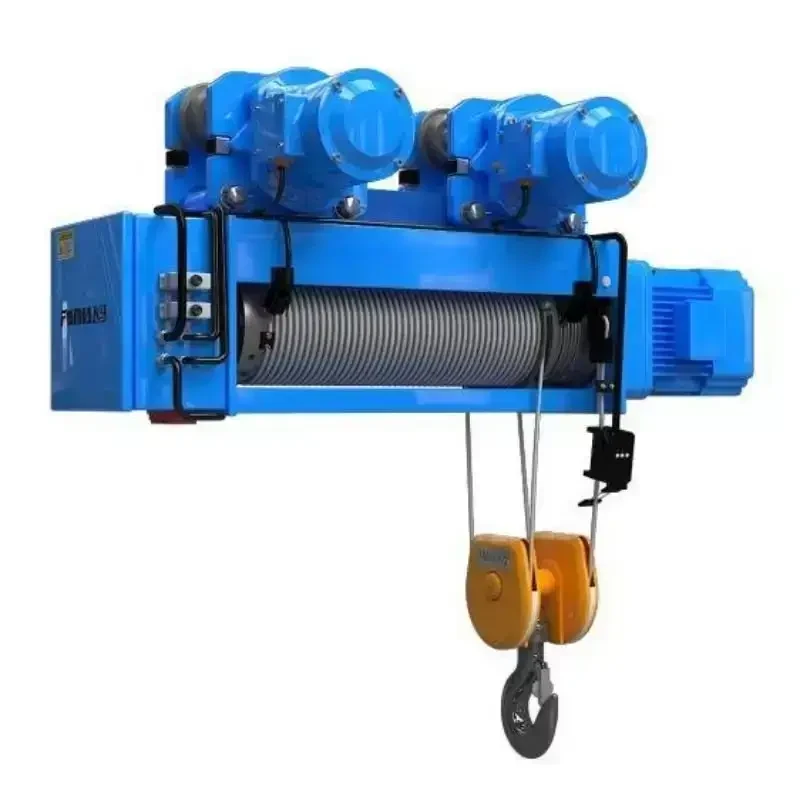
Hoists And Lifting Gear
Electric to 50 tons, pneumatic to 25 tons, manual to 5 tons, plus explosion-proof builds.
Four wire rope hoist drive types for four working environments. Electric hoists lift up to 50 tons or more and cover general industrial duty. Pneumatic hoists run on compressed air and typically lift up to 25 tons where spark-free operation is required, such as in oil refineries. Manual hoists cover light duty to 5 tons. Explosion-proof hoists use special components that prevent ignition of flammable gases or dust.
The range
All 1 Products In This Group
The problem
What This Group Is Built To Solve
Hoists are usually specified by capacity alone, and then somebody discovers that the lifting point is in a zoned area where an electric motor is not permitted. The area classification should select the drive type before capacity is even discussed, and all four drive types come from one supplier here.
Who buys these
Who This Range Is For
Refineries and Chemical Plants
Pneumatic and explosion-proof hoists exist for exactly this: lifting in places where an electric hoist cannot be used.
Crane Builders and Integrators
One hoist range covering electric, pneumatic, manual and explosion-proof simplifies sourcing across a mixed project.
Maintenance Departments
Manual wire rope hoists to 5 tons cover occasional lifting with no power supply needed at the lifting point.
Why these
What Makes This Range Different
A Drive Type for Every Atmosphere
General, spark-free, hazardous and unpowered are all covered, and the environment decides rather than the budget.
Spark-Free Without Losing Capacity
Pneumatic hoists typically reach 25 tons, so refinery duty does not have to drop to a hand hoist to stay safe.
Gearbox Controlled Speed and Torque
The gearbox regulates speed and torque, which is what gives a controlled descent rather than a load falling under gravity.
Matched to Existing Cranes
A replacement hoist can be specified against your existing crane capacity, span and runway rather than forcing a new crane.
Application
Where These Products Are Used
- General manufacturing lifting on overhead and jib cranes
- Oil refineries requiring spark-free lifting
- Petrochemical plants with flammable gas or dust present
- Light-duty maintenance lifting with manual hoists
- Monorail systems moving loads along a fixed path
- Replacing a worn hoist on an existing crane
Documentation
Downloads Covering This Group
Specification sheet PDFs already on file for products in this range.
Industries
Sectors That Specify This Group
Warehousing and Heavy Industry
Lifting from 250 kg to 360 tons, indoors on a runway or outdoors on legs.
Metal Fabrication and Machine Shops
Custom parts, tooling and the cranes that move them around the shop.
Power and Transformer Manufacturing
Winding conductor and core steel specified by conductivity and loss, not by weight.
Further reading
Guides Related To This Group
Choosing an Overhead Crane Light Build or Winch Build
Most crane enquiries name a tonnage. The two questions that actually decide the crane are whether the hook pulls as well as lifts, and how many lifts it makes per shift.
Choosing a Jib Crane Mounting for Your Building
Six mounting types exist because the building constrains the crane more often than the load does. Wall, column, free-standing, articulating, mast and portable each solve a different constraint.
FAQ
Hoists And Lifting Gear Questions
How heavy can an electric wire rope hoist lift?
Up to 50 tons or more depending on the model.
Which hoist suits a hazardous area?
Pneumatic where spark-free operation is required, explosion-proof where flammable gases or dust are present.
What is the pneumatic hoist capacity?
Typically up to 25 tons.
Do you supply manual hoists?
Yes, hand-driven wire rope hoists for light-duty applications up to 5 tons.
Can you match a hoist to our existing crane?
Yes. Send the crane capacity, span and the existing hoist details.
What decides the mechanism class?
Duty cycle in lifts per hour. State it at enquiry so the hoist is not under-classified for the work.
Get A Quotation On Hoists And Lifting Gear
Send the capacity you need, the products it will handle and the destination, and we will confirm configuration, materials and a container plan.