
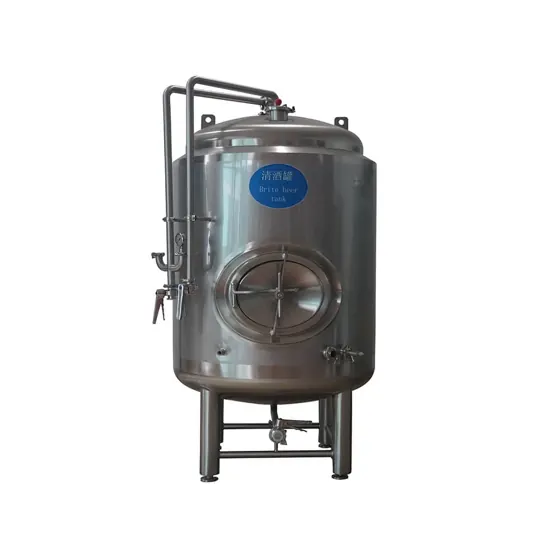
Beer Brewing Equipment
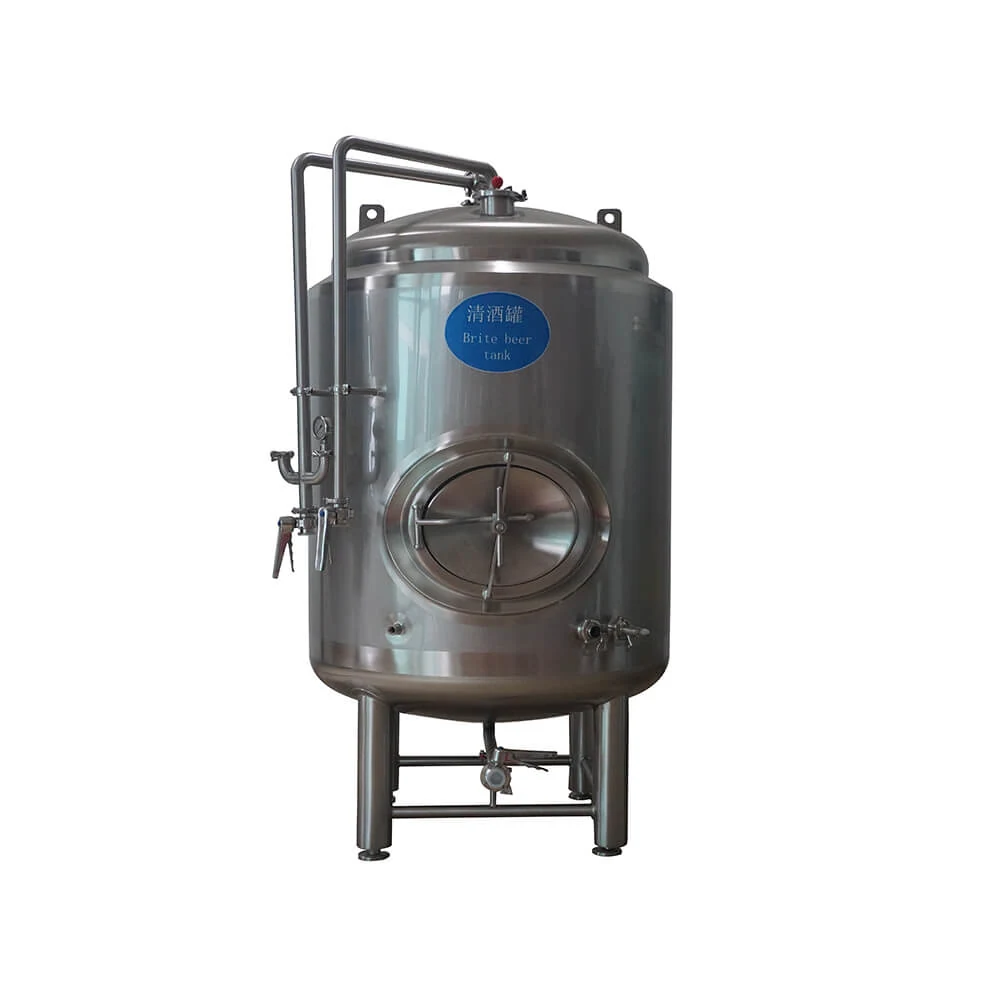
Bright beer tanks from 1 to 200 BBL for maturing carbonating and serving.
Fermentation, bright tank, pasteurisation and filling for beer water and soft drinks.
Beverage production splits into two halves: making the liquid and putting it in a container, and the second half is where line efficiency is usually lost. The range covers fermentation and bright tanks from 1 to 200 BBL, tunnel pasteurisation, can filling at up to 1000 CPM, PET filling at up to 48,000 BPH, glass filling at up to 20,000 BPH, plus labelling, sleeving, wrapping and palletizing.
Moving beer to a bright tank as soon as fermentation completes frees the fermenter and raises annual output without buying another vessel.
Can filling and seaming in one machine keeps the interval short. Degassing upstream removes dissolved oxygen before it ever reaches the filler.
The tunnel pasteuriser's staged warm-then-cold water sequence exists specifically to prevent it.
A conical fermenter lets yeast be collected and repitched, which removes a recurring cost over a year of brewing.
Labellers, wrappers and palletizers are often bought on price and then cap the whole line. Every machine here publishes a speed range.
Can size changeover on the filler and pattern change on a robot palletizer are both designed to be quick, which is what makes short runs viable.
Bright beer tanks from 1 to 200 BBL for maturing carbonating and serving.
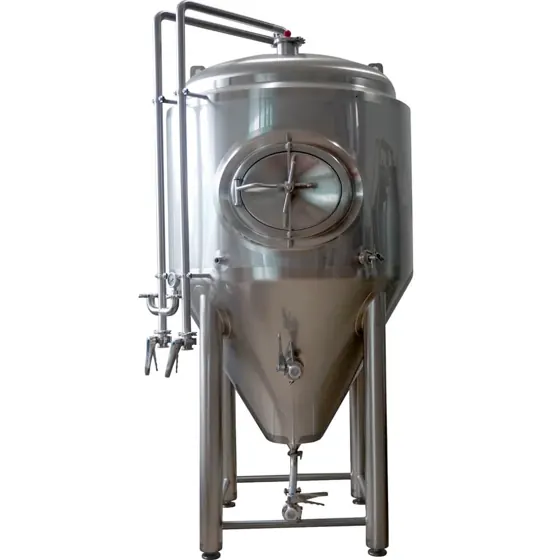
Extraction and fermentation vessels built in SUS304 or SUS316L with the jacket, agitator and instrumentation the process needs.
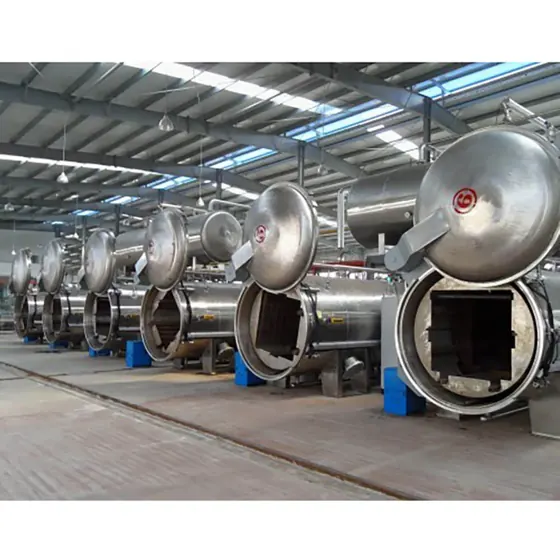
Sterilising and pasteurising product after it is already sealed in its pack.
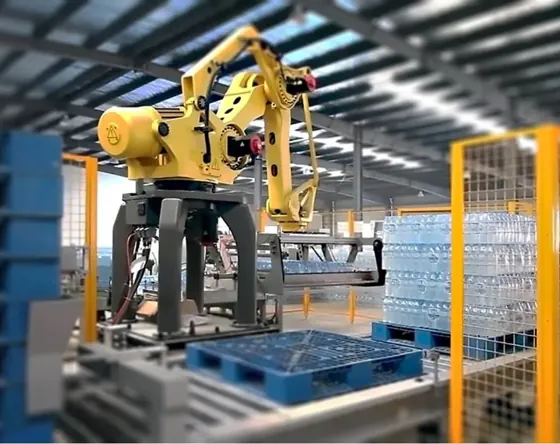
Labelling, sleeving, wrapping, cartoning, palletizing and depalletizing at line speed.
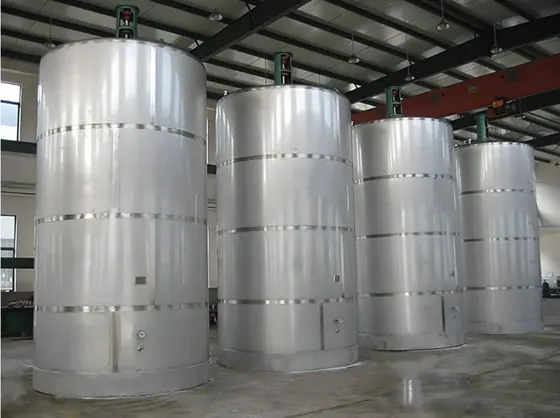
Tanks, separation, heat treatment and filling for every stage between the milking parlour and the pallet.
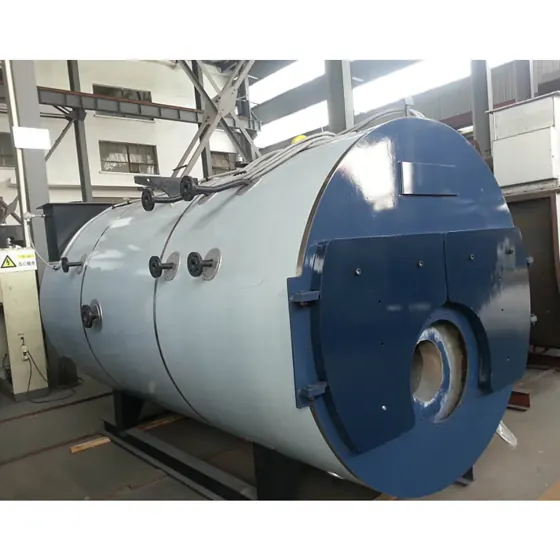
Boilers, cooling towers, air compressors and chillers sized to the process they serve.
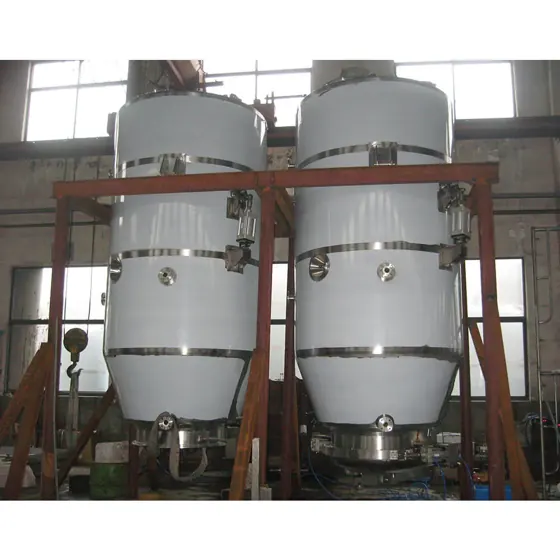
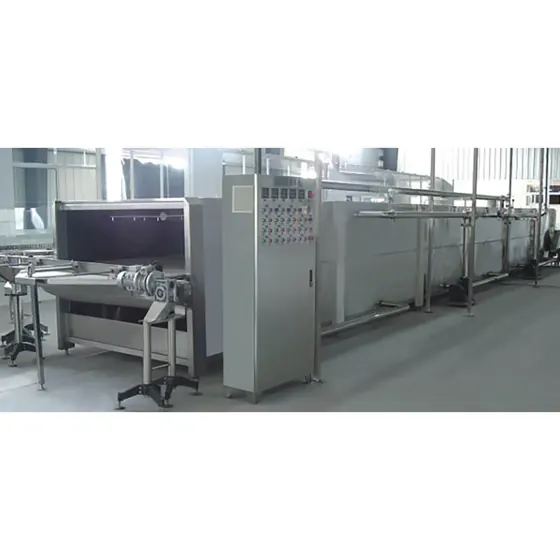
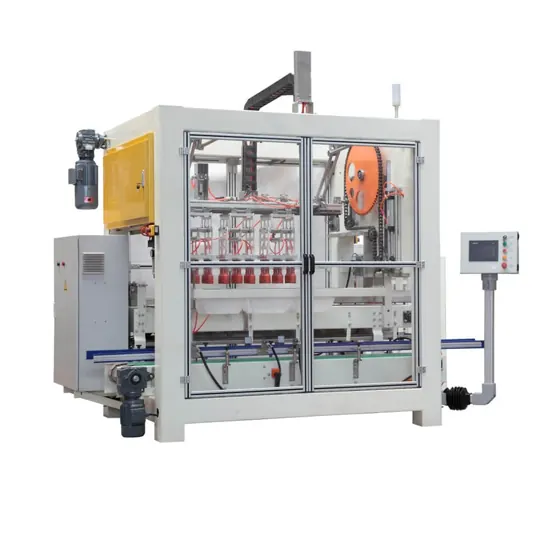
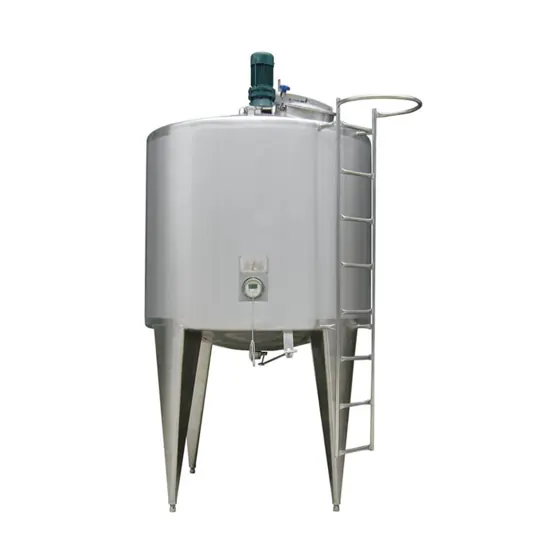
Brew length and pack format between them decide tank sizes and filler speed.
Depalletizer, filler, labeller, wrapper and palletizer all have published speeds. Balance them before ordering, not after.
Plate pasteurisation before filling is cheaper per litre; tunnel pasteurisation after filling treats the container too.
Fermentation cooling and PET blowing are the two largest utility loads in a beverage plant.
Most beverage line efficiency is lost on changeover, which is an operator skill rather than a machine specification.
Three thermal profiles, three different machines and three different distribution models. Which one your plant needs is decided by shelf life and cold chain, not by capacity.
A cleaning cycle that runs without flow cleans nothing and reports success. Conductivity monitoring, flow switches and return pump selection are what make CIP verifiable.
A line runs at the speed of its slowest machine, and that machine is rarely the filler. Every speed in this range is published, so the bottleneck can be found with arithmetic.
1 to 200 BBL on both fermentation and bright beer tanks, in SUS304 or SUS316L.
Can filling and seaming at 200 to 1000 CPM, PET at 2000 to 48,000 BPH, glass at 2000 to 20,000 BPH. The container decides.
Before filling is more energy efficient per litre but needs clean filling downstream. After filling, in a tunnel, treats the container and the product together.
By label material. Hot melt glue for reel-fed paper at volume, adhesive for self-adhesive film, sleeving for contoured bottles.
Yes. The can filler handles both slim and stubby cans with a quick size changeover.
One unit on every machine in the range.
Tell us the process and the problem your team keeps hitting, and the answer names machines and configurations rather than categories.