
Overhead Cranes
Double Girder Overhead Crane
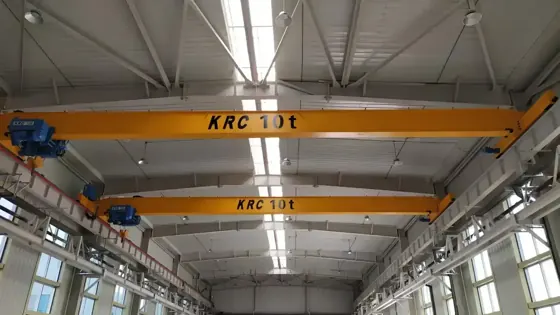
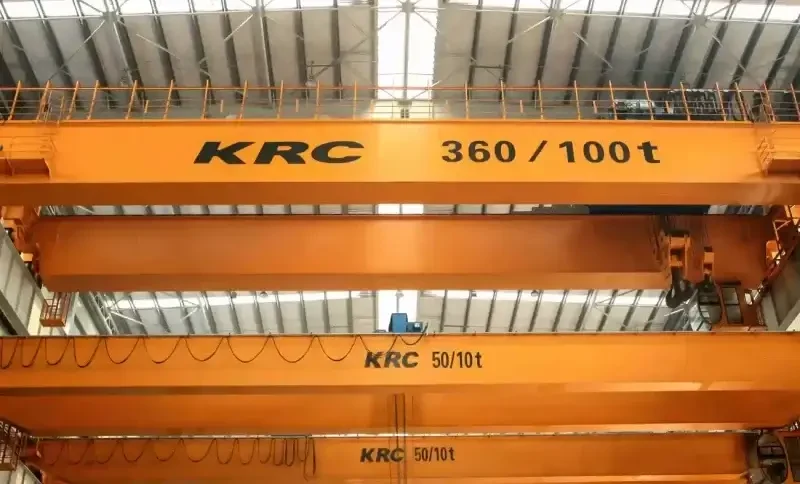
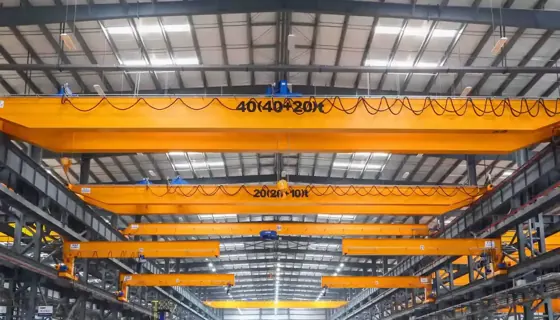
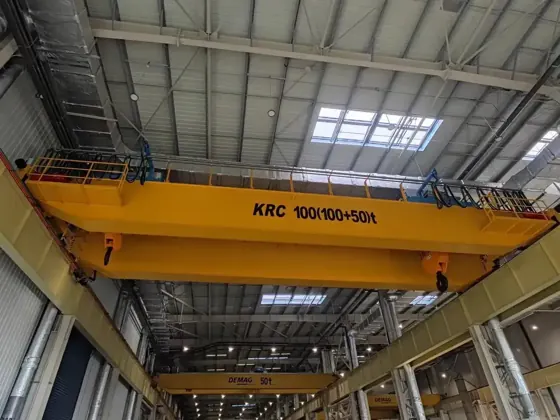
Double girder overhead cranes supplied in capacities of 5, 10, 15, 20, 30, 50, 100, 150 and 200 tons and above.
Product Overview
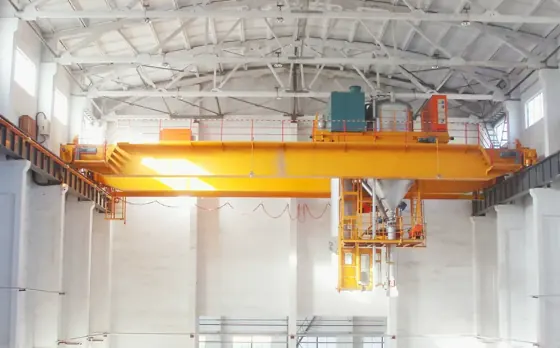
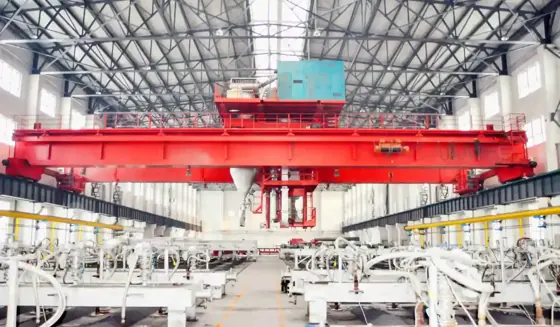
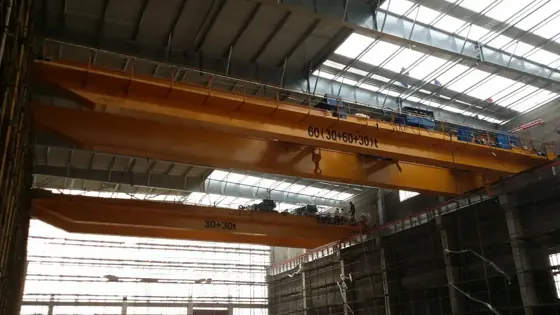
Double girder overhead cranes supplied in capacities of 5, 10, 15, 20, 30, 50, 100, 150 and 200 tons and above. Two builds cover the range: a light double girder crane customisable to 100 tons for medium-capacity indoor handling, and a heavy-duty build for projects that lift and pull. Spans reach 49 metres with lifting heights to 40 metres, long travelling to 90 m/min and cross travelling to 40 m/min.

Key benefits
Why Buyers Choose This Specification
Nine Capacity Steps From One Design
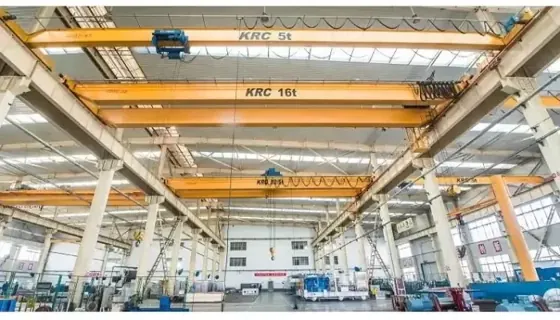
5, 10, 15, 20, 30, 50, 100, 150 and 200 tons come off the same double girder family. A plant standardising its crane fleet buys one design and one spares list across every bay.
Hook Height Recovered by the Girder Layout
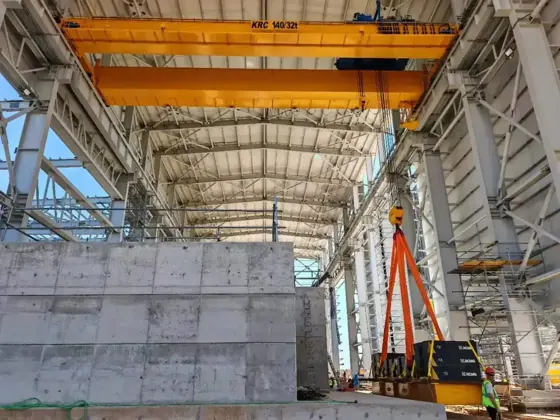
A double girder carries the trolley on top of the beams instead of under them, which is what gives the extra lifting height in a building of fixed clear height.
Travel Speeds That Suit Long Bays
Long travelling up to 90 m/min moves the crane down a long bay quickly between lifts, which is where cycle time is usually lost.
Customisable to 100 Tons on the Light Build
The light double girder crane covers medium-capacity work and is customisable up to 100 tons, so one build serves most general manufacturing duty.
Application scenarios
Where It Is Used
- Indoor industrial facilities lifting and moving medium to heavy loads
- Machine shops handling weldments, moulds and machine beds
- Steel service centres moving coil and plate between stations
- Assembly halls lifting large sub-assemblies onto the line
- Maintenance bays lifting equipment for overhaul
- Heavy-duty projects requiring both lifting and pulling
Who it is for
The Buyers This Product Suits
Plants Standardising a Crane Fleet
With nine published capacity steps in one family, every bay can be specified from the same design.
Facilities With Limited Clear Height
The double girder arrangement recovers hook height that an underslung trolley would lose.
Operations With Long Bays
Long travelling speeds to 90 m/min matter when the crane has to cross the building between every lift.
Problems it solves
What It Fixes
Losing Lift Height to the Trolley
In buildings with restricted clear height, the double girder layout keeps the hook higher than a single girder with an underslung hoist.
A Mixed Fleet of Incompatible Cranes
Nine capacities in one family means common controls, common spares and one training standard.
Dead Time Crossing the Bay
Travel speed, not lifting speed, is usually what limits cycle time in a long building. Long travel runs to 90 m/min.
Specifications
Published Figures For This Product
Every value below comes from our own product specification. Where a figure is not published we leave it out rather than estimating it.
| Available Capacities | 5, 10, 15, 20, 30, 50, 100, 150, 200 tons and above |
|---|---|
| Light Build Customisable To | 100 tons |
| Span Range | Up to 49 m |
| Max Lifting Height | Up to 40 m |
| Long Travelling Speed | Up to 90 m/min |
| Cross Travelling Speed | Up to 40 m/min |
| Girder Arrangement | Double girder, top-running trolley |
| Grade | Light and heavy-duty builds |
Packing and documents
How It Ships And What Comes With It
Packing And Loading
Shipping volume for this item depends on the configuration and capacity you select, so no fixed container figure is published. Confirm the specification and the destination and a loading plan is issued with the quotation, rather than a figure we cannot support.
Documentation On File
- Cranes and Material Handling · Overhead Cranes Specification Sheet32.4 KB
- Catalogue · Full Product Catalogue154.0 KB
Sourcing And Inspection
This product is supplied through TrueGlow Imaging, working with manufacturing partners whose facilities are visited and verified rather than taken on trust. In-process quality control and delivery supervision are available so goods are inspected before the container is sealed. Certifications quoted on this page are those stated on the product specification and belong to that product range rather than to our trading entity, so ask for the certificate covering your specific item.
Handling guide
Getting It Right First Time
Step 1
Choose the capacity step closest above your heaviest routine lift rather than your heaviest ever lift.
Step 2
Measure clear height under the roof steel, since that is what decides the achievable hook height.
Step 3
Send bay length as well as span; travel distance drives cycle time more than lifting does.
Step 4
State whether loads are pulled horizontally, which moves the specification to the heavy-duty build.
Step 5
Confirm the runway can accept the wheel loads at the chosen capacity and span.
Comparison
How It Compares In Our Range
Two double girder builds across the same capacity ladder.
| Light Double Girder Crane | Cost-effective for medium-capacity loads, customisable to lift up to 100 tons. Indoor facilities lifting medium to heavy loads. |
|---|---|
| Heavy-Duty Double Girder Crane | For projects that both lift and pull, and for the higher capacity steps in the range up to 200 tons and beyond. |
FAQ
Double Girder Overhead Crane Questions
What capacities are available?
5, 10, 15, 20, 30, 50, 100, 150 and 200 tons, and heavier on request within the same family.
Why choose double girder over single girder?
Double girder gives more hook height in a building of fixed clear height and carries higher capacity at wide spans.
What is the maximum span?
Up to 49 metres, with lifting heights up to 40 metres.
How fast does the crane travel along the bay?
Long travelling runs up to 90 m/min and cross travelling up to 40 m/min.
Can one design cover several bays?
Yes. That is the usual reason to standardise on this family, and it keeps spares and operator training common.
Is installation supervision available?
Installation supervision and commissioning are quoted with the crane once runway drawings are reviewed.
Related products
Other Products Buyers Look At
Industries
Sectors That Use This Product
Warehousing and Heavy Industry
Lifting from 250 kg to 360 tons, indoors on a runway or outdoors on legs.
Metal Fabrication and Machine Shops
Custom parts, tooling and the cranes that move them around the shop.
Power and Transformer Manufacturing
Winding conductor and core steel specified by conductivity and loss, not by weight.
Further reading
Guides That Cover This Product
Choosing an Overhead Crane Light Build or Winch Build
Most crane enquiries name a tonnage. The two questions that actually decide the crane are whether the hook pulls as well as lifts, and how many lifts it makes per shift.
Choosing a Jib Crane Mounting for Your Building
Six mounting types exist because the building constrains the crane more often than the load does. Wall, column, free-standing, articulating, mast and portable each solve a different constraint.
Quote Double Girder Overhead Crane
Send the capacity or size you need, the quantity and the destination, and we will confirm the configuration, the lead time and a loading plan.