
Design Guide
Sizing a Fruit Processing Line Against Peak Intake
The harvest arrives in a window and does not wait. Every stage of this range is quoted in tonnes per hour so the whole line can be balanced against one number.
Fruit processing is the only food sector where the raw material has a deadline. The crop arrives across a few weeks, quality falls measurably by the day, and any stage that cannot keep pace with intake means fruit sitting on the yard losing value while the line runs at its slowest machine.
Size Everything Against Peak Week
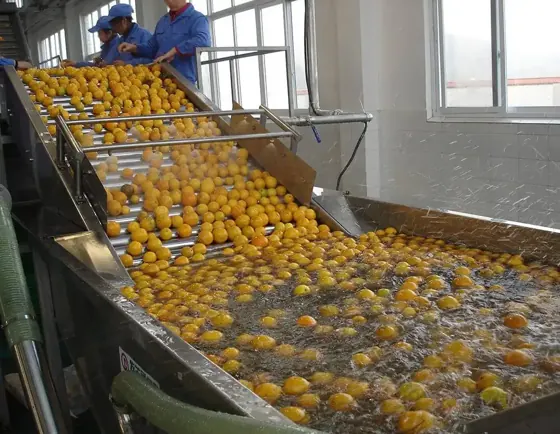
Washing runs 1 to 30 T/H, sorting 1 to 30 T/H, destoning 1 to 15 T/H, pulping 1 to 15 T/H, belt pressing 5 to 15 T/H and aseptic bag filling 1 to 30 T/H. Because every stage is quoted in the same unit, a whole line can be balanced against one intake figure. Use the peak week, not the seasonal average.
Wash Before You Sort
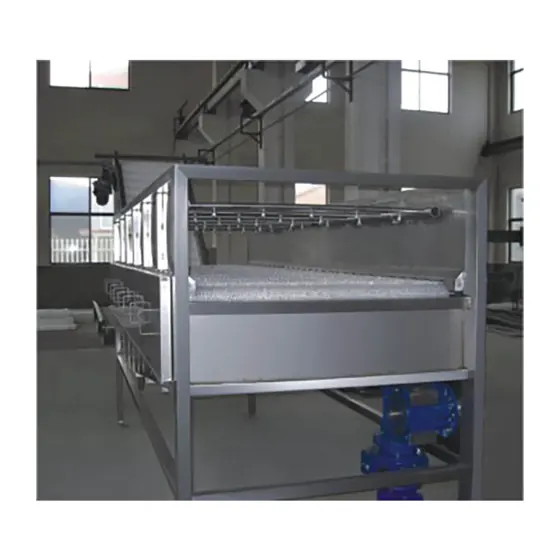
Soil and grit entering a line wear pumps, pulpers and presses, and operators cannot judge fruit quality through a coating of field soil. Washing first protects the equipment and makes the sorting station effective. Brush washing suits firm fruit such as apples; surfing-water washing suits softer fruit that bruises under mechanical contact.
Destone Before You Pulp
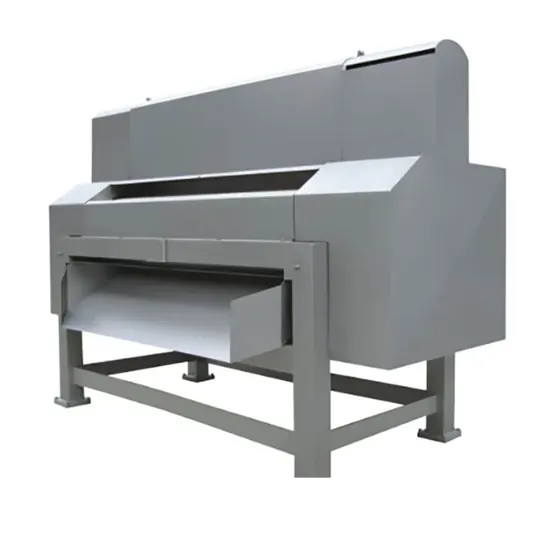
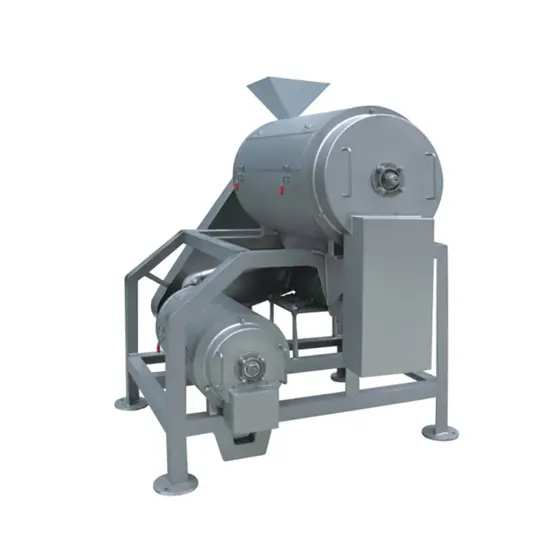
A stone entering a pulper damages the beater and the screen, and crushed kernels contribute bitterness to the juice. Destoning removes the stone whole at 1 to 15 T/H, which protects the most expensive machine on the line and the flavour of the product at the same time.
Match the Sterilizer to the Viscosity
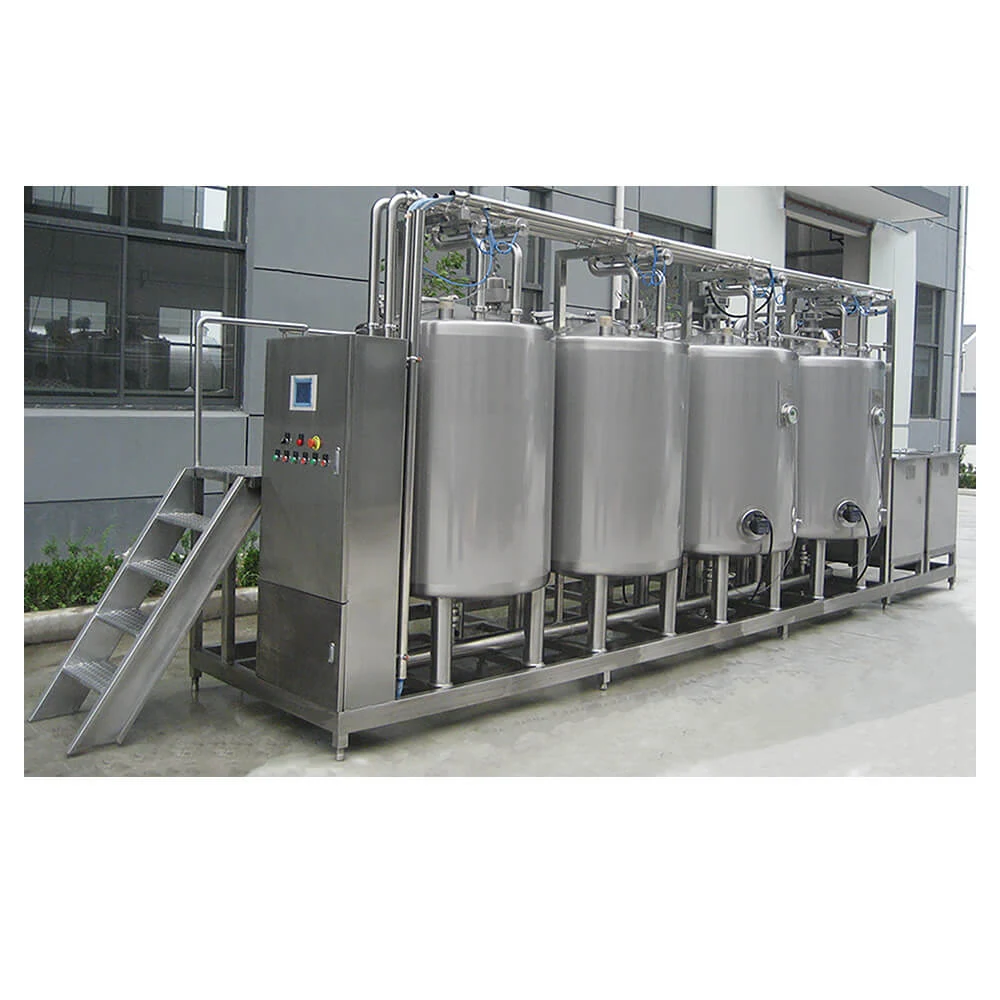
Thin juice goes through plate equipment efficiently. Tomato paste and concentrated juice will not, and a plate exchanger fouls or blocks on them. The tube-in-tube UHT steriliser exists for exactly this, sterilising at 95 to 121 degrees C for 120 to 180 seconds with SUS316L on every wetted surface.
Concentrate Before You Dry
Removing a kilogram of water in an evaporator under vacuum costs a fraction of removing the same kilogram in a spray dryer. On a powder line, concentrating first is the largest single energy decision available, and it is made once at design.
Aseptic Bagging Removes the Cold Chain
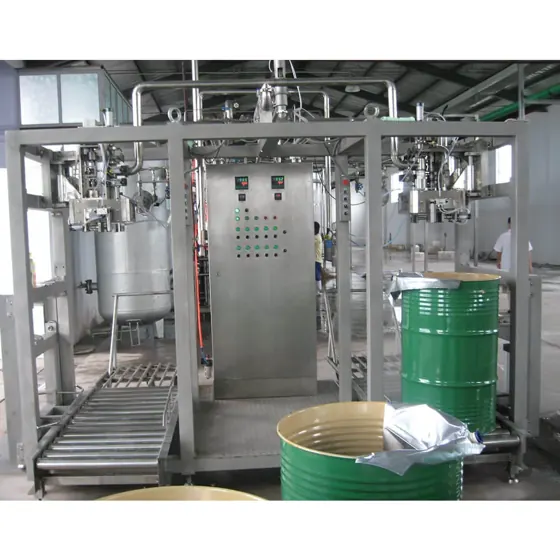
Sterilised puree and concentrate filled into aseptic bags ship at ambient temperature, which is the entire economics of the bulk fruit trade. A double-head filler keeps filling while a bag is changed, which is what keeps a continuous steriliser upstream running rather than pausing between bags.
Choose Material Grade by Acidity
Tomato and citrus are acidic and processed in long continuous campaigns. SUS316L on product contact parts is the correct specification for both, and it is available on the destoner, pulper, press, steriliser and aseptic filler.
Commission in the Off Season
A line commissioned during the harvest loses fruit while it is being proved. Install, commission and run trials before the crop arrives, so the first week of the season is production rather than debugging.
FAQ
Questions On This Guide
Can we build the line in stages?
Yes. Every machine has a minimum order of one unit, so capacity can be added between seasons at whichever stage is constraining.
What capacity should we start at?
Capacities begin at 1 T/H on most machines, so a small regional operation is served by the same range as a large plant.
Which washing machine type do we need?
Brush washing for firm fruit, surfing-water washing for fruit that bruises.
How do we handle a short harvest?
Process to an intermediate that stores: aseptic bagged puree or concentrate, or freeze dried powder. All three let a short crop be sold through the year.
Related products
Products Referenced In This Guide
Product groups
Groups This Guide Covers
Fruit Processing Machines
Intake to aseptic bag: washing, sorting, destoning, pulping, pressing, drying and filling.
Evaporators and Concentrators
Removing water under vacuum before drying, at a fraction of the cost of drying it out.
Tubular UHT Sterilizers
Continuous UHT for thin liquids at 137 degrees C and for viscous products at 95 to 121 degrees C.
Turn This Into A Specification
Send us the application and we will translate it into a machine, a configuration, a material grade and a delivery plan.