
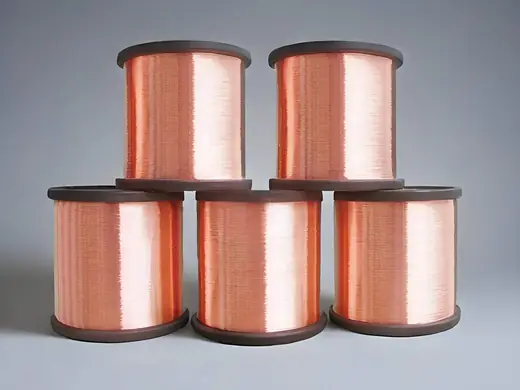
Material and Mould
CCA Wire Copper-Clad Aluminum Wire
Light Low Cost Conductor for LAN Coax and Speaker Cable
View specifications →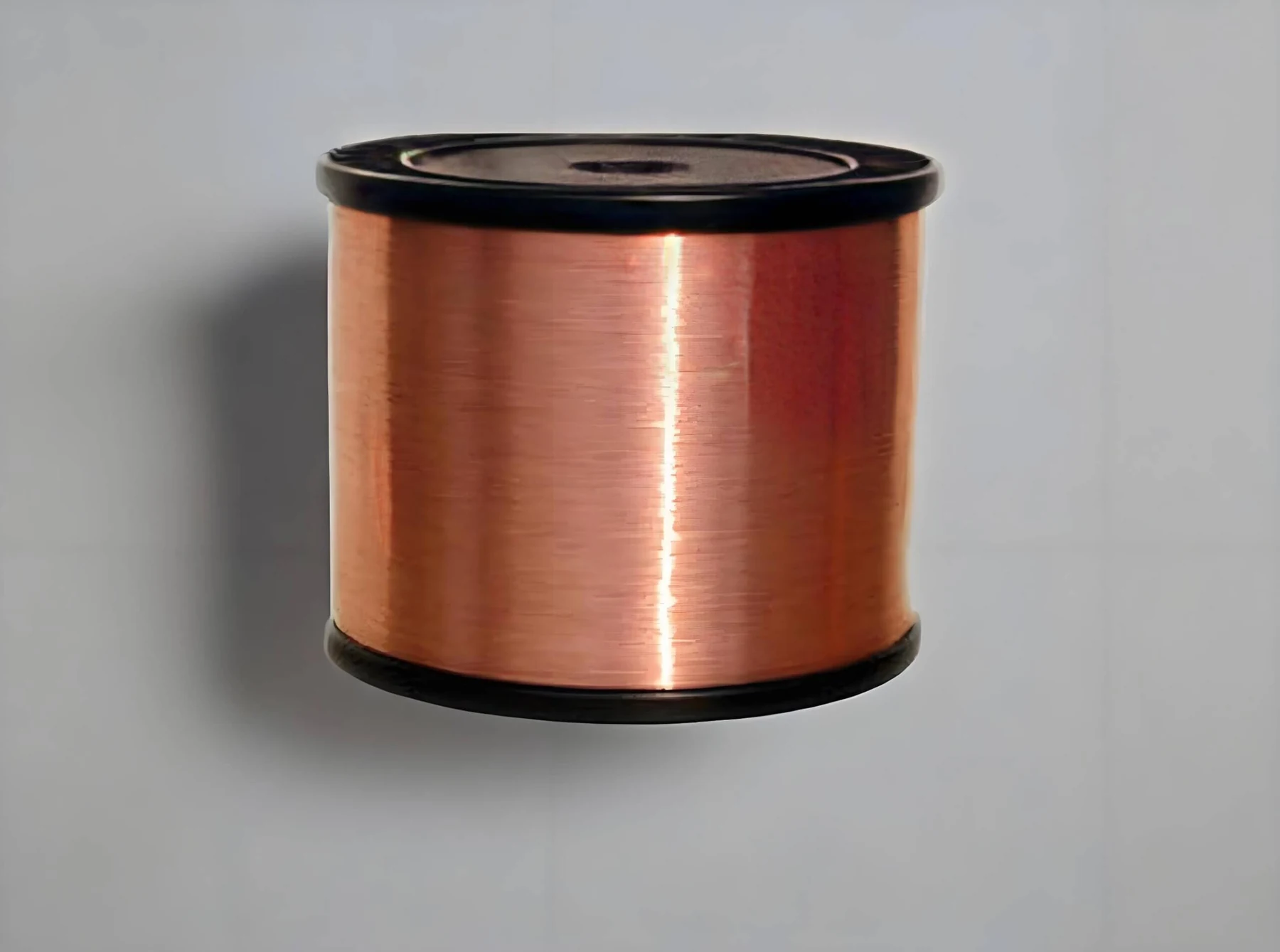
High Tensile Conductor for Coaxial Cores and Grounding
CCS wire is a steel core clad in electrolytic copper, so it carries signal on the copper surface while the steel takes the mechanical load. Conductivity sits at roughly 20 to 40 percent IACS depending on copper thickness, and tensile strength is far above copper or CCA. That combination is why it is used for RG6 and RG59 centre conductors, telecom drop wire and grounding work, including installations where cable theft is a problem.
Material and MouldBraiding and Conductor Wire
Much higher tensile strength than copper or CCA, which suits drop wires and aerial spans.
At radio frequency the current runs in the copper skin, so RF performance stays usable despite the steel core.
The steel core makes the cable difficult to cut through, which is why it appears in public and exposed installations.
The copper outer layer takes solder with standard technique.
Copper and CCA stretch under span load. A steel core holds tension over long aerial runs.
Steel-cored cable resists cutting, which is the practical reason it is specified in public installations.
CCS has poor flexibility and low conductivity compared with CCA or CCAM; we say so up front so it is specified where it fits.
No product certification is claimed for this item beyond the standards named in the specification table. Where a specific certificate is required for your market, ask before ordering and we will confirm what can be provided.
| 0.12 mm | Braided shielding for coaxial, LAN, HDMI and USB. ABS φ200–250 mm reel, 2–5 kg |
|---|---|
| 0.18 mm | Braiding and flexible stranded wires such as 16×0.18mm. ABS φ250 mm reel, 5–10 kg |
| 0.20 mm | Stranded cores such as 7×0.20mm and 16×0.20mm. ABS φ250 mm reel, 5–10 kg |
| Conductivity | ~20–40% IACS |
| Tensile Strength | Very high |
| Weight | Heaviest of the clad wire family |
| Flexibility | Poor |
| Corrosion Resistance | Good, copper clad |
Figures are the published specification for this product. Values outside this table are confirmed in writing before order rather than estimated.
Materials are produced to the stated thickness, width and formulation, then slit, wound and packed to the reel or core size ordered. Dimensional checks are made against the specification before dispatch.
Foil, film, compound or wire checked for thickness and surface condition before processing.
Coating, lamination, slitting or drawing to the ordered dimension.
Width, thickness and roll or reel diameter verified against the specification.
Shielding attenuation and conductivity referenced to the published figures for the grade.
Shaft or reel packing in cartons for safe handling and transport.
CCS Wire Copper-Clad Steel Wire sits inside the Material and Mould range. The products below are the closest alternatives or the parts most often ordered alongside it — compare the published specification tables rather than the descriptions when the choice is close.
Light Low Cost Conductor for LAN Coax and Speaker Cable
View specifications →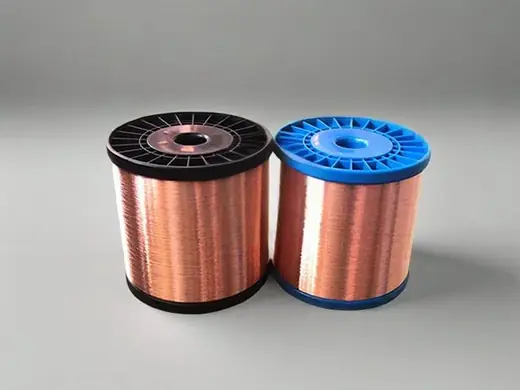
Stronger Than CCA for High Flex Data and HDMI Cable
View specifications →
75 Ohm CATV Core Ready for Your Own Shielding and Jacket
View specifications →Approximately 20 to 40 percent IACS, which varies with the thickness of the copper cladding.
It provides the mechanical strength for drop and aerial installations while still carrying RF signal on the copper surface.
No. Flexibility is poor. For flexible and high-flex work, CCAM or Al-Mg wire is the better choice.
Yes. The copper outer layer allows standard soldering.
ABS reels of φ200 to 250 mm holding roughly 2 to 10 kg depending on wire diameter.
Send the construction, grade and quantity you need. We confirm the specification in writing before quoting.