The Stages of a Coaxial Cable
A coaxial cable is built in sequence: conductor preparation by rod drawing, annealing, stranding and surface cleaning; foamed insulation extrusion with cooling, sizing and on-line testing; aluminium foil or copper tape wrapping; braiding in copper or CCA wire; jacket extrusion in PVC, PE or LSZH; then marking and coiling. Semi-finished product can be taken from any point in that sequence.
Where Cores Are Usually Taken
Two points matter commercially. The first is straight after foaming, when the core is conductor plus dielectric with nothing else — this is the foamed insulation core. The second is after shielding and braiding but before the jacket, which is what most RG cores are. Both are sold because the stages before them are the capital-heavy ones.
The Same Logic in LAN Cable
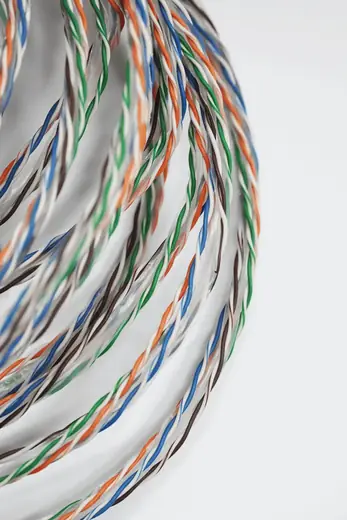
For LAN cable the equivalent stopping point is after the pairs are twisted and any foil or braid shielding is applied, but before the sheath. Pair lay length, conductor diameter and shield construction decide the electrical result, so once those are done the cable's performance is essentially fixed.
What the Buyer Still Controls
Everything visible. Jacket compound decides where the cable may be installed. Colour and print legend decide whose brand it is. Fire classification under CPR or a national standard follows the jacket, not the core. Packing and reel format decide how it ships.
How to Decide Where to Enter
Work backwards from the equipment you own. If you have a jacketing line and no braider, buy shielded cores. If you have a braider but no foaming extruder, buy foamed insulation cores. If you have neither, buy finished cores and invest only in jacketing, printing and packing.