Material and Mould
CCA Wire Copper-Clad Aluminum Wire
Light Low Cost Conductor for LAN Coax and Speaker Cable
View specifications →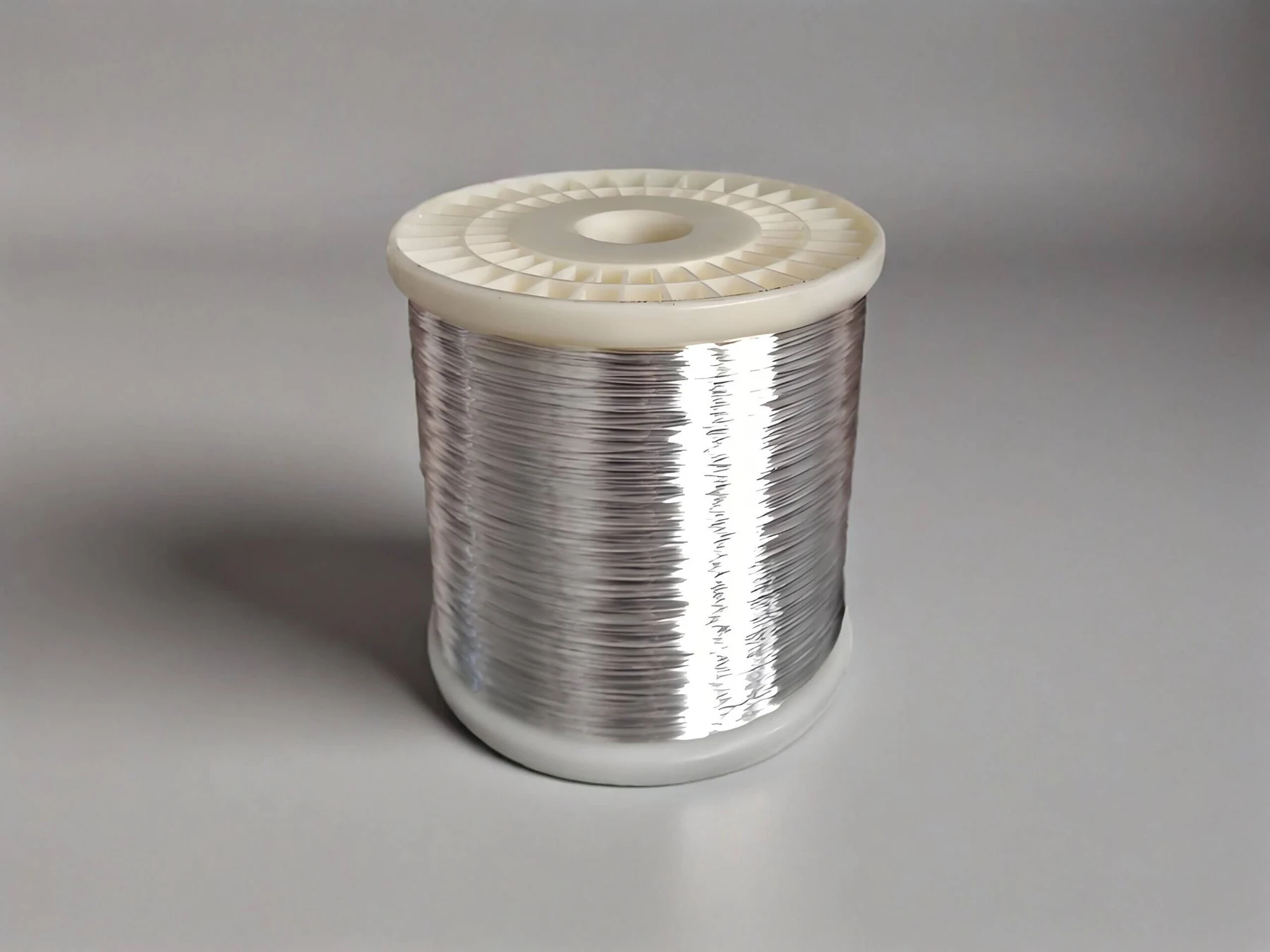
Lightest Braiding Wire With the Best Weight to Strength Ratio
Al-Mg wire is aluminium alloyed with 0.3 to 5 percent magnesium, which raises tensile strength and corrosion resistance while keeping the weight advantage of aluminium. It is the standard choice for braided shielding where finished cable weight matters, and for overhead runs in coastal or industrial air. It is supplied in hard H18 temper for tensile applications and soft O temper for braiding. It is not solderable, so it belongs in shielding rather than terminated conductors.
Material and MouldBraiding and Conductor Wire
The best weight-to-strength ratio among CCS, CCA, CCAM and Al-Mg, which shows up directly in drum weight.
Performs in coastal and industrial environments where plain aluminium degrades.
Soft O temper gives excellent flexibility for shield braiding without wire breaks.
H18 hard temper for strong tensile requirements, O soft temper for flexible braiding work.
A braid covers the whole cable surface. Using the lightest suitable wire cuts finished cable weight across the whole order.
Magnesium content improves corrosion resistance for coastal and industrial installations.
Bare aluminium does not solder. Where the shield has to be soldered to a connector, choose a copper-clad wire instead.
No product certification is claimed for this item beyond the standards named in the specification table. Where a specific certificate is required for your market, ask before ordering and we will confirm what can be provided.
| 0.12 mm | Braided shielding for coaxial, LAN, HDMI and USB. ABS φ200–250 mm reel, 2–5 kg |
|---|---|
| 0.18 mm | Braiding and flexible stranded wires such as 16×0.18mm. ABS φ250 mm reel, 5–10 kg |
| 0.20 mm | Stranded cores such as 7×0.20mm and 16×0.20mm. ABS φ250 mm reel, 5–10 kg |
| Conductivity | ~50–60% IACS |
| Tensile Strength | Medium-high, varies by temper |
| Weight | Lightest of the clad and alloy wire family |
| Flexibility | Excellent in soft temper |
| Solderability | Poor — bare aluminium |
| Corrosion Resistance | Excellent |
Figures are the published specification for this product. Values outside this table are confirmed in writing before order rather than estimated.
Materials are produced to the stated thickness, width and formulation, then slit, wound and packed to the reel or core size ordered. Dimensional checks are made against the specification before dispatch.
Foil, film, compound or wire checked for thickness and surface condition before processing.
Coating, lamination, slitting or drawing to the ordered dimension.
Width, thickness and roll or reel diameter verified against the specification.
Shielding attenuation and conductivity referenced to the published figures for the grade.
Shaft or reel packing in cartons for safe handling and transport.
Al-Mg Wire Aluminum-Magnesium Alloy Wire sits inside the Material and Mould range. The products below are the closest alternatives or the parts most often ordered alongside it — compare the published specification tables rather than the descriptions when the choice is close.
No. Solderability is poor because the surface is bare aluminium. Choose CCA, CCAM or CCS where the shield must be soldered.
Typically 0.3 to 5 percent magnesium, which improves mechanical strength, corrosion resistance and fatigue performance.
Hard H18 for strong tensile requirements and soft O for flexible applications such as braiding.
It combines light weight with good tensile strength and corrosion resistance, which suits overhead lines in coastal or industrial environments.
Al-Mg runs at roughly 50 to 60 percent IACS against about 60 percent for CCA, so CCA is the better conductor where solderability and conductivity both matter.
Send the construction, grade and quantity you need. We confirm the specification in writing before quoting.