Conductor and Bandwidth
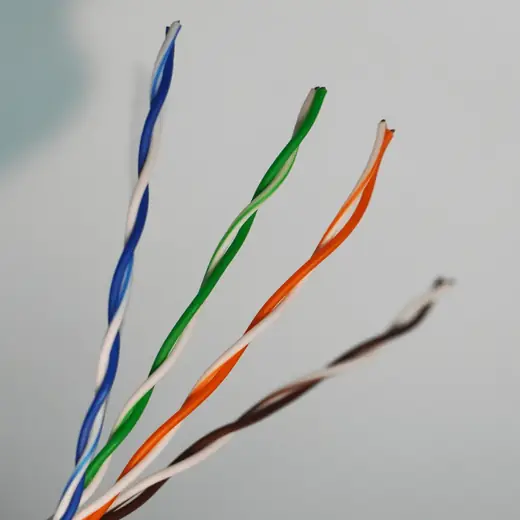
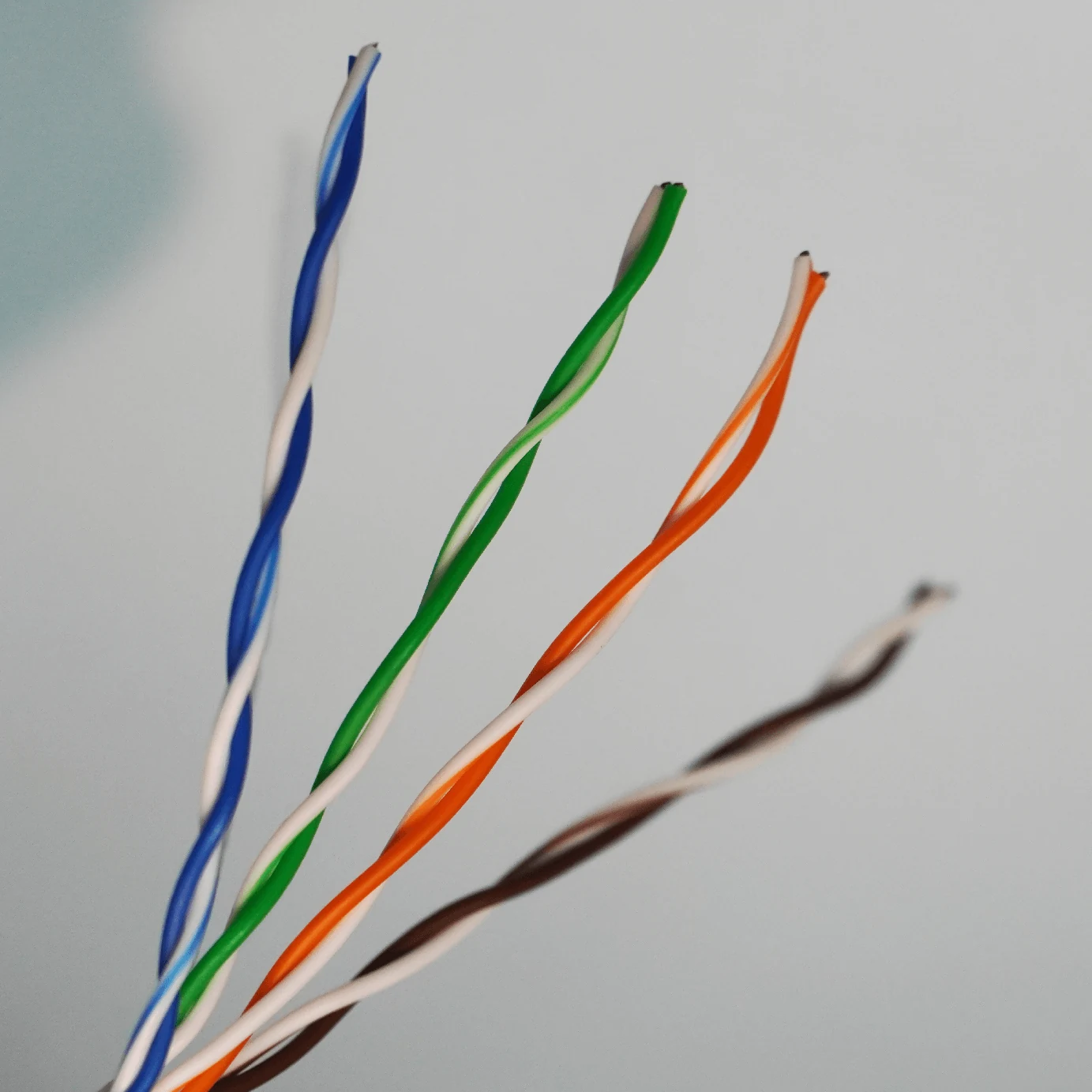
CAT5e uses 24 AWG solid bare copper at 0.51 mm nominal and is specified to 100 MHz. CAT6 and CAT6a step up to 23 AWG at 0.57 mm, with CAT6 specified to 250 MHz. All use HDPE insulation colour-coded to TIA/EIA-568-B and IEC 60228 Class 1 conductors.
Crosstalk Margin
NEXT at 100 MHz is the clearest separator: 45 dB or better for CAT5e, 55 dB or better for CAT6, and 65 dB or better for CAT6a. PSNEXT follows at 43, 52 and 62 dB. Attenuation moves less dramatically — 22.0 dB/100m for CAT5e against 20.9 for CAT6 and 21.9 for CAT6a.
Shielding Arrangements
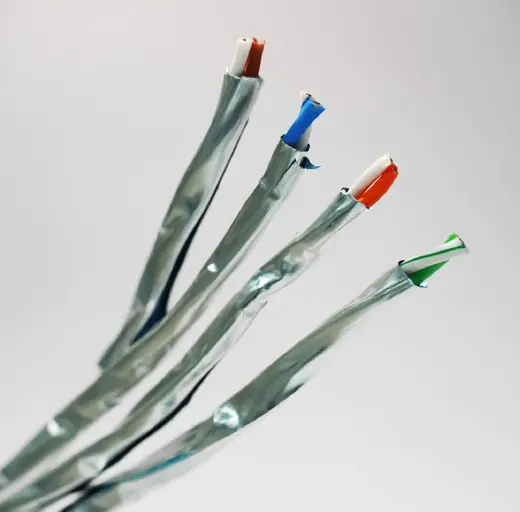
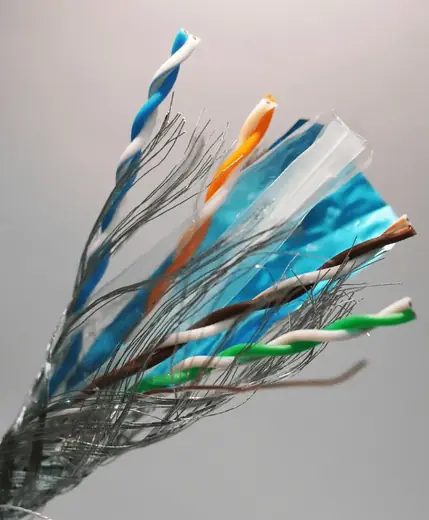
Three arrangements appear across the range. An overall foil around all pairs is F/UTP, sold here as FTP. Foil on each pair plus an overall braid is S/FTP. Foil on each pair with no overall braid is U/FTP, which is how CAT6a is built because alien crosstalk is the limiting factor at 10G.
Core Diameter and Jacketing
Core OD before jacketing runs roughly 4.6–5.2 mm for UTP CAT5e, 5.2–5.8 mm for FTP CAT5e, 5.4–6.2 mm for S/FTP CAT5e, 5.2–6.0 mm for UTP CAT6, 5.8–6.3 mm for FTP CAT6, 6.3–6.7 mm for S/FTP CAT6 and 6.0–6.3 mm for U/FTP CAT6a. Those figures are what the jacketing line needs, not the finished diameter.
Choosing the Construction
Choose the category from the bandwidth the customer specifies, then choose shielding from the installation environment. A quiet office run does not need S/FTP; a cable tray beside variable-speed drives does. For 10GBASE-T, pair-level screening is not optional in practice.