
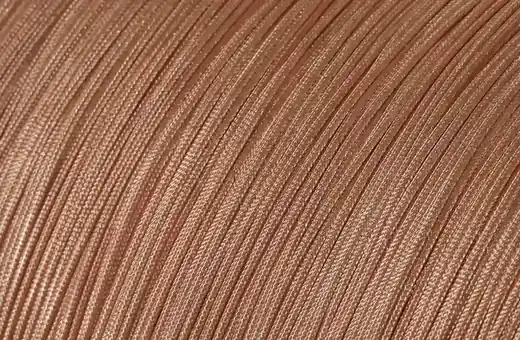
Semi-Finished Coaxial Cable
Semi-Finished Coaxial Cable RG6
75 Ohm CATV Core Ready for Your Own Shielding and Jacket
View specifications →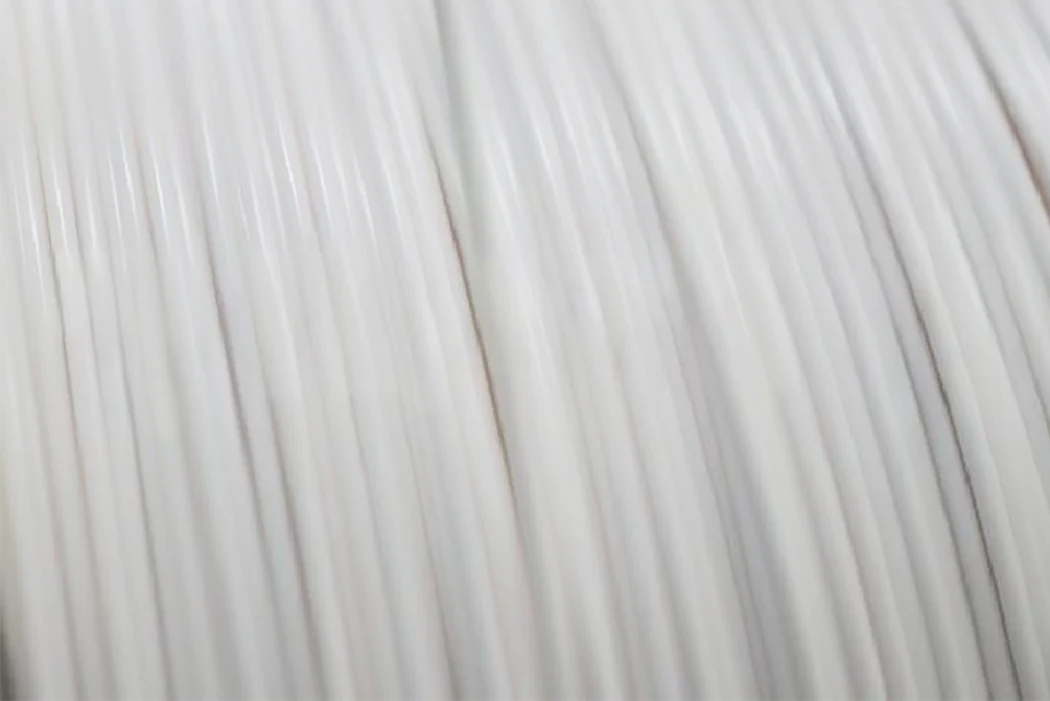
Conductor Plus Foamed Dielectric Before Shielding and Braiding
This is the earliest stage we sell: the inner conductor with its foamed insulation extruded, cooled and gauged, but no shielding, braiding or jacket yet. Plants buy it when they already own braiding and jacketing capacity but not a foaming extruder, which is the hardest part of the coaxial process to run well. Cell size, insulation diameter and concentricity are controlled and monitored on line, so the core is ready to take foil and braid as soon as it reaches your shop.
Semi-Finished Coaxial Cable
Physical or chemical foaming with closed-loop diameter control is capital-heavy and slow to master. This buys the output, not the equipment.
A foamed dielectric lowers the dielectric constant, which improves transmission and reduces loss.
Foamed insulation weighs less than solid insulation, which shows up in freight cost on finished cable.
Surface finish and concentricity are controlled so foil wrapping and braiding run without re-work.
Cell size, density and diameter drift show up later as attenuation variation. The core arrives already gauged and monitored.
A foaming line only pays back at volume. Buying cores turns a fixed cost into a per-metre cost.
Conductor cleaning and surface preparation before extrusion decide whether the insulation bonds properly.
No product certification is claimed for this item beyond the standards named in the specification table. Where a specific certificate is required for your market, ask before ordering and we will confirm what can be provided.
| Structure | Inner conductor + foamed insulation layer |
|---|---|
| Conductor Material | Copper or CCA |
| Insulation Material | PE or FEP, foaming grade |
| Foaming Method | Physical (gas injection) or chemical (blowing agent) |
| In-Process Control | Foam cell size and density, insulation diameter uniformity, surface smoothness |
| On-Line Testing | Continuous insulation thickness and concentricity monitoring |
| Next Stages | Foil or copper tape wrapping, braiding, jacket extrusion, marking and coiling |
| Shielding | Not applied |
| Outer Jacket | Not applied |
Figures are the published specification for this product. Values outside this table are confirmed in writing before order rather than estimated.
Production runs from conductor preparation — rod drawing, annealing, stranding and surface cleaning — through foamed insulation extrusion with controlled cell size and on-line diameter monitoring, then foil wrapping and braiding to the shield specification ordered. The line stops before jacket extrusion.
Rod drawing, annealing and surface cleaning so the insulation bonds without microvoids.
Insulation thickness and concentricity monitored continuously on line during extrusion.
Foil overlap and braid coverage checked against the ordered shield construction.
Impedance and attenuation sampled against the published values for the construction.
Reels wrapped in plastic film against moisture and dust, then cartoned or palletised.
Foamed Insulation Coaxial Cable Core sits inside the Semi-Finished Coaxial Cable range. The products below are the closest alternatives or the parts most often ordered alongside it — compare the published specification tables rather than the descriptions when the choice is close.
75 Ohm CATV Core Ready for Your Own Shielding and Jacket
View specifications →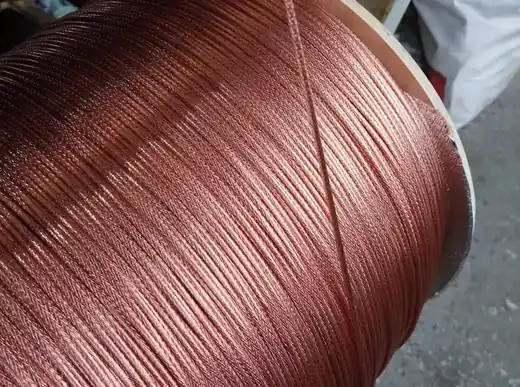
Trunk Grade Foamed PE Core for CATV Backbone Cable
View specifications →
Fluoropolymer Insulation Line Running to 500 Degrees Celsius
View specifications →The inner conductor with the foamed insulation layer extruded, cooled and gauged. There is no shielding, braid or jacket.
It lowers the dielectric constant, which improves signal transmission and reduces attenuation, and it makes the cable lighter and more cost effective.
Copper or copper-clad aluminium, solid or stranded, prepared by drawing, annealing and surface cleaning before extrusion.
Aluminium foil or copper tape wrapping, copper or CCA braiding, jacket extrusion in PVC, PE or LSZH, then marking and coiling.
Insulation thickness and concentricity are monitored continuously on line during extrusion.
Send the construction, grade and quantity you need. We confirm the specification in writing before quoting.