Why a Shrink Tube Cannot Do This
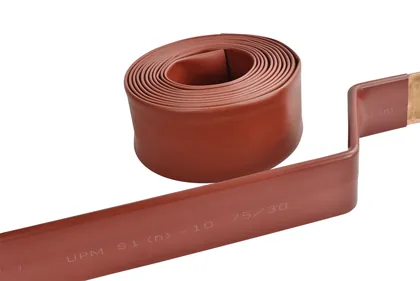
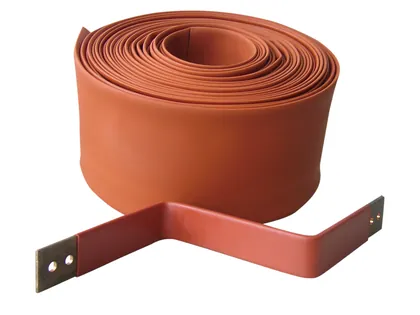
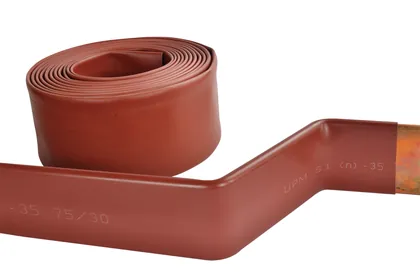
A shrink tube recovers toward a circular or gently rectangular section. A bolted lap joint is a step change in thickness with bolt heads and nuts protruding on both faces. A tube forced over that geometry either bridges the step leaving a void or tears on a bolt head.
Bridging is the worse outcome because the void is invisible from outside and it becomes the point where condensation collects.
What to Measure
Six dimensions describe almost any lap joint well enough to quote and tool a cover.
- Bar width and thickness on each side of the joint
- Overlap length of the joint itself
- Bolt count and pattern
- Bolt head height above the bar face including any washer stack
- Any spacer or packing thickness between the bars
- Available clearance around the joint inside the cubicle
A dimensioned sketch is ideal. A photograph with a steel rule laid across the joint is enough to start a quotation.
Keeping the Joint Inspectable
Bolted joints are a maintenance item. They need periodic torque verification and thermographic survey because a loose joint heats and a hot joint eventually fails. Any insulation scheme that prevents that inspection creates a worse problem than the one it solves.
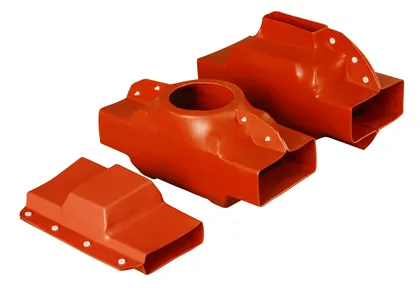
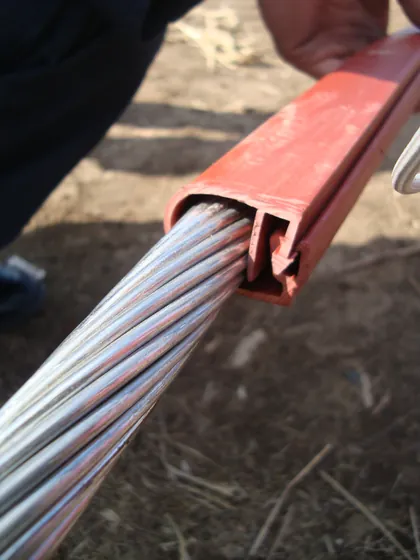
A buckle type closure lets the cover be opened along its length, the joint inspected, and the same cover refitted. It should be possible to do that without tools and without damaging either the cover or the joint.
Installation Sequence
- Torque the bolted joint to the design figure and record it
- Carry out any initial inspection or thermographic baseline before covering
- Clean the joint area so no swarf or debris is trapped under the cover
- Fit the cover and engage the buckle along its full length so no gap remains
- Record the cover part number against the joint position for future maintenance
At Each Maintenance Interval
Open the buckle, inspect and survey the joint, then refit the same cover. If a cover is damaged or no longer closes fully replace it — a cover with a gap gives dust and condensation exactly the path it needs while looking like protection.
Because covers are tooled to a joint geometry, repeat orders from existing tooling are fast and inexpensive.