Medium and Heavy Wall Tubing
S3(n) Medium Wall Halogen Free Heat Shrink Tube
Halogen free medium wall polyolefin tubing with 3:1 and 4:1 shrink for insulating sealing and protecting cable to 36 kV
- Operating temperature: -55 to 110°C
- Minimum fully recovery temperature: 125°C
- Shrink ratio: 3:1 & 4:1
- Halogen-free, RoHS compliant
- Single or Dual wall optional
- Standard Color: Black, Other colors optional
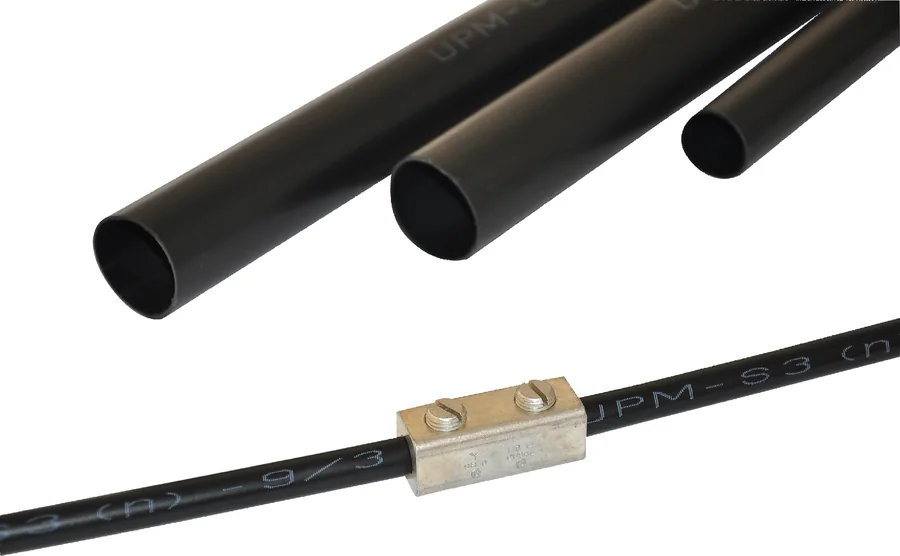
S3(n) · Medium and Heavy Wall Tubing
Product Overview
What S3(n) Does
Medium wall halogen-free polyolefin shrink tubing,with or without adhesive liner.Excellent insulation,mechanical protection and sealing of low voltage power cable joints and terminations.
Halogen free medium wall polyolefin tubing with 3:1 and 4:1 shrink for insulating sealing and protecting cable to 36 kV It is manufactured by Dalian United Polymer Material Co., Ltd. in Dalian China where radiation cross linking extrusion and molding are all performed in house under one quality system.
Key Benefits
- Halogen free and RoHS compliant for enclosed and public infrastructure
- 3:1 and 4:1 ratios that cover a wide diameter range from one stock size
- Operating range from -55 to 110 °C which exceeds most cable jacket ratings
- Adhesive lined option that seals against water at cable jacket repairs and joints
- Black as standard with other colours available for phase identification
Who It Is For
Who Benefits Most from S3(n)
The buyers and site teams this product was designed around
Tunnel Metro and Building Services Contractors
Halogen free is mandatory where a cable fire would fill an enclosed space with corrosive smoke.
Data Centre and Hospital Electrical Teams
Sensitive equipment and evacuation routes make halogen free the default specification.
LV and MV Jointing Crews
Medium wall tubing is the workhorse layer for jacket repair joint sealing and general insulation.
Panel Builders and OEMs
Insulating and sealing cable entries and internal connections inside assemblies.
Problems It Solves
Problems This Product Removes
Every one of these is a failure mode we have seen on real networks
Halogenated Smoke Is a Life Safety Issue in Enclosed Routes
S3(n) is halogen free and RoHS compliant so it can be specified in tunnels shafts metro stations and public buildings.
A 2:1 Tube Will Not Cover an Irregular Profile
3:1 and 4:1 shrink ratios let one size span from a large connector down to a small cable diameter.
Thin Wall Tubing Tears During a Duct Pull
Medium wall gives real mechanical protection where a thin wall would abrade through.
Sealing Needs Adhesive but Not Every Position Does
Single wall and adhesive lined dual wall are both offered so the same product family covers sealed and unsealed positions.
Application Scenarios
Where It Is Used
LV Cable Joint Sealing
Outer protection and sealing over a completed 1 kV joint.
Cable Jacket Repair
Covering a damaged outer sheath section.
Busbar and Connector Insulation
Insulating exposed connections inside enclosures.
Cable Entry Sealing
Sealing where cable passes through a gland plate or bulkhead.
Marine and Rail Cabling
Halogen free routes where smoke toxicity is regulated.
Technical Data
Specifications and Dimensions
Test methods and requirements taken directly from the manufacturing specification
Technical Data
| Property | Test Method | Requirement |
|---|---|---|
| Tensile Strength | ASTM D2671 | ≥12 MPa |
| Ultimate Elongation | ASTM D2671 | ≥300% |
| Heat Aging (136°C/168h) Tensile Strength Ultimate Elongation | ASTM D2671 | ≥10 MPa ≥200% |
| Water absorption (23°C/24h) | ASTM D2671 | ≤0.5% |
| Low-temperature flexibility (-55°C/4h) | ASTM D2671 | No cracking |
| Heat shock (200°C/4h) | ASTM D2671 | No cracking, dripping or flowing |
| Dielectric strength | ASTM D2671 | ≥15 kV/mm |
| Volume resistivity | ASTM D2671 | ≥1.0×10¹⁴Ω·cm |
| Copper corrosion | ASTM D2671 | No corrosion |
Dimensions
| Size S3(n) | As supplied(mm) Inner diameter D (min.) | After recovered (mm) Inner diameter d (max.) | Wall thickness t (nom.) | Standard length (m/pcs) |
|---|---|---|---|---|
| 8/2 | 8 | 2 | 1.8(with glue) | 1.0/1.22 |
| 9/3 | 9 | 3 | 1.9(with glue) | 1.0/1.22 |
| 12/4 | 12 | 4 | 2.2(with glue) | 1.0/1.22 |
| 16/5 | 16 | 5 | 2.5(with glue) | 1.0/1.22 |
| 19/6 | 19 | 6 | 2.4 | 1.0/1.22 |
| 22/6 | 22 | 6 | 2.4 | 1.0/1.22 |
| 25/8 | 25 | 8 | 2.5 | 1.0/1.22 |
| 28/6 | 28 | 6 | 2.9 | 1.0/1.22 |
| 33/8 | 33 | 8 | 2.9 | 1.0/1.22 |
| 35/12 | 35 | 12 | 2.6 | 1.0/1.22 |
| 40/12 | 40 | 12 | 2.8 | 1.0/1.22 |
| 45/13 | 45 | 13 | 2.9 | 1.0/1.22 |
| 55/16 | 54 | 16 | 3 | 1.0/1.22 |
| 65/19 | 65 | 19 | 3 | 1.0/1.22 |
| 75/22 | 75 | 22 | 3 | 1.0/1.22 |
| 85/25 | 85 | 25 | 3 | 1.0/1.22 |
| 95/25 | 95 | 25 | 3.2 | 1.0/1.22 |
| 105/30 | 105 | 30 | 3.2 | 1.0/1.22 |
| 115/34 | 115 | 34 | 3.2 | 1.0/1.22 |
| 130/36 | 130 | 36 | 3.2 | 1.0/1.22 |
| 140/42 | 140 | 42 | 3.3 | 1.0/1.22 |
| 160/50 | 160 | 50 | 3.4 | 1.0/1.22 |
| 175/58 | 175 | 58 | 3.4 | 1.0/1.22 |
| 200/65 | 200 | 65 | 3.5 | 1.0/1.22 |
| 230/75 | 230 | 75 | 3.5 | 1.0/1.22 |
| 260/85 | 260 | 85 | 3.5 | 1.0/1.22 |
| 300/100 | 300 | 100 | 4 | 1.0/1.22 |
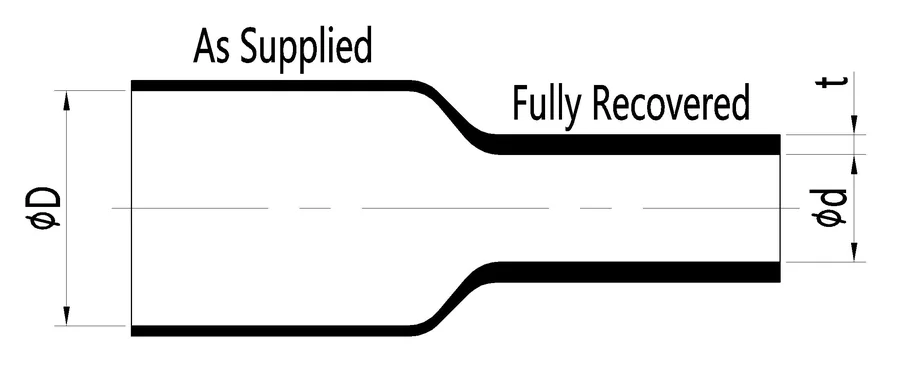
CROSS REFERENCE · Tyco-Raychem: MWTM /BSTS/ SST-M
Manufacturing and Quality
How It Is Made and Checked
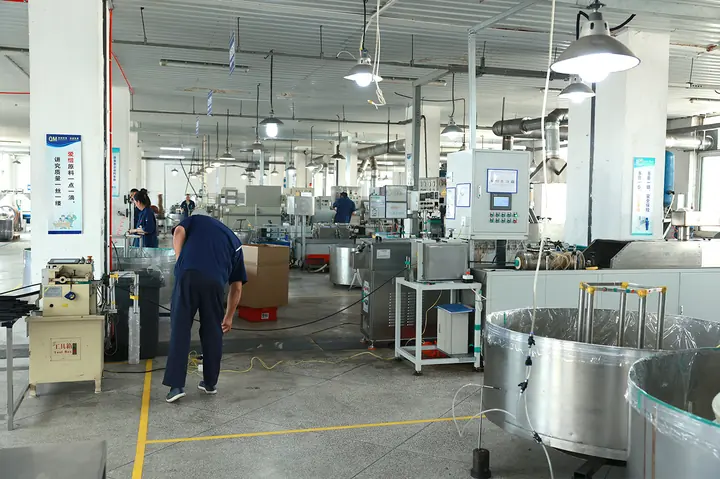
Compounding extrusion radiation cross linking expansion and test all under one roof in Dalian
-
01
Compounding
Base polyolefin antioxidants flame retardants and functional fillers are mixed to a recipe held under our own formulation control rather than bought as a masterbatch.
-
02
Extrusion
The compound is extruded to the required wall and diameter. Co extruded products form two or three layers in a single pass so no interface can trap air.
-
03
Radiation Cross Linking
Electron beam irradiation creates the cross linked network that gives the material its shape memory. This step is what makes the product heat shrinkable.
-
04
Expansion
The cross linked part is heated expanded to its supplied diameter and cooled under tension so the expanded shape is locked in until heat is applied again.
-
05
Test and Inspection
More than 90 percent of product performance tests are carried out in our own laboratory including tensile elongation heat aging dielectric strength and tracking resistance.
-
06
Packing and Traceability
Each batch carries a production record so a delivered part can be traced back to its compound lot and process parameters.
Certification
ISO 9001:2015
Quality management system
IATF 16949:2016
Automotive quality management
ISO 14001:2015
Environmental management
ISO 45001:2018
Occupational health and safety
GJB 9001C-2017
Defence quality management
UL 224 E341796
Extruded insulating tubing
CE / RoHS
European conformity and restricted substances
CCS / ABS / DNV
Marine classification society approvals
Comparison
How S3(n) Compares
An honest comparison so you can rule this product in or out quickly
| Product | Wall Class | Fire Behaviour | Typical Use |
|---|---|---|---|
| S3(n) | Medium wall | Halogen free | Enclosed routes public buildings |
| S3(nh) | Heavy wall | Halogen free | Enclosed routes needing more mechanical protection |
| S3 | Medium wall | Flame retardant | Marine offshore wet and underground |
| S3(h) | Heavy wall | Flame retardant | Marine offshore heavy duty |
Use Guide
How to Select and Install S3(n)
The sequence our engineers walk customers through on every first installation
-
01
Measure the Largest and Smallest Diameter
The tube must slide over the largest point and recover tight onto the smallest. That ratio decides whether you need 3:1 or 4:1.
-
02
Decide If You Need Adhesive
Choose adhesive lined dual wall wherever water must be excluded. Choose single wall for pure insulation inside a dry enclosure.
-
03
Cut to Length with Allowance
Allow at least 25 mm of overlap onto sound material at each end and remember the tube shortens slightly as it recovers.
-
04
Clean and Abrade
Wipe the surface and lightly abrade a glossy jacket so the adhesive keys properly.
-
05
Shrink from One End
Work steadily from one end to the other so air escapes ahead of the heat.
-
06
Check the Adhesive Bead
On dual wall a continuous bead at both ends confirms the seal.
FAQ
S3(n) Frequently Asked Questions
The questions buyers ask before they place an order
What does halogen free mean in practice
What is the difference between S3(n) and S3
When do I need 4:1 instead of 3:1
Can it be used on a 36 kV cable
Is the adhesive suitable for a polyethylene jacket
What colours are available
Still need an answer ask our engineers on WhatsApp
Related
Related Products
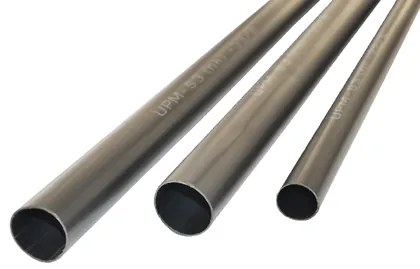
S3(nh) Heavy Wall HF
Thickened halogen free polyolefin tubing where the same fire performance is needed with far more mechanical protection
VIEW DETAILS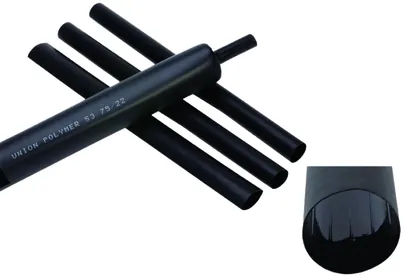
S3 Medium Wall FR
Flame retardant medium wall tubing formulated for wet and underground service on vessels platforms shipyards and harbours
VIEW DETAILS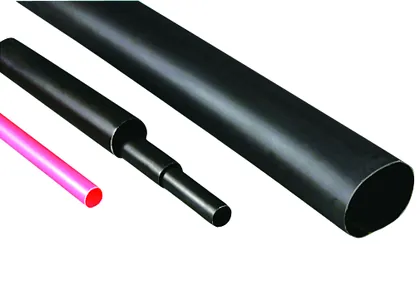
S3(h) Heavy Wall FR
The toughest tube in the S3 family combining flame retardant marine formulation with a thickened heavy wall
VIEW DETAILS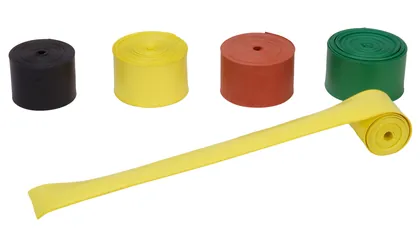
T1 Heat Shrink Tape
Adhesive lined heat shrink tape that seals and insulates irregular shapes where no tube or sleeve will fit
VIEW DETAILS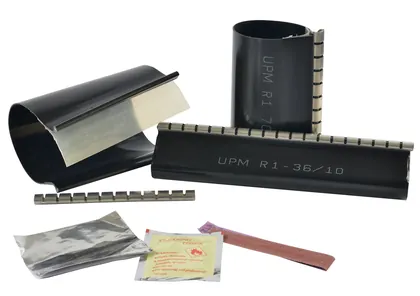
R1 Repair Sleeve
A rail and channel closure sleeve that repairs a damaged cable jacket without cutting the cable or removing the terminations
VIEW DETAILSGet a Quotation for S3(n)
Send us the voltage class conductor size and quantity and we will return a part number a price and a lead time. No form to fill in.