Start with the Cable Not the System Voltage
The single most common selection error is using the nominal system voltage instead of the cable rating. An 11 kV network is normally cabled with 6.35/11 kV cable which sits inside the 8.7/15 (17.5) kV accessory class. A 33 kV network is normally cabled with 19/33 kV cable which sits inside the 26/35 (40.5) kV class.
The cable rating is printed on the outer sheath as two numbers separated by a slash. The first is U0 the phase to earth voltage and the second is U the phase to phase voltage. Match the accessory class to those numbers.
| Cable Rating | Accessory Family | Typical Networks |
|---|---|---|
| 0.6/1 (1.2) kV | C1 | 400 V and 1 kV distribution |
| 8.7/15 (17.5) kV | C15 | 6 kV 10 kV 11 kV 15 kV |
| 26/35 (40.5) kV | C35 | 20 kV 24 kV 33 kV 35 kV |
Decide Termination or Joint and Indoor or Outdoor
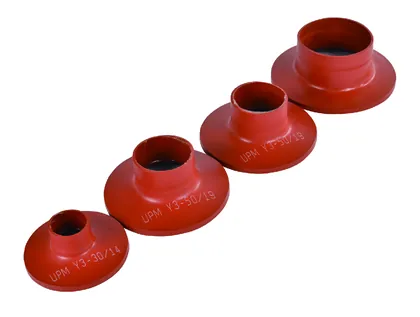
Part numbers encode this decision. NSY is an indoor termination WSY is an outdoor termination and JSY is a joint. The difference between NSY and WSY is not the electrical layers underneath but the rain sheds that build creepage distance on an exposed surface.
If the position is inside a cable box a ring main unit or a switchgear compartment it is an indoor termination. If it can see the sky it is an outdoor termination even if it is under a canopy.
- NSY — indoor termination
- WSY — outdoor termination with rain sheds
- JSY — straight through joint
Read the Conductor Band and the Core Count
Kits cover conductor size in bands rather than individual sizes. A 185 mm² conductor sits in the 150 to 240 mm² band. The last digit of the part number encodes the band and the digit before it encodes the core count.
For C1 the range runs from 4 mm² to 400 mm² across six bands and one to six cores. For C15 and C35 the range covers single core and three core cable with C35 reaching 630 mm².
Where a conductor sits close to the edge of a band send us the actual cable dimensions. The dimension that matters is the diameter over the insulation not the nominal conductor cross section.
Set the Pollution Class for Outdoor Positions
The shed count in a standard outdoor kit assumes a normal pollution class. Coastal industrial cement and desert sites all need more. This is the variable that most often gets left at the default and then causes flashovers two years later.
| Pollution Level | Sheds per Phase | Typical Site |
|---|---|---|
| Light | 2 to 3 | Inland rural clean air |
| Medium | 3 to 4 | Suburban light industry |
| Heavy | 4 to 6 | Coastal cement works mining |
| Very heavy | 6 or more | Salt spray zone heavy chemical |
Confirm Before You Order
Send the cable datasheet or a photograph of the cable cross section with a rule across it on WhatsApp. Tell us the voltage class the conductor size the core count and whether the position is a termination or a joint. We will return the exact part number before you commit to an order.
That five minute check costs nothing and removes the most expensive category of error in this business which is a crew opening a kit in a trench and finding it does not fit.