CN Series
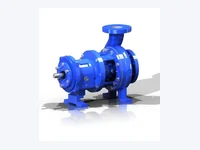
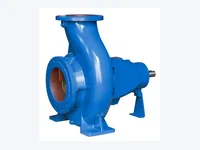
ANSI CN Series Water Centrifugal Pump
End-suction water pump built to ANSI/ASME B73.1 with a full open impeller and ANSI B16.5 flanges
View specifications
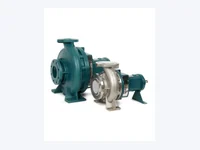
EN733 / DIN24255
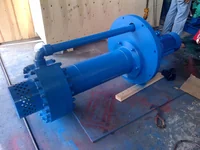
Vertical Wet-Pit
General Purpose
Efficiency on one side, solids passage and adjustability on the other. The choice is decided by the water, not the pump.
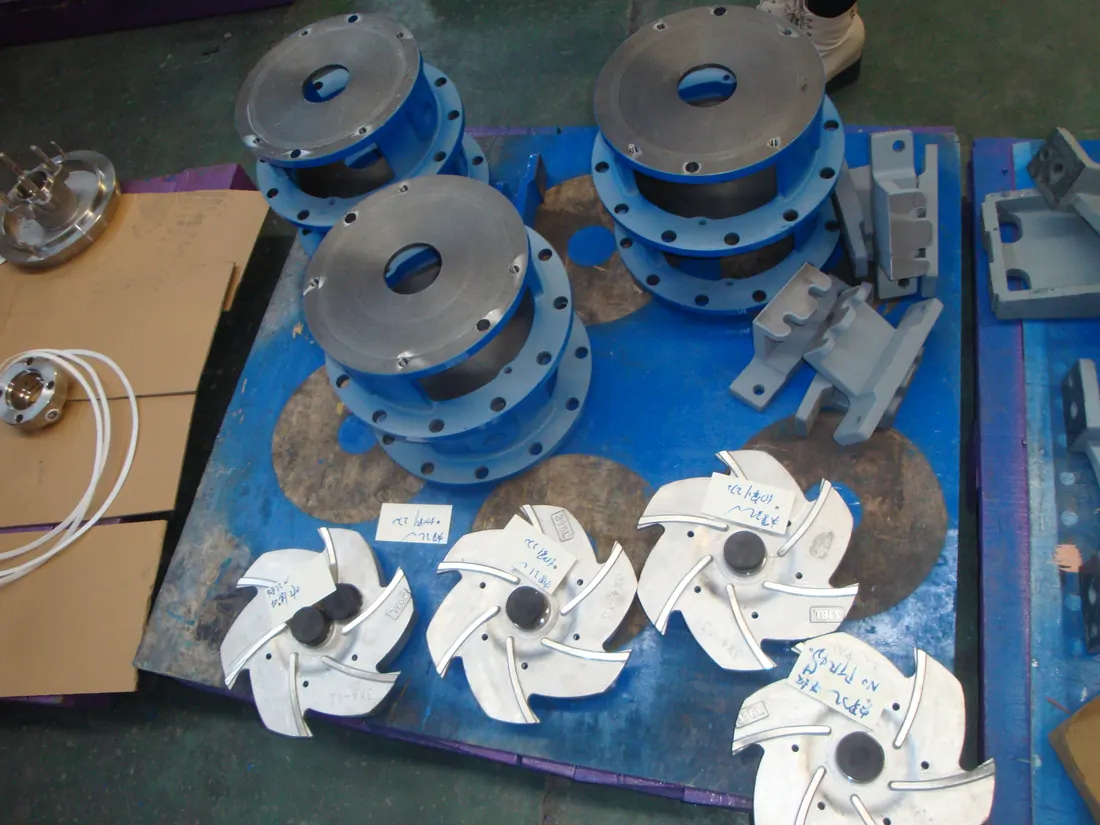
An impeller is either shrouded on both sides, on one side, or on neither. That single geometric decision changes efficiency, solids handling and how the pump wears.
The Flowsteer range uses all three: a full open impeller on the ANSI CN series, closed impellers on the ISO CI and VNP series, and a choice of closed or semi-open on the KCP.
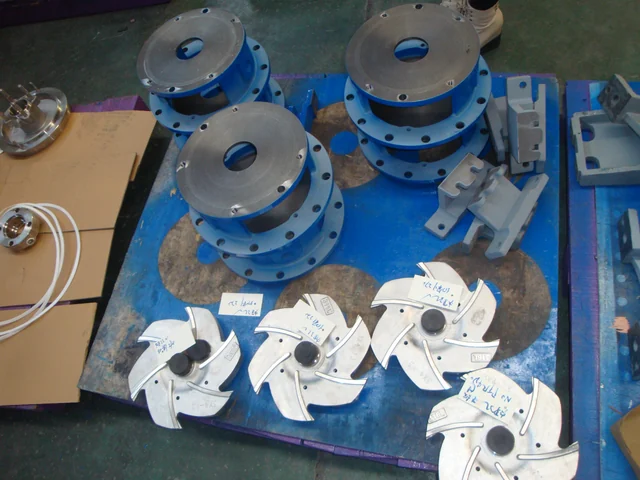
A closed impeller has shrouds on both the front and back of the vanes, forming enclosed passages.
That geometry gives the highest hydraulic efficiency because leakage from discharge back to suction is limited by wear rings rather than by a running clearance.
The cost is solids handling. Anything fibrous entering the impeller has a shroud to catch on, and once a passage starts to block it does not clear itself.
Closed impellers are the right choice for clean and treated water where efficiency matters over years of continuous running.
A full open impeller has no shrouds; the vanes run against the casing wall with a set clearance.
There is nothing for rag and fibre to wrap behind, which is why open impellers are chosen for waste and water treatment duties. The Flowsteer ANSI CN series uses a full open impeller for exactly this reason.
Efficiency is lower because the running clearance leaks, and that leakage grows as the pump wears. The compensation is that the clearance can be reset from outside the casing, restoring head without a strip-down.
A semi-open impeller carries a shroud on the back only. It sits between the two in both efficiency and solids passage.
The Flowsteer KCP series offers closed or semi-open impellers so the selection can trade one against the other for a given effluent duty.
Clean or treated water, continuous running, efficiency is the priority — closed.
Solids-bearing water, rag and fibre present, availability is the priority — open.
Effluent with moderate solids where efficiency still matters — semi-open.
Abrasive water — expect wear whichever you choose, and prefer a design whose clearance can be reset.
Record the clearance set at commissioning. It is the reference for every later adjustment.
When delivered head falls without a process change, the clearance is the first thing to check.
Resetting the clearance is a far cheaper way to recover performance than replacing an impeller, and it can usually be done without removing the pump.
End-suction water pump built to ANSI/ASME B73.1 with a full open impeller and ANSI B16.5 flanges
View specifications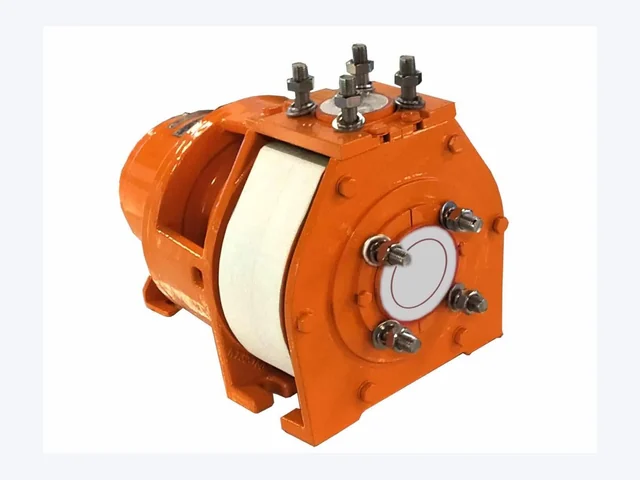
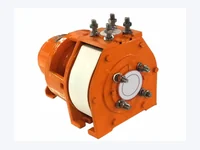
Horizontal single-stage pump in PP, PE and UHMW-PE for water that attacks metal wetted parts
View specifications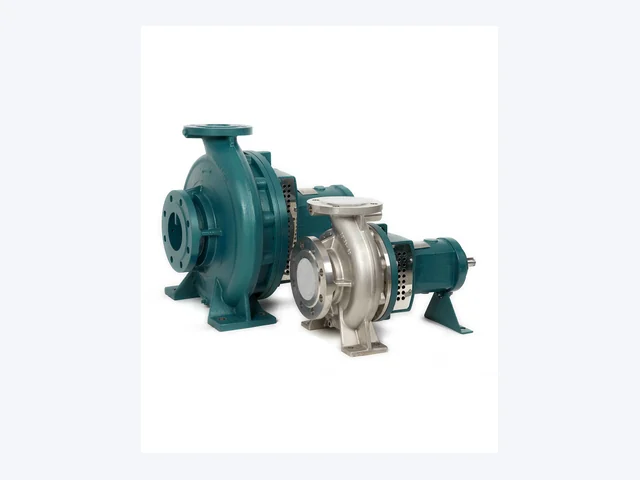
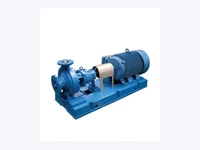
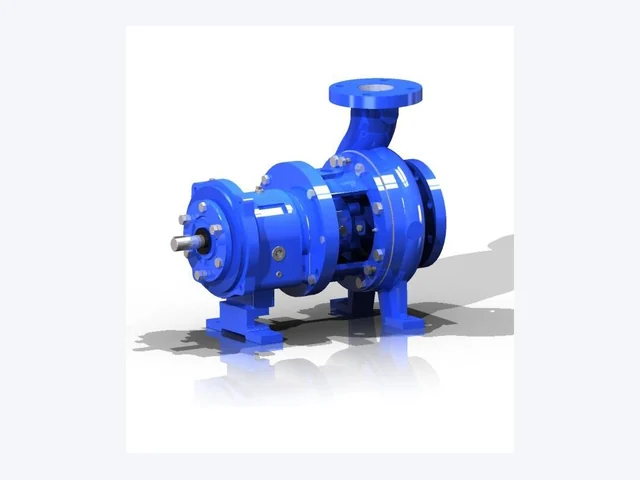
ISO 2858 and ISO 5199 back-pull-out end-suction pump, fully interchangeable with other ISO brands
View specifications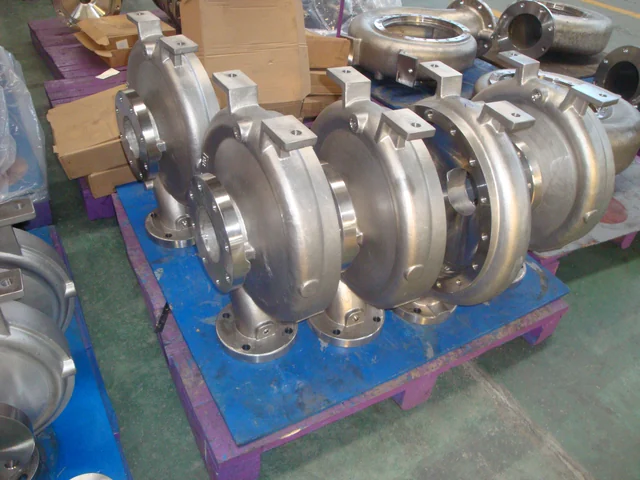
Grey iron through to UHMW-PE. What each wetted material is for, and the failure it is chosen to prevent.
Read more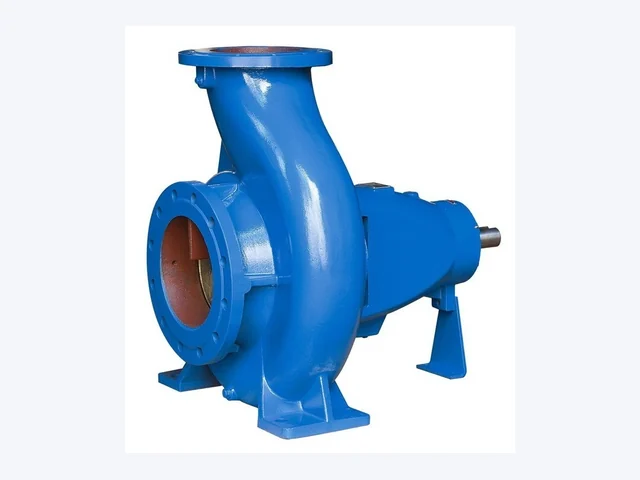
A published envelope such as 2 to 1100 m3/h is a range of sizes, not the capability of any one pump. Here is how to get from it to a selection.
Read more
A short list of the things that actually decide how long a water pump lasts, drawn from how these pumps are built rather than from general advice.
Read moreA full open impeller, chosen for waste and water treatment duties where suspended solids are present.
Not as a field change. The casing, clearance arrangement and shaft loading all differ. Ask us to review the duty rather than modifying the pump.
At the same duty point it is usually less efficient, and the gap widens as the running clearance opens up. Resetting the clearance on schedule is what keeps the difference small.
Closed or semi-open, selected against the solids loading, which is published as approximately 10 percent.
Send the pump details and the duty point and we will tell you what this means for your installation rather than in general.