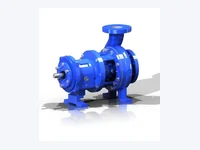
FA Series
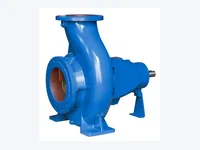
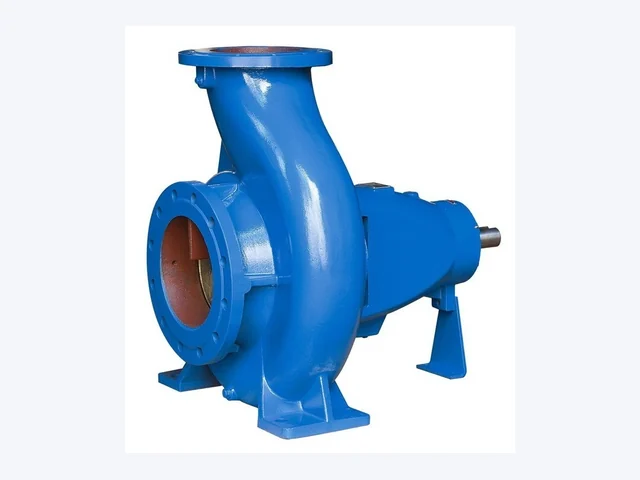
FA Series EN733 Horizontal Centrifugal Pump
BS EN733 / DIN24255 end-suction pump, 2 to 1100 m³/h and head to 152 m, for building services fire and irrigation
View specifications
EN733 / DIN24255
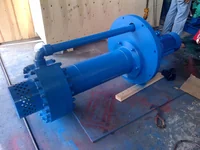
Vertical Wet-Pit
General Purpose
A published envelope such as 2 to 1100 m3/h is a range of sizes, not the capability of any one pump. Here is how to get from it to a selection.
When a series publishes flow from 2 to 1100 m³/h and head from 2 to 152 m, as the Flowsteer FA series does, no single pump delivers both extremes. The figures describe the range the series covers across all its sizes and speeds.
Getting from that envelope to a pump means fixing four things: the flow, the head, the speed and the liquid.
Flow, in m³/h. What the process actually needs, not the pipe size.
Total head, in metres. Static lift plus friction losses at the design flow, not just the height difference.
Supply frequency. The FA publishes 1450 to 2900 rpm at 50 Hz and 1750 to 3500 rpm at 60 Hz, and the curve moves with speed.
The liquid: temperature, solids content and chemistry. These decide materials and impeller type, and they can rule out a hydraulically perfect selection.
The head-flow curve falls from left to right. Where it crosses your system curve is where the pump will actually run — not necessarily where you wanted it to.
Efficiency is plotted as a separate curve or as islands across the chart. The peak is the best efficiency point.
NPSH required rises with flow. Check it against the NPSH available in your suction system at the worst case, not the design case.
Power rises with flow on most water pumps. Size the motor for the whole operating range, not just the design point.
Efficiency is the obvious reason, and on a pump running continuously it is a real operating cost.
The less obvious reason is mechanical. Running far from the best efficiency point puts uneven radial load on the impeller, which deflects the shaft and shortens both seal and bearing life.
A pump running at 60 percent of its best efficiency flow is not merely wasteful; it is wearing out faster.
Sizing on the pipe diameter rather than on the flow required.
Adding a safety margin to the head. The pump then runs further left on its curve, at lower efficiency and higher radial load, and it still delivers the flow the system allows.
Ignoring the supply frequency, which shifts the entire curve.
Selecting on the duty point alone and leaving the material and impeller decisions to the supplier.
Flow in m³/h and total head in metres.
Supply frequency and voltage.
Liquid description, temperature and solids percentage.
Existing pump details if this is a replacement — nameplate, size designation and flange rating.
Pipe class and flange standard already installed.
BS EN733 / DIN24255 end-suction pump, 2 to 1100 m³/h and head to 152 m, for building services fire and irrigation
View specifications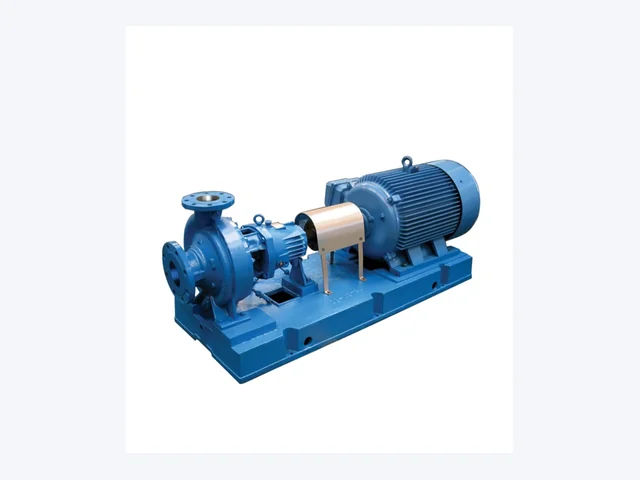
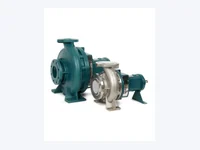
Process-duty water pump from DN 25 to DN 400 with flow to 600 m³/h for water and waste water
View specifications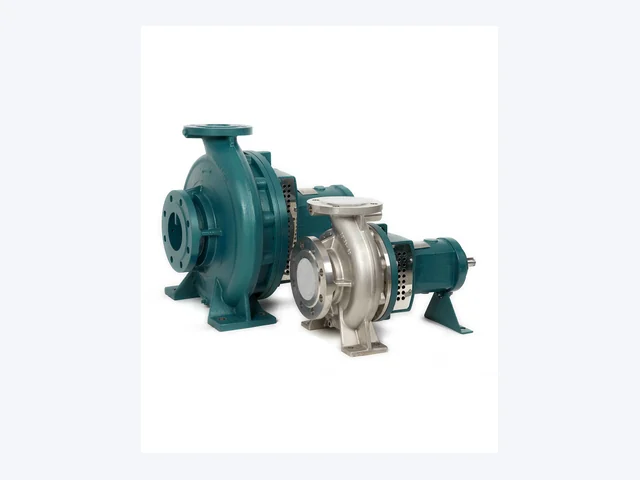
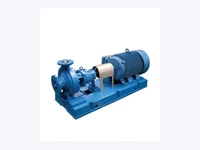
ISO 2858 and ISO 5199 back-pull-out end-suction pump, fully interchangeable with other ISO brands
View specifications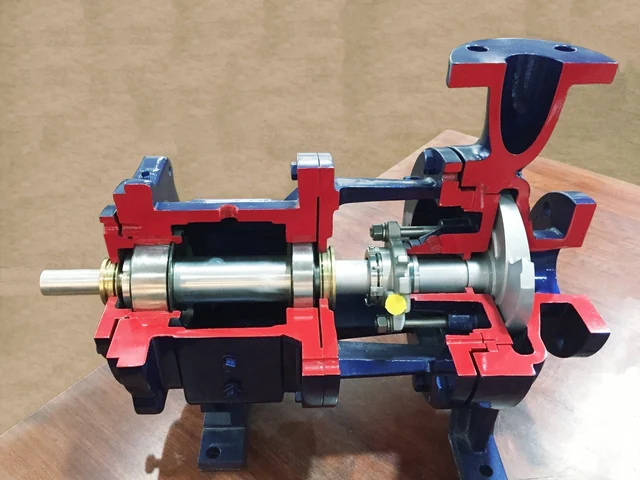
Cavitation is not a pump defect. It is a suction system defect that destroys the pump, and it is almost always designed in rather than developed.
Read more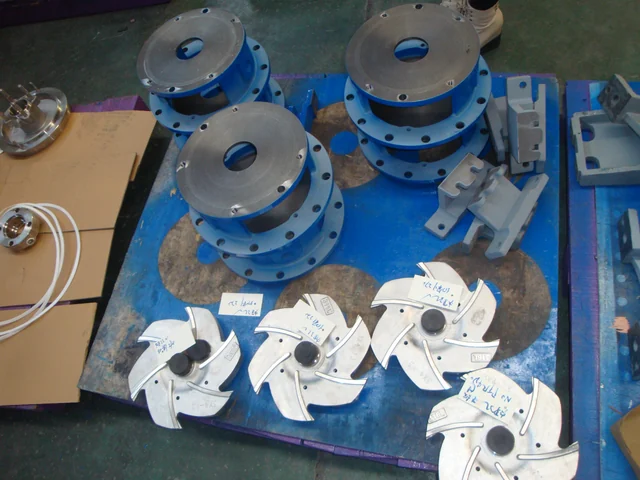
Efficiency on one side, solids passage and adjustability on the other. The choice is decided by the water, not the pump.
Read more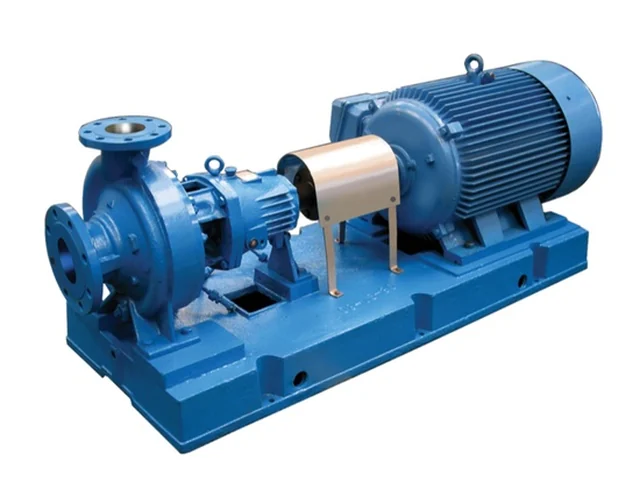
Most premature pump failures are installation failures. Foundation, pipework and alignment decide more about pump life than the pump does.
Read moreNo. A published envelope such as 2 to 1100 m³/h describes what the series covers across all its sizes and speeds. Each size covers a portion of it.
Generally no. Extra head pushes the pump left on its curve, away from best efficiency, with higher radial load. Calculate the head properly instead.
Yes, substantially. The FA series publishes 1450 to 2900 rpm at 50 Hz and 1750 to 3500 rpm at 60 Hz. Always state the frequency.
Tell us that plus what the process needs. Pipe size alone does not determine flow, and selecting from it is the most common way to end up with the wrong pump.
Send the pump details and the duty point and we will tell you what this means for your installation rather than in general.