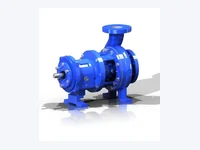
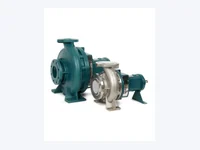
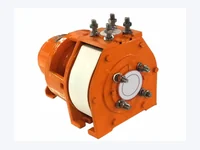
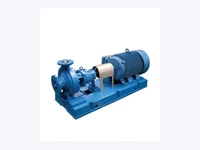
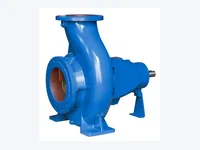
CN Series
ANSI CN Series Water Centrifugal Pump
End-suction water pump built to ANSI/ASME B73.1 with a full open impeller and ANSI B16.5 flanges
View specifications
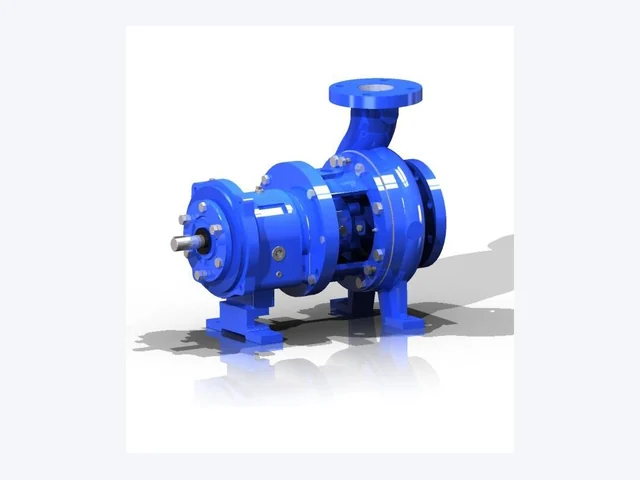
EN733 / DIN24255
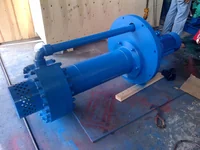
Vertical Wet-Pit
General Purpose
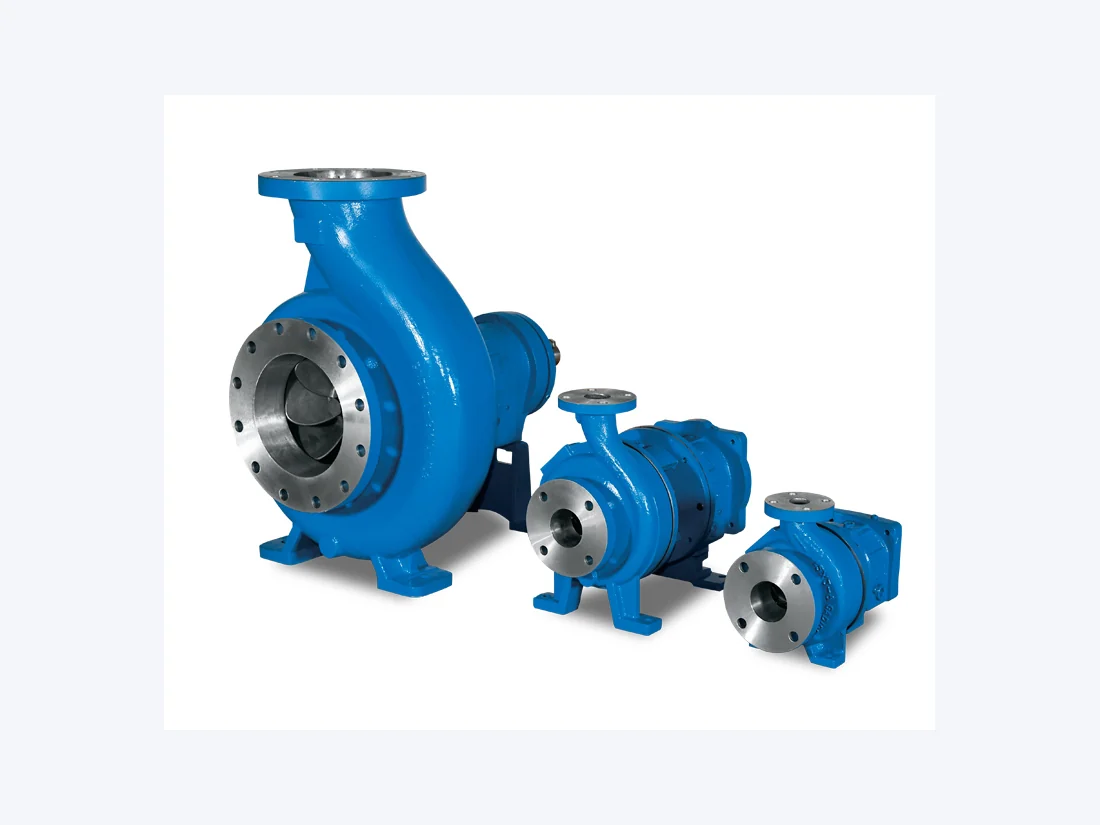
B73.1 is a dimensional standard, not a performance standard. Knowing the difference is what makes a replacement pump drop straight onto an existing baseplate.
ANSI/ASME B73.1 covers horizontal end-suction centrifugal pumps for chemical and water process service. It is one of the most quoted pump standards in the world and one of the most misunderstood.
What it fixes is geometry. What it does not fix is how well the pump performs. Both facts matter when a pump is being replaced.
The standard sets the external dimensions of the pump: the foot and baseplate bolt pattern, the shaft centreline height above the baseplate, the positions of the suction and discharge flanges relative to that centreline, and the shaft extension diameter and length.
It also fixes the pump as a back pull-out design, so the rotating assembly can be withdrawn with the casing left bolted into the pipework.
Two B73.1 pumps of the same size designation will therefore bolt onto the same baseplate, line up with the same pipe spools and accept the same coupling, even if they come from different manufacturers and different decades.
It does not fix the hydraulic curve. Impeller design, vane count, efficiency and NPSH required are the manufacturer's business, and they differ.
It does not fix materials, although it does set requirements for the casing design. A cast iron B73.1 pump and a stainless B73.1 pump are dimensionally identical and behave very differently in the same water.
It does not guarantee the replacement pump will hold your duty point. Always check flow and head against the published curve when the brand changes.
Plant foundations, grouted baseplates and pipe spools outlive pumps by decades. A pump that honours B73.1 can be replaced without breaking any of them.
That is worth real money. Replacing a non-standard pump usually means new pipe spools at minimum, and sometimes new grouting and a new motor stool.
It also shrinks the spares store: one set of bearings, seals and shaft sleeves covers more of the pump population when the population shares a standard.
B73.1 fixes where the flanges are; ANSI B16.5 fixes what they are. The Flowsteer CN series is available with ANSI B16.5 150LB and 300LB flanges, in both flat face and raised face.
A 300LB flange is thicker and has a different bolt circle in most sizes, so the rating has to match the pipe class already installed. Getting the position right and the rating wrong still stops the installation.
B73.1 allows a range of power frames. The Flowsteer CN series publishes four — S, M, L and XL — which lets the shaft diameter and bearing size be matched to the duty rather than fixed at one compromise.
A larger frame means a stiffer shaft and lower deflection at the seal face, which is why heavily loaded duties are given a bigger frame even when the hydraulics do not require it.
End-suction water pump built to ANSI/ASME B73.1 with a full open impeller and ANSI B16.5 flanges
View specifications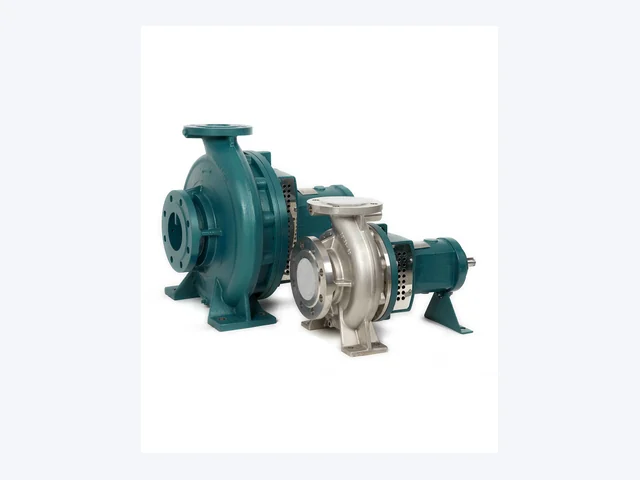
One standard says where the holes go. The other says how long the pump should last. Specifications usually need both.
Read more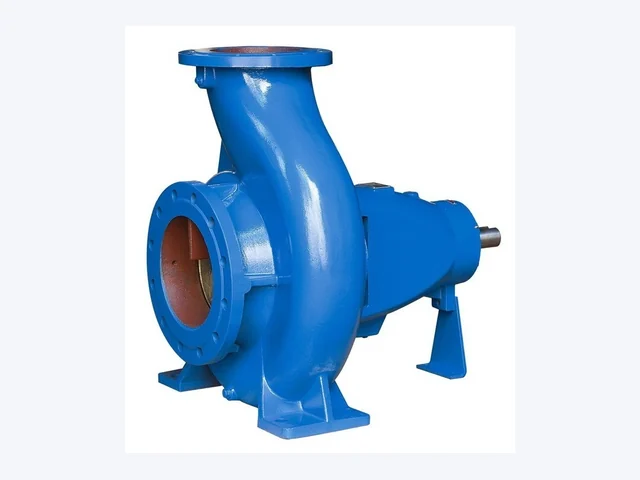
Two names, one set of dimensions. Why both still appear on specifications and what they fix on an end-suction pump.
Read more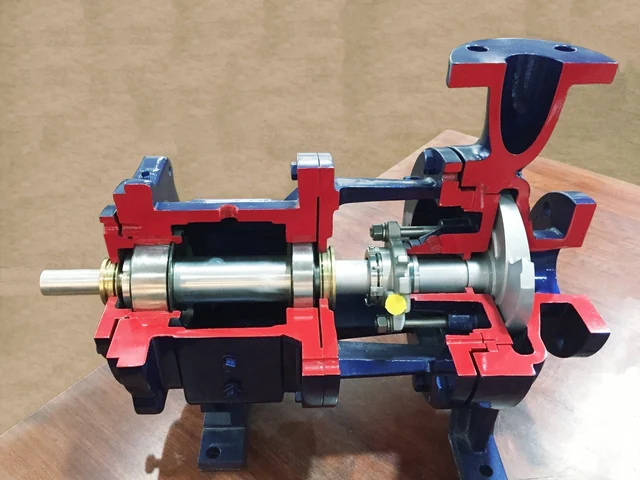
The single construction feature that decides whether a seal change takes two hours or two days.
Read moreDimensionally, yes, provided the size designation matches. Hydraulically, not necessarily — check the duty point against the new pump's curve.
No. B73.1 covers horizontal end-suction pumps. B73.2 covers vertical in-line pumps.
ANSI B16.5 150LB and 300LB, both in flat face and raised face.
The CN series, which runs 1 inch to 10 inch with capacity to 400 m³/h.
Send the pump details and the duty point and we will tell you what this means for your installation rather than in general.