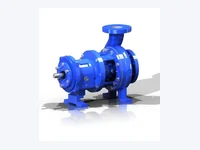
CI Series
ISO CI Series Water Centrifugal Pump
ISO 2858 and ISO 5199 back-pull-out end-suction pump, fully interchangeable with other ISO brands
View specifications
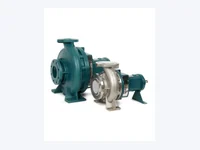
EN733 / DIN24255
Vertical Wet-Pit
General Purpose
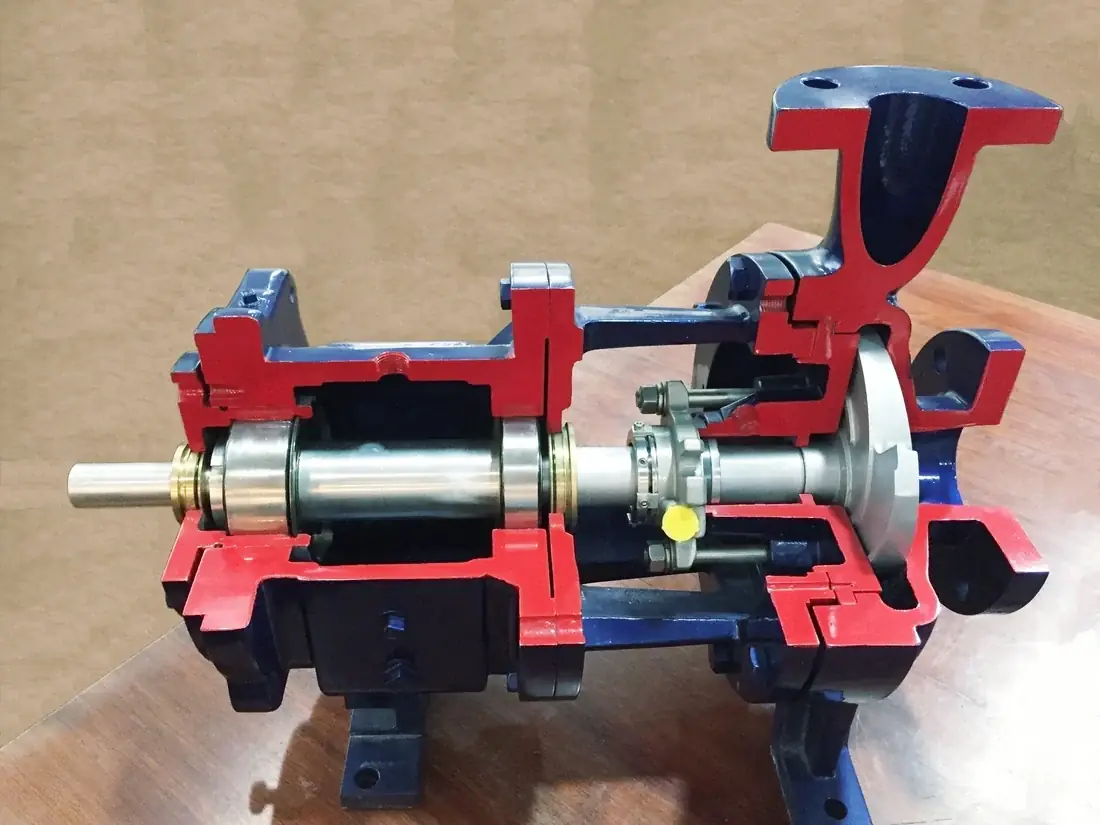
One standard says where the holes go. The other says how long the pump should last. Specifications usually need both.
ISO 2858 and ISO 5199 are quoted together so often that they are frequently treated as one standard. They are not, and the difference matters when a specification is being written or checked.
ISO 2858 is dimensional. ISO 5199 is technical. A pump can meet one and not the other.
ISO 2858 fixes the sizes, flange positions, shaft heights and nominal impeller diameters of end-suction centrifugal pumps rated at 16 bar.
Sizes are named by designation — for example 80×50-200, meaning an 80 mm suction branch, a 50 mm discharge branch and a 200 mm nominal impeller diameter.
Any two ISO 2858 pumps sharing a designation will mount on the same baseplate and connect to the same pipe spools. That is what lets the Flowsteer CI series state that it is fully interchangeable with other brands.
ISO 5199 covers what happens inside the pump: permissible shaft deflection at the seal faces, minimum bearing life, seal chamber dimensions, casing wall thickness allowances and testing requirements.
It exists because dimensional compliance alone says nothing about durability. A pump can be perfectly dimensioned and still deflect enough at the shaft to wreck a mechanical seal.
When a consulting engineer writes ISO 5199 into a specification, that is usually what they are protecting against.
The designation is the part that has to match when a pump is replaced. The brand does not.
In 80×50-200, the first figure is the suction branch in millimetres, the second the discharge branch, and the third the nominal impeller diameter. The Flowsteer CI series covers 50×32-160 through 250×200-400.
If the existing pump's nameplate has been painted over, the branch sizes and the impeller diameter measured from the casing will usually recover the designation.
Quote both standards. ISO 2858 secures the interchangeability; ISO 5199 secures the engineering.
Add the wetted material explicitly. Neither standard specifies it, and the CI series offers CI, SS304 and SS316.
State the duty point separately. Neither standard fixes the hydraulic curve, so the pump still has to be selected.
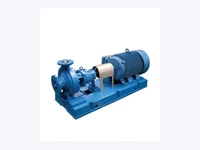
ISO 2858 and ISO 5199 back-pull-out end-suction pump, fully interchangeable with other ISO brands
View specifications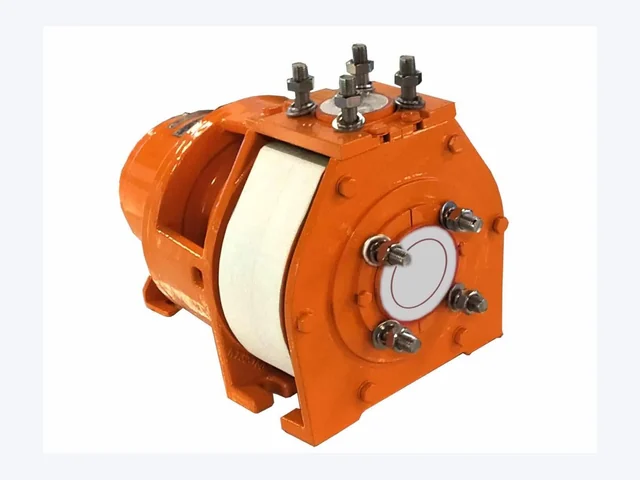
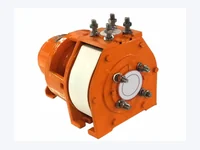
Horizontal single-stage pump in PP, PE and UHMW-PE for water that attacks metal wetted parts
View specifications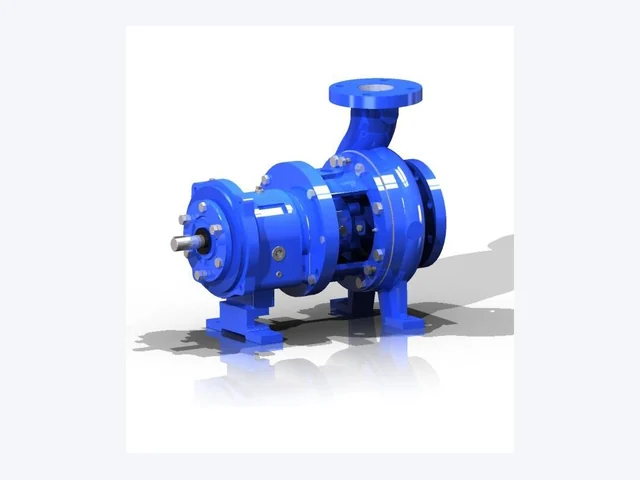
B73.1 is a dimensional standard, not a performance standard. Knowing the difference is what makes a replacement pump drop straight onto an existing baseplate.
Read more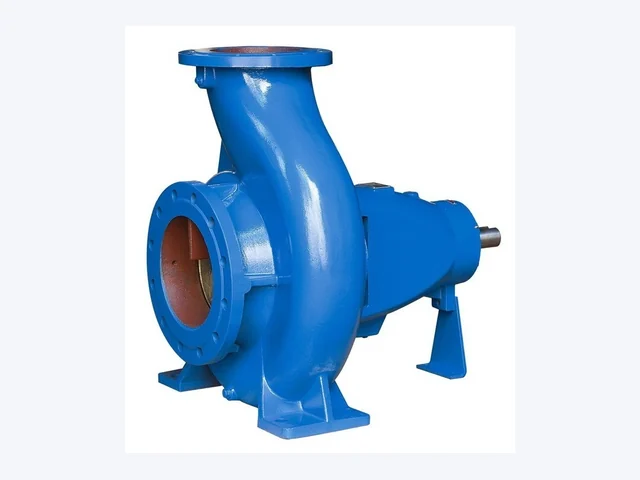
Two names, one set of dimensions. Why both still appear on specifications and what they fix on an end-suction pump.
Read more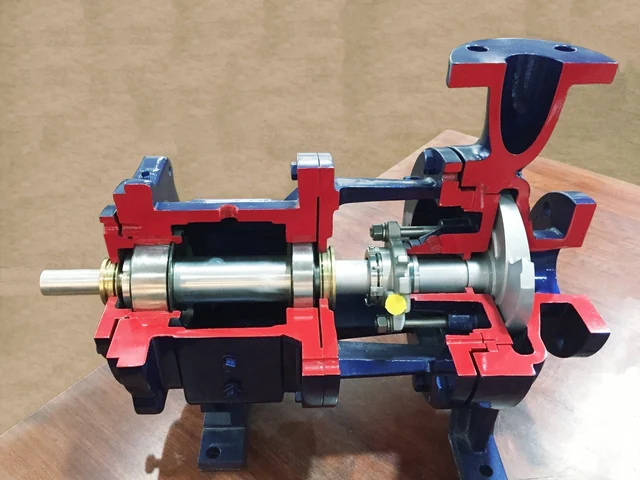
The single construction feature that decides whether a seal change takes two hours or two days.
Read moreYes, and many do. ISO 2858 is about dimensions; a pump can match them while falling short of the shaft deflection and bearing life requirements of ISO 5199.
A 125 mm suction branch, a 100 mm discharge branch and a 250 mm nominal impeller diameter.
Yes. The CI series is built to ISO 2858 dimensions and the ISO 5199 engineering class.
No. It fixes dimensions only. Check the duty point against the new pump's published curve.
Send the pump details and the duty point and we will tell you what this means for your installation rather than in general.