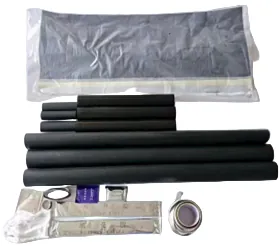
Why Sheds Exist
Pollution flashover is not caused by rain. It is caused by a conducting film that forms when accumulated salt or dust is wetted by dew, mist or the first rain after a dry period. Leakage current flows across that film, dries part of it, and the resulting dry band arcs. Enough dry band arcing and the termination flashes over.
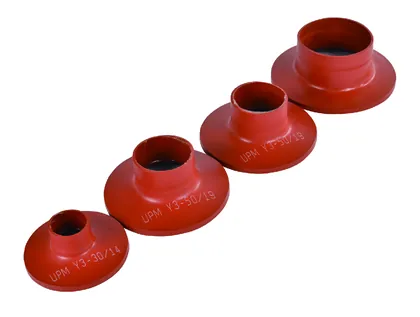
A rain shed breaks that path. The underside of each skirt stays dry and the surface path the leakage current has to take gets much longer without the termination getting any taller.
The Variable That Gets Left at Default
A standard outdoor kit ships with a shed count sized for a normal inland pollution class. Coastal, cement, mining, desert and heavy chemical sites all need more. Because the kit works perfectly well for the first year or two, the under specification usually surfaces as flashovers well after the installation is signed off.
| Pollution Level | Sheds per Phase | Typical Site |
|---|---|---|
| Light | 2 to 3 | Inland rural clean air |
| Medium | 3 to 4 | Suburban light industry |
| Heavy | 4 to 6 | Coastal cement works mining |
| Very heavy | 6 or more | Salt spray zone heavy chemical |
Reading the Signs on an Existing Installation
- Flashovers clustering after the first rain following a dry spell — classic pollution flashover
- Visible surface tracking marks on the outer insulation — the creepage path is being used
- Failures on outdoor terminations only while indoor terminations on the same feeder are fine
- A cleaning regime that visibly cannot keep up with deposition between cycles
Retrofitting Is Usually the Answer
If the underlying termination is electrically sound the fix is to add sheds rather than rebuild. Y3 sheds slide over a finished termination and shrink into place with mastic collars sealing each one, so no electrical layer has to be disturbed. Each retrofit takes under twenty minutes.
If the outer insulation already shows tracking or erosion, replace that layer first. Covering damaged insulation hides the problem instead of solving it.
Installation Points That Matter
- Slide every shed on before applying heat to any of them
- Space sheds evenly — an uneven gap leaves one long unbroken creepage section that becomes the weak point
- Heat the collar not the skirt so the mastic flows and seals
- Check for a visible mastic bead at every collar edge before finishing