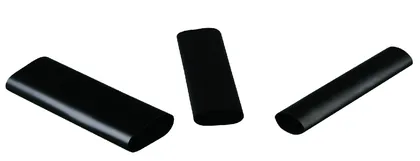
The Basic Difference
A heat shrink accessory is made from a cross linked polymer that has been expanded and cooled under tension. Applying heat releases the stored shape memory and the part recovers tightly onto the cable and locks there permanently.
A cold shrink accessory is a pre expanded elastomeric body held open on a removable core. Pulling the core lets stored elastic energy contract the body onto the cable. No heat is applied and the body remains under permanent elastic tension.
Where Each One Wins
| Factor | Heat Shrink | Cold Shrink |
|---|---|---|
| Conductor size range per part | Wide — one size spans several conductor bands | Narrow — sizing is critical |
| Installation | Torch or hot air gun required | No heat source needed |
| Hazardous area | Flame permit usually required | No ignition source |
| Cold weather | Works down to -55 °C in service | Elastic recovery slows in extreme cold |
| Shelf life | Five years in a sealed carton | Limited — the body is under permanent tension |
| Cost | Lower | Higher |
| Re entry | Cut off and replace | Cut off and replace |
Why Heat Shrink Dominates Distribution Networks
The wide conductor range per part number is the practical reason. A utility with dozens of conductor sizes on its network can cover them with a handful of heat shrink part numbers where cold shrink would need many more.
Shelf life matters too. A cold shrink body sits under permanent elastic tension from the day it is made which limits how long it can be stored. A heat shrink kit sealed in its carton holds for five years which suits a store that buys in bulk.
Where Cold Shrink Is the Better Choice
If a flame permit is genuinely difficult to obtain, if the crew has no reliable heat source, or if the work is in a confined space where a torch is unwelcome, cold shrink solves a real problem that heat shrink does not.
It is also faster per termination for a crew that installs the same size repeatedly and has the sizing correct.
The Decision in Practice
Most distribution utilities standardise on heat shrink for cost and range and hold a small quantity of cold shrink for the positions where a flame is impractical. That is a sensible answer and we would rather tell you that than pretend one technology wins everywhere.