
What Is Digital Fabric Printing
Digital fabric printing sends a design straight from a computer to piezoelectric inkjet heads that spray dye onto cloth, with no screens, no rotary cylinders and no print paste to wash away. That removes both the setup cost and the effluent, which is why it has changed what a short textile run costs and how quickly it can be delivered. This guide covers the process, its colour range, its environmental case and where it fits in a buyer's schedule.
How the Process Works
The design is brought into a computer in digital form and prepared through a colour separation and tracing system. Software then drives a micro piezoelectric inkjet head that sprays specialist dye directly onto the fabric to form the pattern. Nothing physical is made in between: there is no screen to expose, no engraved cylinder to prepare and no colour paste to mix and match by hand.
Where the Technology Came From
Digital textile printing emerged in the mid-1990s as computing power made it practical to drive inkjet heads at production speed and resolution. It combines machinery with computer information technology rather than being a refinement of an existing press, and it has been improving steadily since. For buyers this matters because the economics of textile printing changed rather than simply got cheaper.
No Screens, No Cylinders, No Wastewater
Because dye is delivered only where the pattern needs it, there is no surplus print paste to discharge and no colour kitchen effluent from the sizing room. Film, silk screens and engraved silver cylinders are all removed from the workflow along with their material consumption. That eliminates a significant pollution stream and removes a standing cost from the factory rather than trading one for another.
Colour Range and Design Freedom
Digital printing works in four-colour process supported by spot colours and can reproduce in the region of 16.7 million colours, so photographic imagery, fine gradients and painterly artwork reproduce directly. Conventional screen-based textile printing limits a design to the number of screens you are prepared to pay for; digital printing does not, which means a complex design costs no more to run than a simple one.
Short Runs and Personalisation
Conventional textile printing only pays once a run reaches a certain scale, because setup has to be spread across enough metres to be worth it. Digital printing removes that threshold, so a single length, a sampling metre or a one-off personalised piece is commercially sensible. Markets that used to be closed to custom textiles, from home decoration to clothing and travel goods, become reachable at small volumes.
Speed From Design to Finished Cloth
Under traditional processes, getting a design from approval to delivered product took several days and often considerably longer once screens or cylinders were in the queue. With digital printing, once the customer has chosen the pattern and the fabric, printed cloth can be produced in a matter of hours rather than days. That collapses the sampling cycle and lets a design be revised and reprinted while the buyer is still deciding.
What Digital Printing Means for Designers
For a textile designer the process removes the compromise between the design in their head and the design the production route can carry. Artwork does not have to be simplified into a limited palette of separated colours, and a finished piece can be seen on the intended cloth rather than imagined from a colour standard. That shortens the distance between an idea and a saleable sample.
When Conventional Printing Still Wins
Volume and opacity are still conventional printing's territory. On long production runs, rotary and flat-bed screen printing spread their setup cost over enough metres to undercut digital on unit price, and screen printing can lay down a heavier, more opaque ink film on dark or difficult cloth. The practical approach is to develop and sample digitally, then decide the production route by quantity.
Bringing a Fabric Project to Us
Send your pattern as PDF, AI, PSD or JPEG with raster content at a minimum of 300dpi and fonts outlined, together with the fabric you intend to use and the repeat if the design needs one. Digital work and samples turn round in 1-2 working days, bulk printing generally in 5-7 working days. Stock samples are free and custom sample costs are refunded once the bulk order is confirmed.
What to Remember
- Digital textile printing sprays dye straight onto cloth, with no screens or engraved cylinders.
- It produces no print paste effluent and removes screen and cylinder consumables entirely.
- Around 16.7 million colours means photographic and gradient designs cost no more to run.
- Printed cloth can follow pattern and fabric selection in hours, not days.
- Screen printing still wins on long runs and on heavy opaque coverage over dark cloth.
Products This Guide Covers
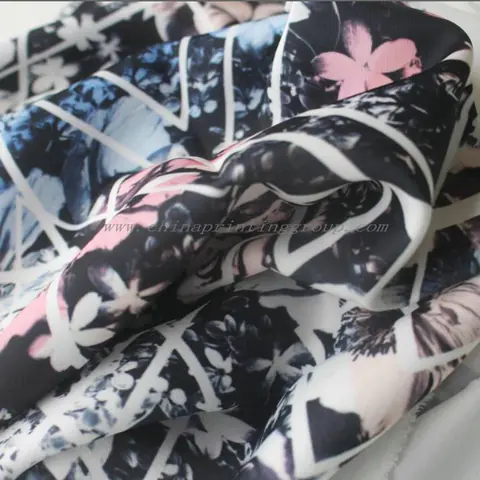
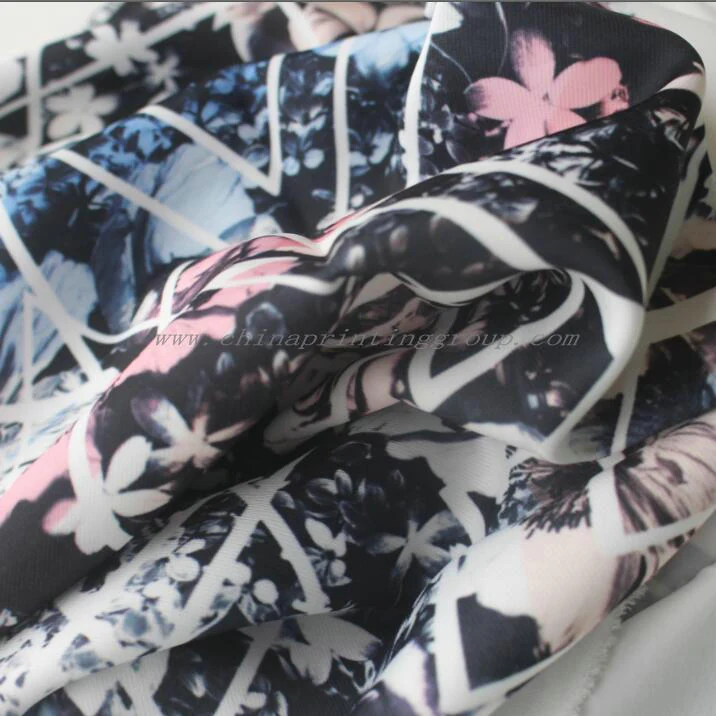
Digital Printed Fabric of Polyester or Silk Sublimation Printing
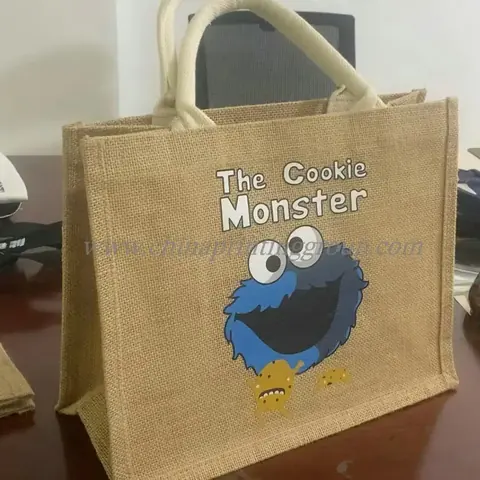
PPrintable Tote Bags Reusable 250–400gsm Jute Free Design Burlap Canvas Bag
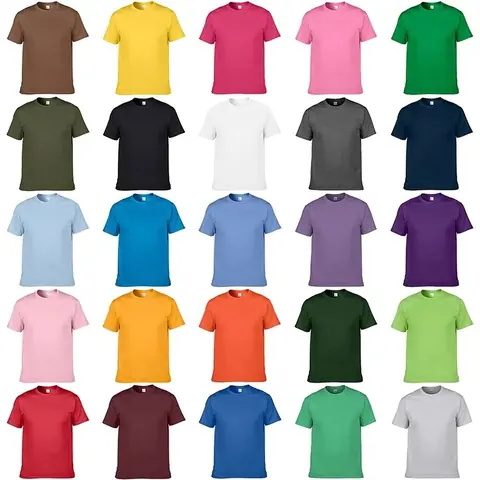
Screen Printed Logo Shirts Cheap 100% Pure Cotton Promotion
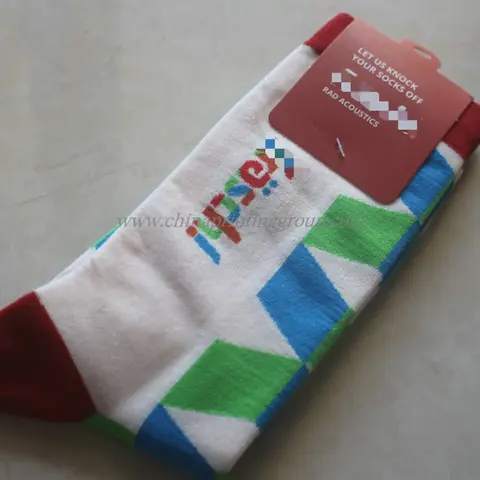
Custom Socks With Logo Free Design 100% Cotton Unisex Sock
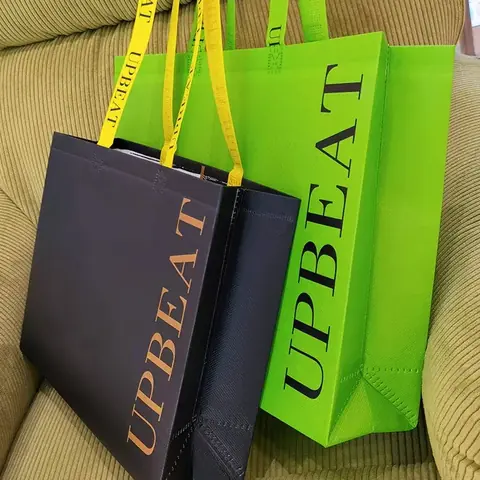
Personalized Canvas Tote Bags A4 Factory Price Luxury Woven Bags
Where to Browse Next
Questions About This Topic
What is the minimum quantity for digital fabric printing?
Digital printing has no plate or screen cost, so short lengths are commercially viable and a single sampling metre is normal. Minimums vary by product rather than by process: some items carry none, others sit in the 500-1000 piece range once they are made up into finished goods. Tell us the finished product and we will confirm.
Can digital printing reproduce photographic artwork on cloth?
Yes, and this is one of its main advantages. Four-colour process plus spot colours covers roughly 16.7 million colours, so gradients, photographs and painted originals reproduce without being reduced to a limited separated palette. Supply raster artwork at a minimum of 300dpi at final printed size to get the detail you expect.
Is digital printing cheaper than screen printing on fabric?
At low and medium quantities, yes, because there are no screens to make and no setup to amortise. At high volume screen printing overtakes it, since its setup cost spreads across the run while digital cost per metre stays roughly constant. We will quote both routes where a job sits near the crossover.
How is digital fabric printing better for the environment?
Dye is applied only where the pattern needs it, so there is no surplus print paste, no colour kitchen discharge from the sizing room and no wastewater from washing screens. It also removes the consumption of film, silk screens and engraved cylinders. That is a genuine reduction in process waste rather than a claim about any specific certification.
What do you need from me to start a fabric printing job?
The artwork in PDF, AI, PSD or JPEG with fonts outlined and images at a minimum of 300dpi, the fabric you want to print on, the finished dimensions or repeat, and the quantity. If the cloth is being made up into a finished product, tell us that too, because it affects placement, bleed and shrinkage allowance.
Have a Job That Needs This
Send the item, the quantity and the deadline and we will tell you which process fits and what it costs.