
How to Cut Sampling and Proofing Cost on Print Orders
Proving a print job used to mean a separate set of plates for every stock in the order, which is accurate but expensive when a buyer's range spans several papers and formats. Ganging different stocks onto one large-format plate set keeps the press proof honest while removing most of the platemaking cost. This guide explains the technique, what it trades away, and how to sequence proofs so you only pay for the certainty you need.
Why Traditional Proofing Gets Expensive
Conventional press proofing treats each paper type as its own job: separate imposition, separate plates, separate makeready. That is easy to control because every proof is printed exactly as the final product will be. The cost, though, scales with the number of stocks rather than the number of designs, so a customer order made up of several formats on several materials can end up carrying five or six sets of four-colour plates before a single saleable piece is produced.
Changing the Paper Without Changing the Plate
The alternative is to combine products printed on different stocks onto one large-format plate set and run the paper through in turn. A single offset forme might carry a self-adhesive item, a white cardboard item, a white-board item, a thin text stock and a heavy board. Fewer plates are made, less makeready time is spent, and the proofing stage stops being the most expensive part of the quotation.
How the Press Operator Controls a Mixed Forme
Each paper behaves differently under pressure and takes ink at its own rate, so the press cannot be optimised for all of them at once. The operator sets impression pressure and ink coverage against the one product being judged on that pass, and lets the rest of the forme fall where it may. When the next stock goes through, pressure and ink are reset around that product and the previously approved layouts are disregarded. Every product therefore gets one pass in which it is genuinely correct.
Separating the Sheets After Proofing
Once each product has been run on its own stock, the correct semi-finished sheets are pulled out by hand and sent on to whatever finishing they need, whether that is lamination, varnishing, foil stamping or spot coating. At cutting and die-cutting the sheets are sorted again by stock and the surplus impressions from the other papers are discarded. The waste looks dramatic on the floor but is measured in tens to a few hundred sheets.
Doing the Arithmetic Before You Choose
The comparison is simple: the extra paper consumed by ganging against the cost of an additional four-colour plate set plus its makeready. Wasted proofing sheets are typically tens to hundreds of sheets per product, which is almost always the cheaper side of that trade. Ganging becomes less attractive only when one item in the group has unusually tight colour tolerances, or when the stocks behave so differently that no shared pressure setting is workable.
Proof Stages and What Each One Proves
Not every question needs a press. We preflight artwork for design discrepancies before imposition and pagination, which catches missing fonts, low-resolution images and trapping problems at zero cost. A PDF proof then confirms content, pagination and layout. A hard copy digital proof shows colour and, on a mock-up, structure and fold. Only ink behaviour on a specific stock genuinely requires a press proof.
Where Digital Printing Replaces Proofing Altogether
For small quantities and for samples, a digital press removes the platemaking question entirely and turns work round in 1-2 working days. This is the practical route for approval copies of books, brochures, cards and labels, and for pre-production samples shown to a retail buyer. Regular commercial offset work runs 4-5 working days, so building a digital sample step into the schedule rarely costs you delivery time.
What We Absorb and What You Pay For
Stock samples are supplied free. Where a custom sample has to be made, its cost is refunded once the bulk order is confirmed, so the charge functions as a deposit rather than an extra. Every account is handled by a named key account manager who plans the proofing route with you, and regular clients receive VIP pricing scaled to annual order value.
What to Remember
- Ganging several stocks onto one plate set removes the largest cost in multi-material proofing.
- Judge each product on the pass where the press is set for its own paper, not the others.
- A few hundred wasted sheets is cheaper than an extra set of four-colour plates.
- Use preflight and PDF proofs first; reserve press proofs for real ink-on-stock questions.
- Custom sample charges are refunded once the bulk order is confirmed.
Products This Guide Covers
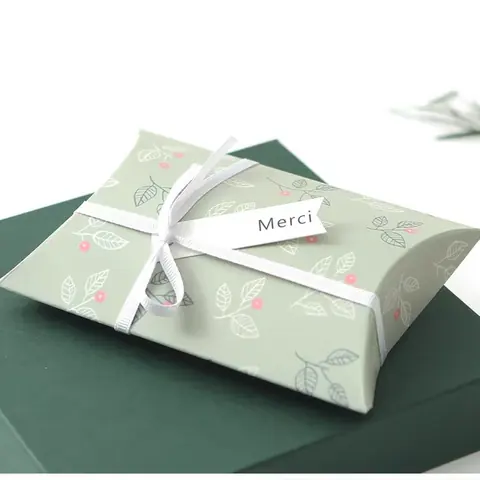
Custom Box Printing Pillow Box Gift Packaging 4C Printed
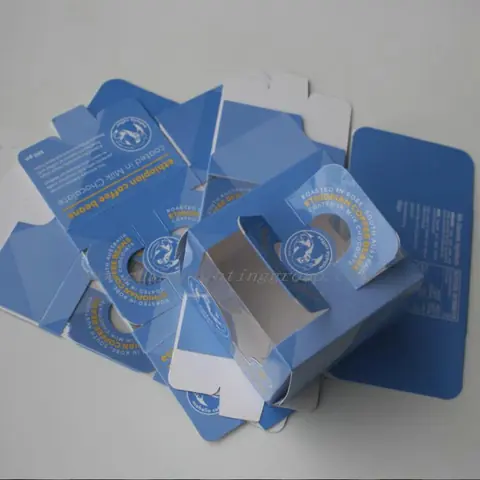
Printed Boxes Cheap Square Coffee Box 1 Transparent Window
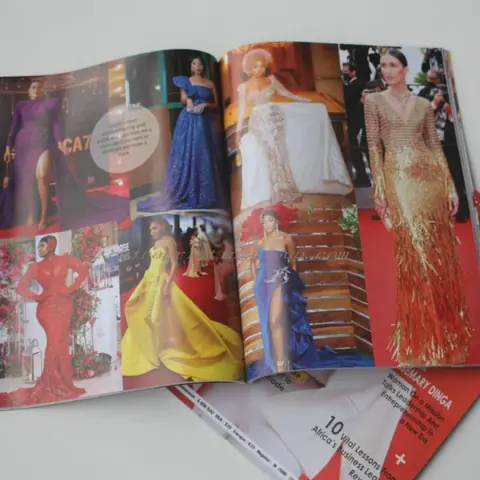
Cheap Magazine Printing A4 Size Fancy Paper New Fashion
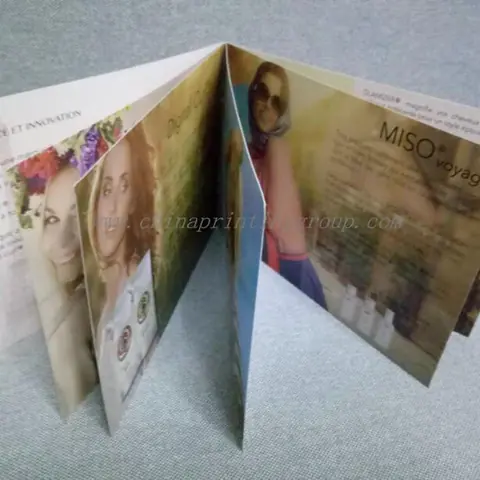
Brochure Printing Services A5 Size Professional Fast Turnaround Booklets
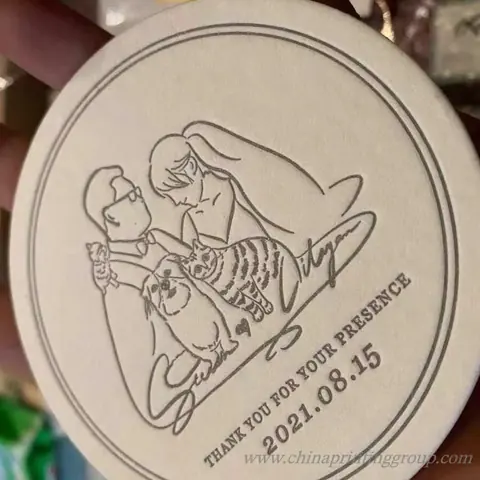
3D Custom Printed Cards New Wedding Invitation Thank U Card
Where to Browse Next

Questions About This Topic
Will a ganged proof show me the true colour of my product?
Yes, for the pass where the press is set around your product. During that pass impression pressure and ink coverage are adjusted specifically for your stock, and that sheet is the one you judge. The other layouts on the same sheet will be off colour on that pass and are not presented to you as representative.
When should I insist on a wet proof rather than a digital proof?
When the question is about how ink behaves on a particular stock: heavy solid coverage, uncoated or textured papers, metallic and specialty boards, tight brand colour matching, or overprinting onto laminated surfaces. For content, pagination, trim and general colour direction, a PDF or hard copy digital proof answers the question at a fraction of the cost.
Do I have to pay for samples?
Stock samples are free. Custom samples carry a cost because they need artwork, tooling or plate work, but that cost is refunded once you confirm the bulk order. Ask your key account manager for the sample cost at quotation stage so it is visible in your budget from the start.
How much lead time does proofing add?
A digital sample or short-run approval copy takes 1-2 working days. Regular offset commercial work runs 4-5 working days and large quantity orders 10-12 working days, so a proof cycle typically adds a few days rather than weeks. Shipping is the larger variable: 3-4 days by air or express, 15-18 days by sea.
What can I do at my end to avoid repeat proofs?
Supply print-ready files with fonts outlined, raster content at a minimum of 300dpi, and colours specified the way you want them separated. Send PDF, AI, PSD or JPEG. Fix content and pagination before colour approval, because a text change after plates are made restarts the cycle and is the most common cause of a second round.
Have a Job That Needs This
Send the item, the quantity and the deadline and we will tell you which process fits and what it costs.