
Types of Self-Adhesive Labels and Stickers
A self-adhesive label is a laminate: a face material carrying the print, an adhesive on its back, and a silicone-coated liner protecting it until use. Which face stock, which adhesive and which liner you choose decides whether the label survives a chiller, a labelling line or a dishwasher. This guide breaks down each layer and the options within it so you can write a specification rather than just order stickers.
What a Self-Adhesive Label Actually Is
Self-adhesive stock is a composite material made from paper, film or a specialty substrate, coated on the back with adhesive and backed by a silicone-coated release liner. After printing, die-cutting and any other finishing, that composite becomes a finished label. In use you either peel the liner and press the label onto the surface, or feed the roll into a labelling machine that applies it automatically on the production line.
The Four Layers to Specify
Every self-adhesive label has the same four components, and a complete specification names all of them: the face material that carries your printed content, the film layer where a film face or overlaminate is used, the adhesive, and the base liner. Buyers who specify only the print and the size usually end up with a default construction that may or may not suit the surface, the temperature and the application method.
Paper Face Materials
Paper faces are grouped by surface gloss into five families: high gloss, semi-gloss, matt, metallised and specialty papers. Within those you will encounter coated paper, laser paper, temperature-resistant paper, kraft paper, fluorescent paper, gold and silver plated paper, synthetic paper, aluminium foil paper, pearl paper, sandwich coated paper, thermal paper and fragile anti-counterfeit paper that tears if removal is attempted. Paper is the cheaper route and suits dry indoor use.
Film Face Materials
Film stocks are grouped by transparency into transparent, semi-transparent, opaque, metallised and specialty types. Common constructions include transparent and semi-transparent polyester, transparent and semi-transparent oriented polypropylene, transparent PVC, gloss white and matt white PVC, synthetic paper, and gloss or matt gold and silver polyester. Films resist moisture, oils and abrasion far better than paper, which is why they dominate cosmetics, chemicals and chilled food.
Choosing the Adhesive
Adhesives are selected by the job they have to do: general-purpose permanent, general-purpose high-tack, a chilled and frozen food grade formulated to bond at low temperature, general-purpose removable, and fibre-tear removable. The adhesive has two responsibilities at once: it must hold the face stock to the liner moderately enough to release cleanly, and then bond strongly to the target surface once applied.
The Release Liner
The base paper, commonly called backing paper, has a low surface energy silicone coating and is not itself adhesive. It isolates the adhesive and lets the face stock peel away cleanly. Typical liners are white, blue or yellow glassine, kraft paper, polyester, coated paper and polyethylene. Liner choice matters most for machine application, where the liner must be strong and dimensionally stable enough to run at line speed.
Matching the Construction to the Application
Start from the surface and the environment rather than from the label. A glass bottle going into a chiller needs a film face and a cold-bond adhesive. A carton label read by a scanner in a dry warehouse can be a semi-gloss paper with a general-purpose adhesive. A promotional sticker applied by hand to unknown surfaces should be a durable film with high tack. Anti-counterfeit and asset labels use fragile paper precisely because they destruct on removal.
Hand Application Versus Machine Application
Hand-applied labels are usually supplied on sheets or as individual cut pieces, and tolerance is forgiving. Machine-applied labels must be supplied on rolls with the winding direction, core size, roll diameter and gap between labels specified to match your applicator. Tell us the make and model of the labelling machine at quotation stage, because retrofitting a roll specification after printing means reprinting.
Printing and Finishing Options
Labels are printed by offset, digital, flexographic, UV or screen printing depending on quantity, stock and effect, and can be finished with hot foil stamping, lamination, spot varnish and die-cutting to shape. Digital work suits short runs and variable data with a 1-2 working day turnaround; bulk label printing generally runs 5-7 working days. Ask for a material swatch before approving a specification you have not used before.
What to Remember
- Specify all four layers: face stock, film or laminate, adhesive and release liner.
- Paper faces suit dry indoor use; film faces survive moisture, oils and abrasion.
- Choose the adhesive from the application: permanent, high-tack, chilled, removable or fibre-tear.
- For machine application, give us the applicator model plus core, winding and roll diameter.
- Fragile anti-counterfeit paper destructs on removal and is the right stock for security labels.
Products This Guide Covers
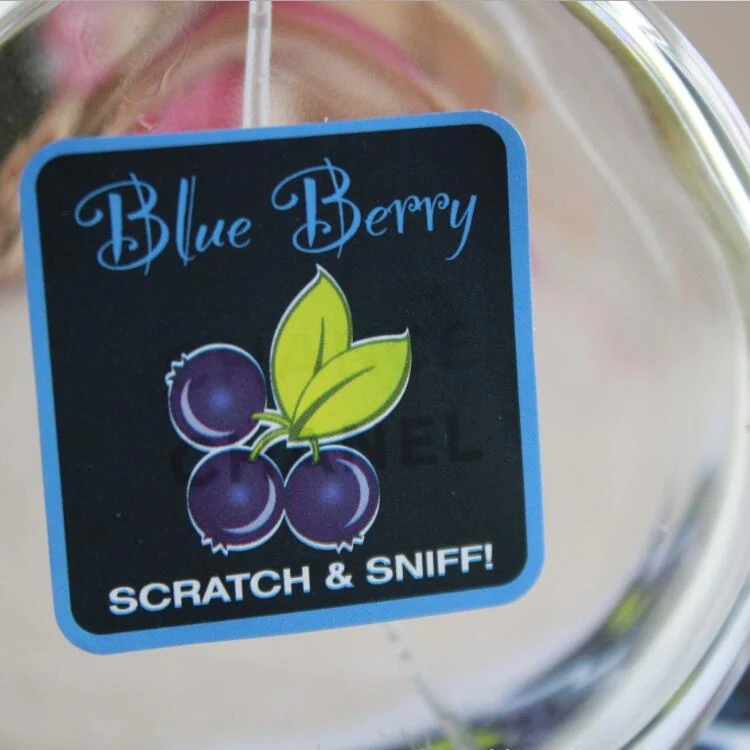
Custom Sticker Sheets Wholesale New Scratch and Sniff Fragrance Label
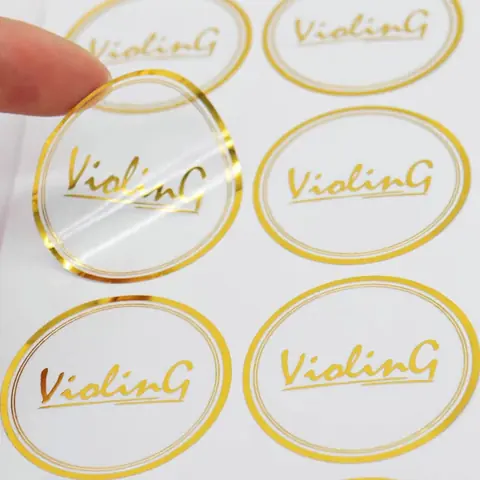
Clear Sticker Printing Custom Vinyl Transparent Seal Label
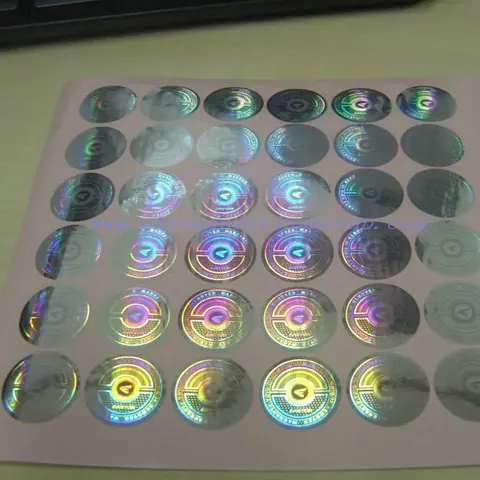
Holographic Sticker Custom Anti-fake 2024 New Print No MOQ
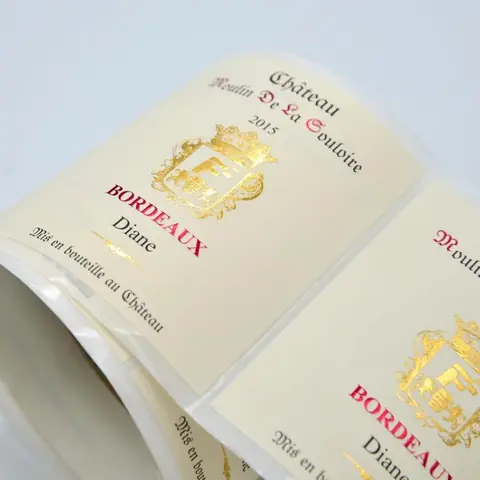
Personalized Sticker Rolls Custom Label Bottle Packaging Free Design
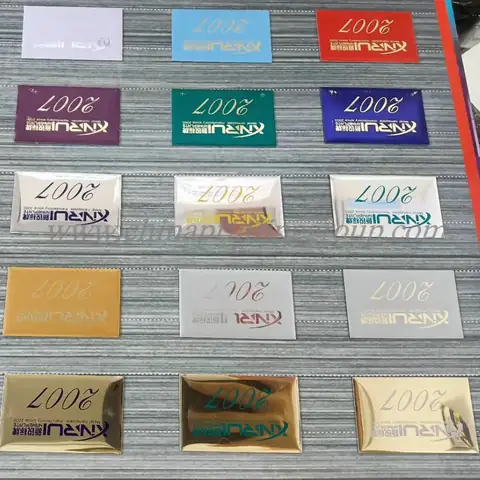
Metallic Labels Engraved 4 Color Printed New Logo No MOQ
Where to Browse Next
Questions About This Topic
Should I choose a paper or a film label?
Choose paper for dry indoor applications where cost matters: cartons, shelf labels, general packaging and mailing. Choose film where the label will meet moisture, condensation, oils, cleaning chemicals or handling abrasion, such as cosmetics, household chemicals, chilled foods and outdoor use. Film also allows a genuinely clear no-label look that paper cannot give.
Which adhesive works for chilled and frozen products?
A dedicated cold-bond adhesive designed for refrigerated and frozen food, because general-purpose adhesives lose tack at low temperature and lift at the label edge. Also tell us whether the product will be labelled at room temperature and then chilled, or labelled while already cold, because the two cases call for different specifications.
Can labels be removed cleanly later?
Only if you specify a removable adhesive at the outset. General-purpose removable and fibre-tear removable grades are designed to release without leaving residue on the target surface, within a reasonable time window and on suitable surfaces. Permanent adhesives are not designed to come off and will usually damage the face stock or the surface if forced.
What do you need from me to quote a label?
The finished size and shape, the quantity, the surface the label will be applied to, the environment it must survive, whether it is applied by hand or machine, and the print artwork. If it runs on an applicator, add the machine model, core size, roll diameter and winding direction. With that we can specify face, adhesive and liner precisely.
Can I get material samples before ordering?
Yes. Stock samples of the face materials are free, which is the quickest way to settle a choice between a matt, semi-gloss or metallised paper, or between a clear polyester and a clear oriented polypropylene. Where we make a custom printed sample, its cost is refunded once you confirm the bulk order.
Have a Job That Needs This
Send the item, the quantity and the deadline and we will tell you which process fits and what it costs.