Project Case · Power Utilities and Grid
15 kV Feeder Refurbishment for a Distribution Utility in Southeast Asia
820 terminations and 140 joints delivered against a 14 week outage programme
Client Background
A national distribution utility was replacing 15 kV feeder cable across three districts. The existing accessories were a mix of four brands accumulated over twenty years and the store held sixty three different part numbers for what were really eight cable configurations.
Project Challenge
Complete 820 terminations and 140 joints inside a 14 week outage programme with crews working night shifts in monsoon conditions, using an accessory family the utility could approve against IEC 60502-4 before the programme started.
Customer Pain Points
- Sixty three part numbers in store for eight real cable configurations
- Crews trained on four different installation methods
- Resin joints failing to cure in monsoon humidity and overnight temperatures
- No single supplier able to produce a complete IEC 60502-4 record inside the tender window
Our Solution
We mapped the utility's cable schedule onto eight C15 part numbers covering indoor terminations outdoor terminations and joints across two conductor bands. Outdoor kits carried four rain sheds per phase rather than the standard count because two of the three districts sit within salt spray range of the coast. The IEC 60502-4 and GB/T 12706.4 test record went to the design authority in week one of the tender.
Manufacturing Process
Kits were packed to an agreed bill of materials in Dalian. The stress control and non tracking layers were extruded and radiation cross linked in house. Molded rain sheds and breakout boots came from our own tooling. Every carton carried a production record traceable to the compound lot.
Supply Chain Coordination
Deliveries were phased in four shipments against the outage programme rather than one container. That kept the utility's district stores from overflowing and let us adjust the mix in shipment three after the first district reported higher joint consumption than forecast.
Quality Control
Per lot testing covered tensile strength ultimate elongation heat aging dielectric strength volume resistivity and tracking resistance. Twelve sample terminations were built and tested before the first shipment was released.
Final Result
The programme completed in 13 weeks. Store part numbers dropped from 63 to 8. Two joints were rebuilt during the programme both traced to semiconductive residue left on the insulation surface which was corrected with a WhatsApp video refresher for that crew.
Customer Benefit
The utility now holds eight part numbers instead of sixty three, its crews are trained on one installation method, and the accessory family is on the approved list for the next three districts.
Products
Products Supplied on This Project
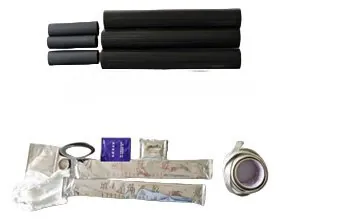
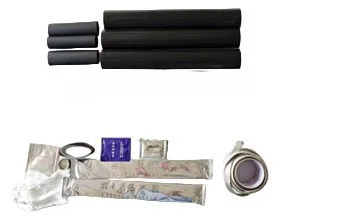
MV Kits 8.7/15 kV
Indoor outdoor and joint kits for 8.7/15 (17.5) kV single core and three core cable tested to IEC 60502-4
VIEW DETAILS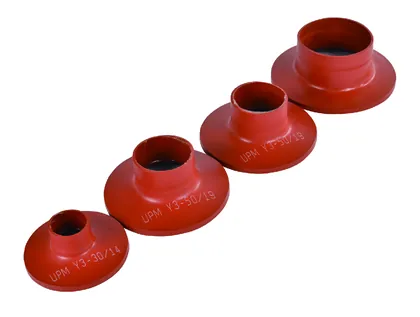
Y3 Rain Sheds
Red anti tracking skirts with mastic collars that build creepage distance on outdoor terminations from 1 kV to 36 kV
VIEW DETAILS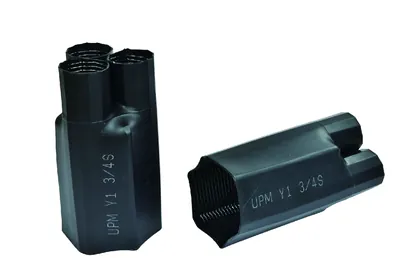
Y1 Breakout Boots
Molded two three four and five leg boots with adhesive on the big end and every leg for 1 kV to 36 kV cable
VIEW DETAILS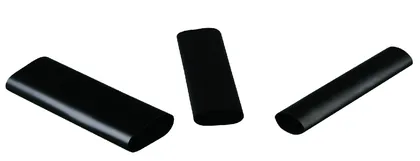
C102-10 Stress Control
High permittivity black tubing that redistributes the electrical field at the screen cut back on 6 to 24 kV cable
VIEW DETAILSFAQ
Questions About This Project
How long did the approval process take
Why four rain sheds instead of the standard count
How were the two failed joints handled
Can deliveries be phased on any project
Still need an answer ask our engineers on WhatsApp
More Cases
Other Projects
Retrofitting Creepage on Flashover Prone Outdoor Terminations
Rain sheds fitted to 96 existing 33 kV terminations without rebuilding any of them
READ CASE →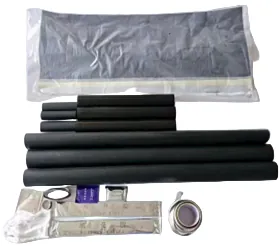
Accessory Package for a 350 MW Solar Collector Circuit
Take off from a single line diagram consolidated 14 part numbers down to 5
READ CASE →Tower Base Cabling Package for a European Wind Farm
Sealed multi core breakouts and 15 kV terminations inside 28 turbine towers
READ CASE →Discuss a Project Like This One
Tell us the voltage class the quantity and the programme. We will tell you what is realistic before you commit.