
- Home
- Products
- Robotics and Motion
- Robotic Motion Assembly
DK-03 · Robotics and Motion
Robotic Motion Assembly
Robot assembly cells delivered complete with tooling presentation guarding and controls
Overview
What This Machine Does
A robot arm is a motion device. An assembly cell is a system: the arm, the end of arm tooling, the way parts arrive, the fixturing that holds them, the guarding that keeps people out of the envelope, and the controls that make all of it agree on what happens next.
Delkotech scopes and builds the whole cell. Reach, payload and cycle are checked against your actual part before a robot is selected, and the tooling is designed for your part family rather than for the sample that came with the enquiry.
The result is a cell that holds its cycle with your parts, with safe operator and maintenance access designed in rather than negotiated afterwards.
From the original specification: Robotic motion assembly is listed among Delkotech's services, and robotics is one of the published solution areas.
Key Benefits
What It Changes on Your Floor
Scoped as a system
Tooling, presentation, guarding and controls are in the scope from the start, so the budget reflects the real project.
Cycle proved with your parts
Rate is demonstrated with the parts you actually run, not calculated from a data sheet.
Tooling for the family
Including the low volume variant that usually gets discovered during commissioning.
Access designed in
Loading, clearing and maintenance can be done without defeating a guard.
One accountable supplier
Mechanical, controls and safety come from one group, so integration is not left to the customer.
Application Scenarios
Where It Is Used
Component assembly
Picking, orienting and placing components into a fixture at a controlled rate.
Machine tending
Loading and unloading a machine so the operator is not tied to its cycle.
Material transfer between stations
Moving parts between operations where geometry or orientation changes.
Inspection handling
Presenting a part to a sensor or camera in a repeatable position.
Who It Is For
Plants That Ask for This Machine
- Manufacturers who bought a robot and found the integration was the project
- Plants with a repetitive assembly task that varies between operators
- Producers who need a cell rather than an arm
- Engineering groups who want one supplier accountable for the cycle
Problems It Solves
The arm is the cheap part
Tooling, presentation, guarding and controls are where a robot project actually costs money. Scoping them late is how projects overrun.
Parts arrive in chaos
A robot cannot compensate for unpredictable presentation. Feeders and nests are part of the answer, not an accessory.
Guarding blocks the job
Guarding designed after layout ends up in the way, and then it gets bypassed.
Nobody owns the cycle
With separate suppliers, rate becomes an argument. One supplier removes the argument.
Technical Features
How It Is Built
Application study first
Reach, payload, orientation and cycle checked against the real part and the real floor space.
End of arm tooling
Grippers and vacuum tooling designed for the part family.
Part presentation
Feeders, nests and fixtures so parts arrive in a known position.
Safety and guarding
Fencing, light curtains and interlocks laid out for operator and maintenance access.
Cell controls
PLC coordinating the robot, the stations and the line handshake.
Rate proving
The cell is run to rate before it ships and again after installation.
Specifications
Specification Sheet
Delkotech builds to order, so dimensional and performance values are set against your part at design review, then measured and recorded before shipment. Values not yet fixed for your project are marked TBC rather than guessed.
| Cell type | Robotic assembly, handling or machine tending cell |
|---|---|
| Robot | Selected against reach, payload and cycle at application study |
| End of arm tooling | Designed to the customer part family |
| Payload | TBC - confirmed at design review |
| Reach | TBC - confirmed at design review |
| Cycle time | TBC - confirmed at design review |
| Cell footprint | TBC - confirmed at design review |
| Part presentation | Feeders, nests or fixtures specified per application |
| Safety | Fenced or light curtain guarded, arrangement set at safety review |
| Control platform | PLC cell controller with HMI, platform agreed with the customer |
| Integration | Handshake to upstream and downstream equipment |
| Electrical supply | TBC - confirmed at design review |
| Compressed air | TBC - confirmed at design review |
| Built at | Delkotech facility, Vaughan, Ontario, Canada |
| Tooling | Machined aluminium and steel end of arm tooling with application specific contact faces |
|---|---|
| Fixturing | Steel and aluminium nests with hardened locating elements |
| Guarding | Welded frame guarding with mesh or polycarbonate panels |
| Handles | Metal, plastic and assembled components as specified |
Manufacturing Process
From Enquiry to Commissioned Machine
Application study
Part, orientation, rate and floor space reviewed before any equipment is selected.
Cell concept
Layout, robot selection, tooling approach and safety strategy presented together.
Design
Tooling, fixturing, guarding and controls designed as one package.
Build and integration
Cell assembled and integrated at the Vaughan facility.
Rate proving
Run to rate with your parts before shipment.
Installation and training
Installed, commissioned and handed over with operator and maintenance training.
Quality Control
What Is Checked Before It Ships
- Tooling proved on the full part family, not only the sample
- Robot program checked for reach and singularity across the whole path
- Cycle time measured over a continuous run, not a single best cycle
- Safety functions verified and recorded
- Rate run with customer parts before shipment
Certifications
Compliance Position
Cells are built to be validated to current regulatory standards, with safety functions verified and recorded before shipment. Robot and component certificates come from their manufacturers. Project specific cell certification is agreed at contract stage and listed as TBC until then.
Customization Options
- Robot brand matched to what your maintenance team already supports
- Tooling covering a defined part family
- Manual, semi-automatic or fully automatic part presentation
- Vision guidance where presentation cannot be fixtured
- Integration with existing upstream and downstream machines
- Data output to your plant systems
Comparison
Compared With the Alternatives
| Buying a robot and integrating in house | Viable when you have the engineering capacity. The usual cost is schedule, because tooling and presentation are discovered rather than designed. |
|---|---|
| Gantry or fixed automation | Cheaper and stiffer for a straight repetitive transfer. A robot earns its cost when orientation changes or the part family is varied. |
| Staying manual | Right at low volume and high mix. Once the task repeats and consistency matters, the variation costs more than the cell. |
Use Guide
Running It Well
Keep presentation as designed
A feeder or nest that has been moved or modified is the first thing to check when placement drifts.
Do not modify guarding
The layout allows the routine tasks. If a task seems to require opening a guard, it should be raised as a change, not solved on the floor.
Inspect tooling contact faces
Vacuum cups and gripper pads wear. A schedule based on cycles prevents a slow decline in reliability.
Record program changes
Robot programs drift over years. Keeping a version record makes a later problem traceable.
Photographs
The Machine in the Shop
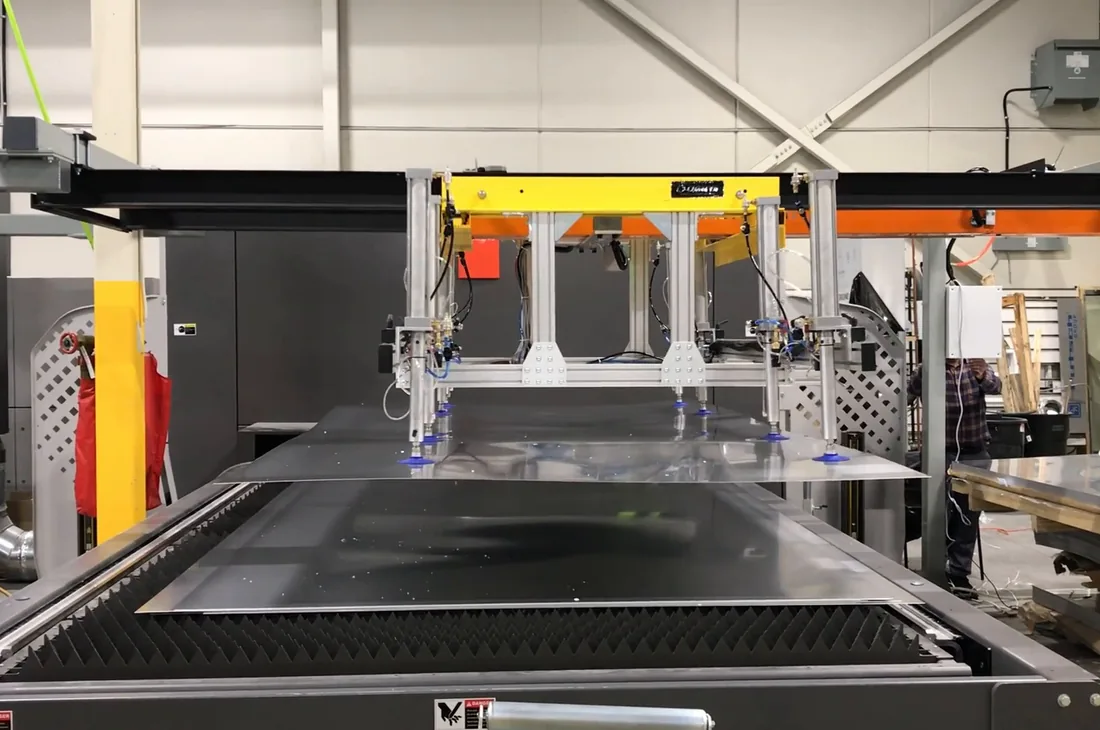
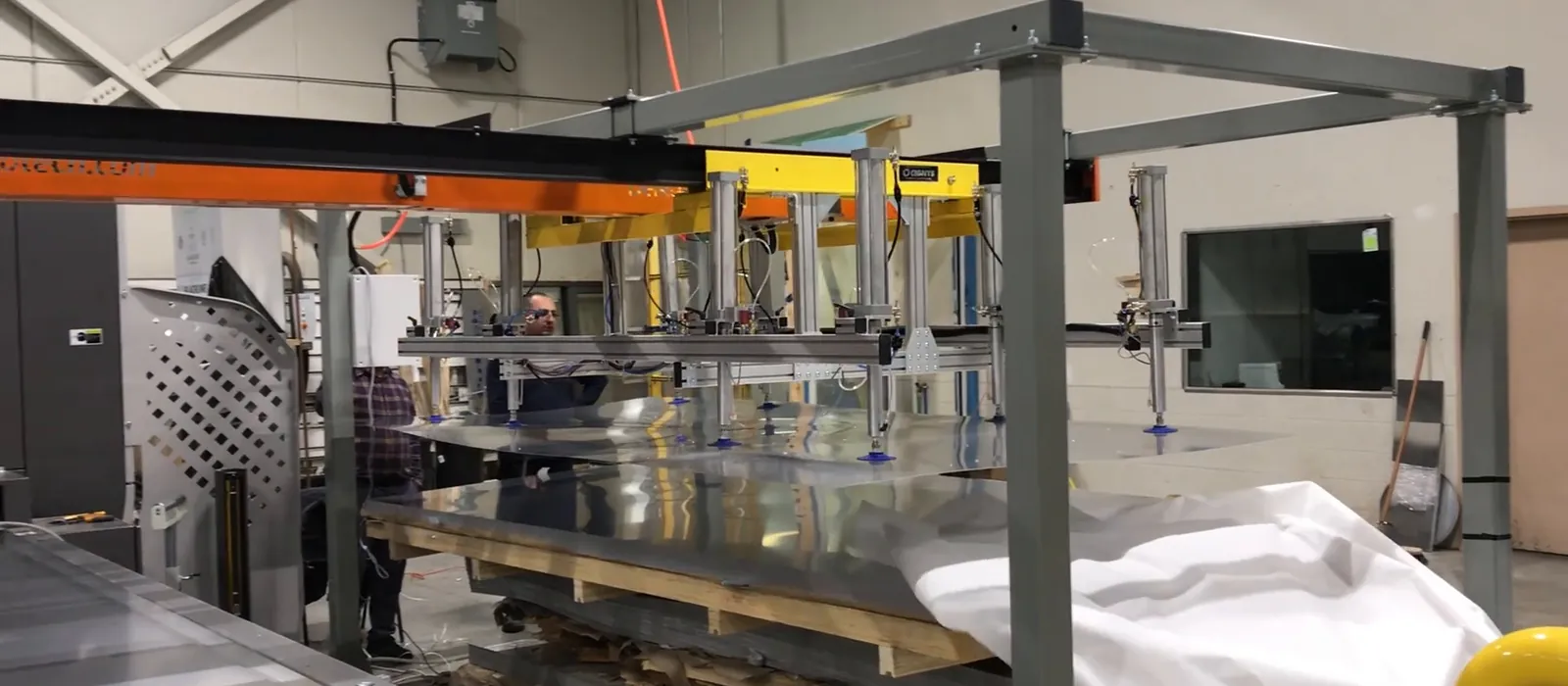
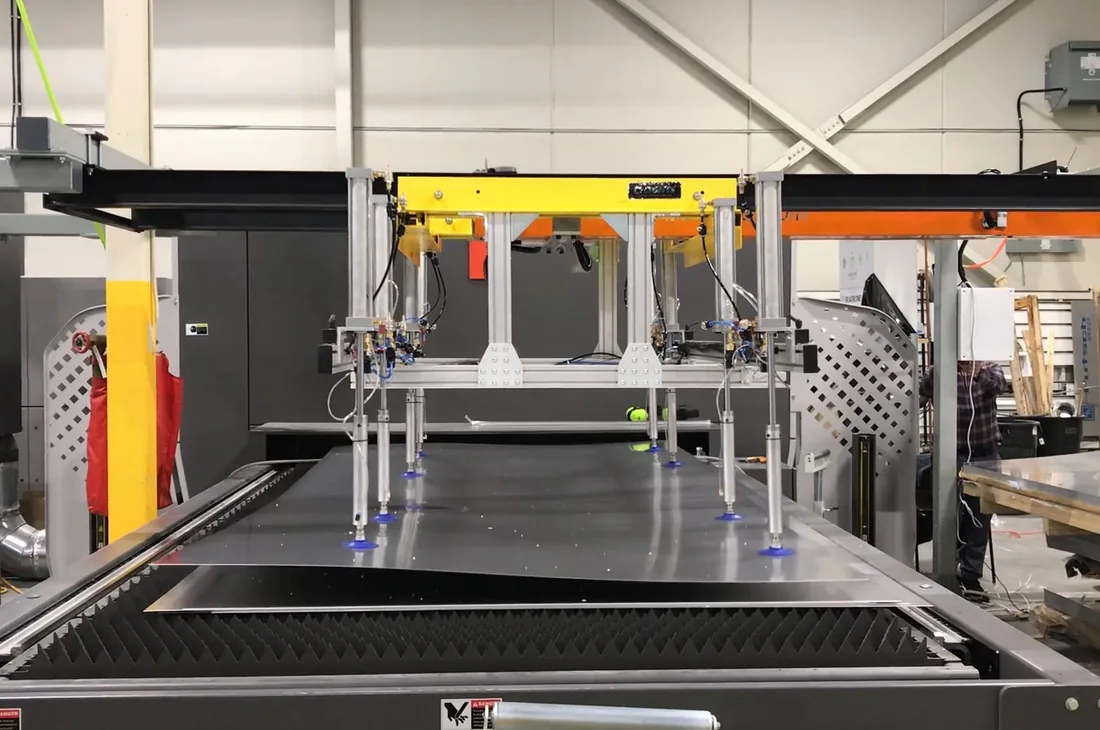
Photographs of Delkotech built equipment. No stock imagery is used on this site.
Questions
Robotic Motion Assembly Questions
Do you supply the robot as well?
Yes, as part of the cell. Robot selection follows the application study, and we are happy to match the brand your maintenance team already supports.
How do you confirm the cycle time before we commit?
The application study estimates the cycle from the real move sequence and part geometry. The commitment is proved by running the cell to rate with your parts before it ships.
What if our part changes next year?
Tell us the likely change at concept stage. Tooling and fixturing can be designed with that headroom, which is far cheaper than retrofitting it.
Can the cell be interfaced to our existing machines?
Yes. We need the make, model and available signals of the equipment either side, then the handshake is part of the design.
Who does the safety assessment?
Delkotech designs the guarding and safety functions and verifies them before shipment, and supplies documentation describing them. The assessment for your site is normally completed with your own safety group.
How much floor space is needed?
That comes out of the layout, which is done against your actual available space rather than a generic footprint. Send a floor plan at enquiry.
Related
Related Equipment
Robotics and Motion
Micro Assembly Technology
Handling and joining small components where the part is too small to place by hand
View equipment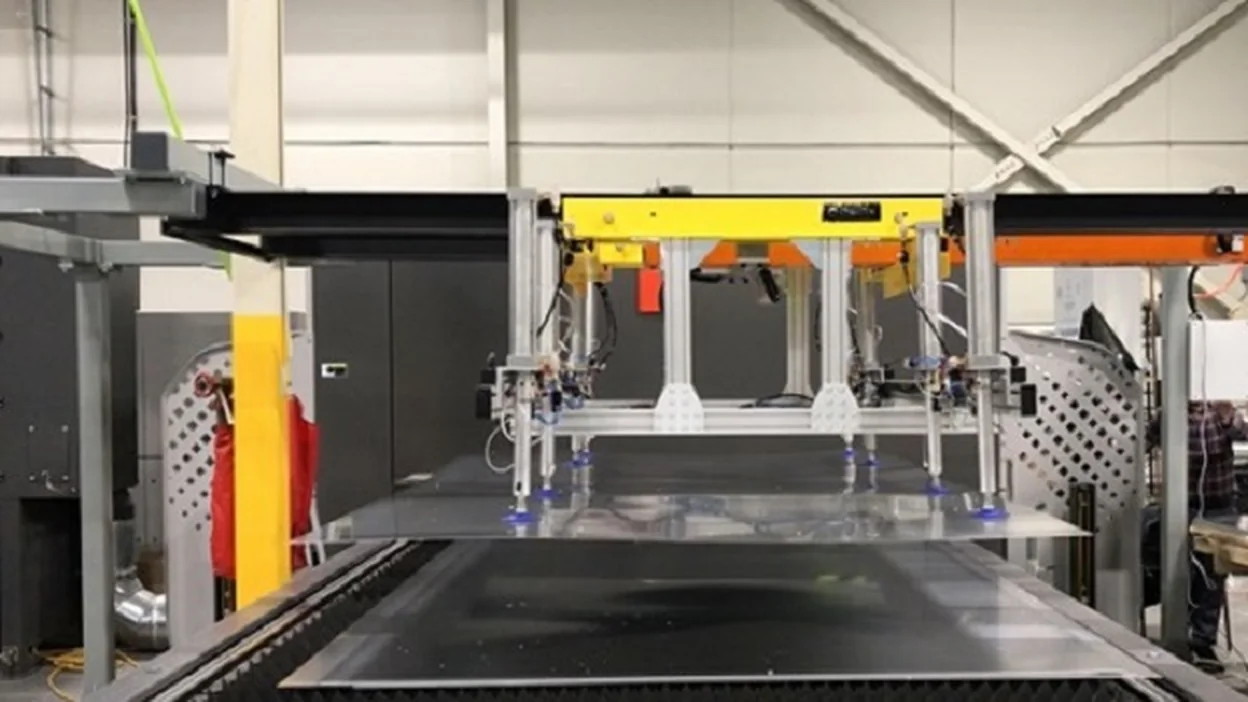
Sheet Metal Automation
Automatic Sheet Metal Pick and Place Machine
Vacuum gantry de-stacker that feeds blanks to a laser or press without manual lifting
View equipment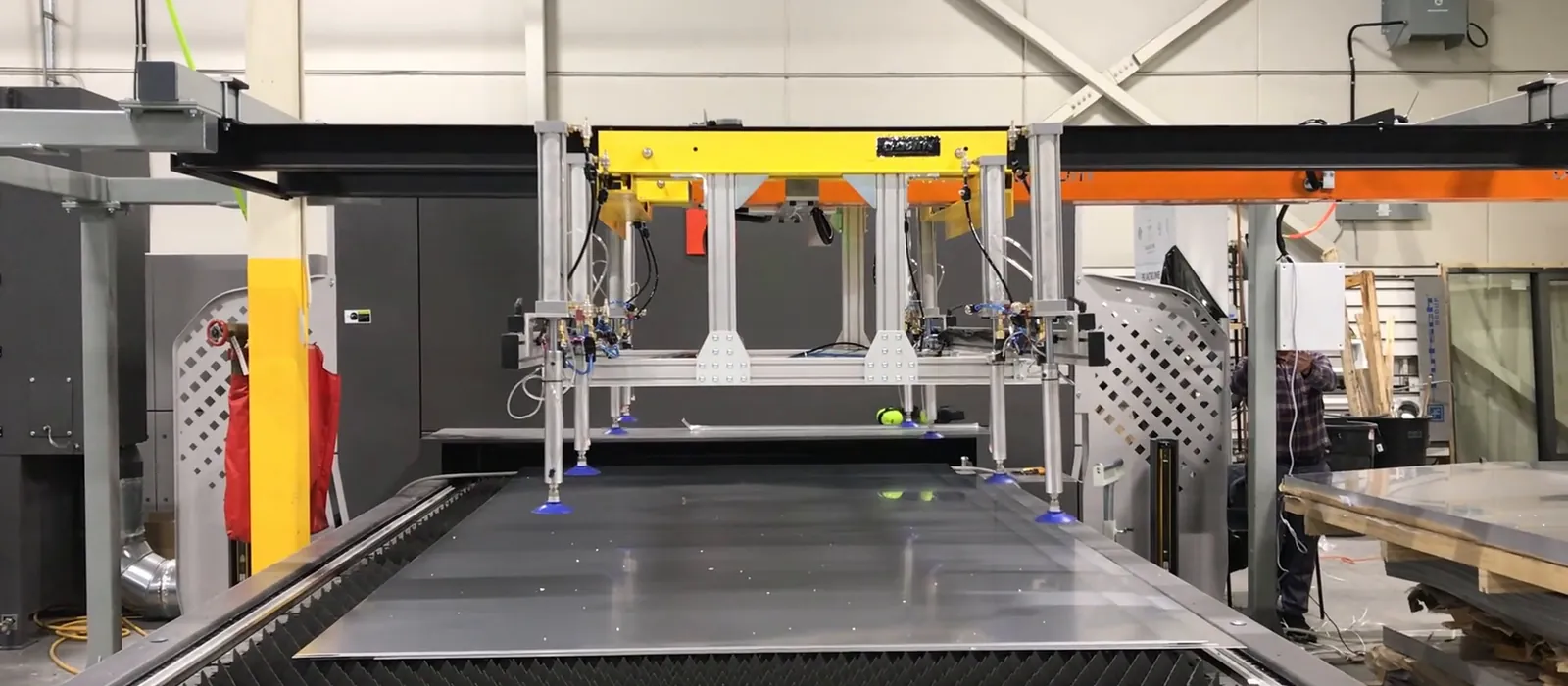
CNC Assembly Machines
CNC Custom Automation Equipment
Purpose built CNC machines designed around your part when no catalogue machine fits
View equipmentTalk to an engineer
Get a Quotation for This Machine
Send the part drawing, the operation and the rate you need. You will get a concept and a defined scope, not a brochure.