
- Home
- Knowledge Centre
- Preventing Double Blanks in a De-Stacker
Troubleshooting Guide
Preventing Double Blanks in a De-Stacker
Why two sheets lift as one and what actually fixes it
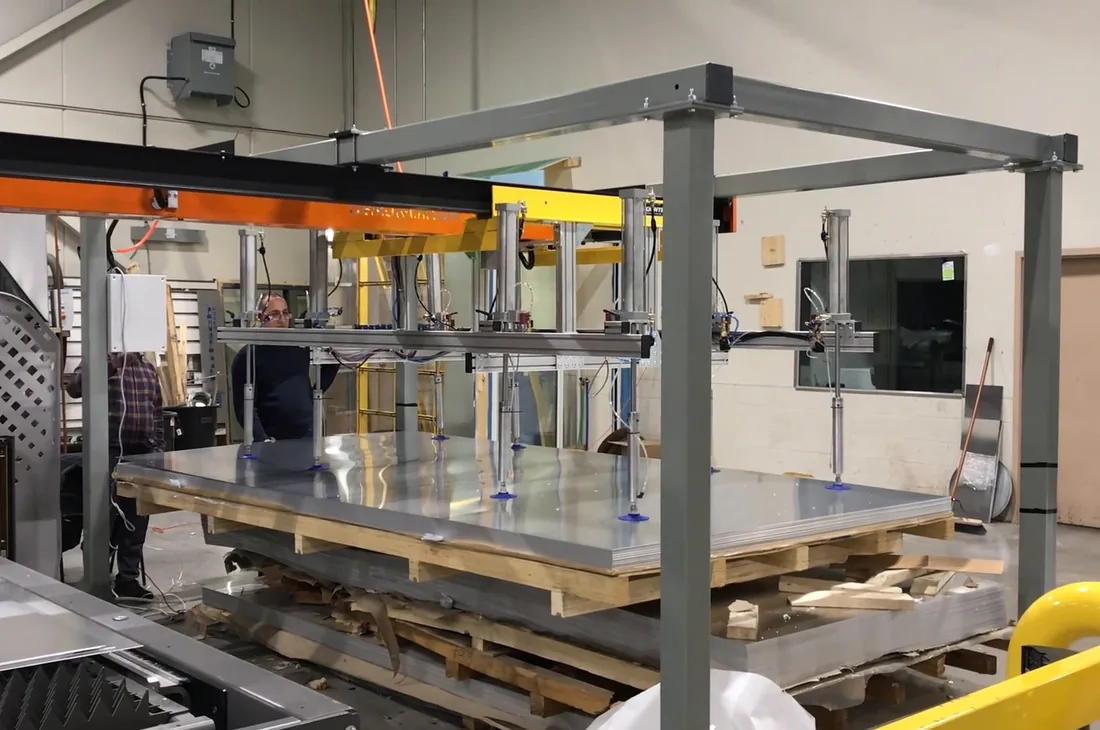
Introduction
A double blank is the failure that turns a productivity project into a damaged laser head. It is also one of the most misdiagnosed problems in sheet handling, because the instinct is to reduce the vacuum, which usually makes the situation worse.
All Articles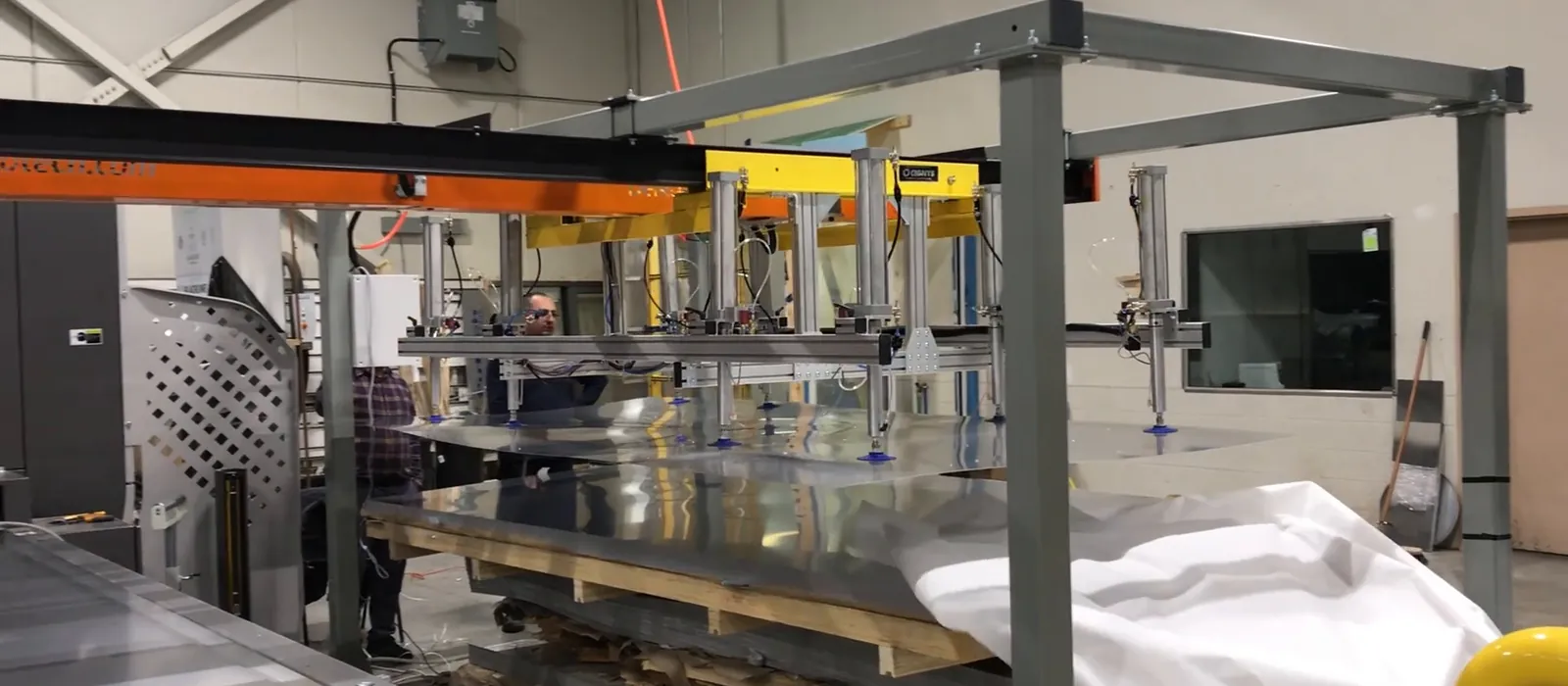
Why sheets stick together
Oil between blanks creates a film that resists separation. On aluminium and on oiled steel this is the dominant cause.
Flat, smooth sheets can also hold together by simple surface contact, especially if the stack has been compressed under its own weight.
In both cases the lifting force is applied to the top sheet and transmitted to the second one through the film or the contact. Lowering vacuum does not break that link, it just risks dropping both.
Separation is mechanical, not a vacuum setting
The working approaches introduce a physical separation at the stack: peeling the top sheet from one edge rather than lifting it flat, introducing air between the sheets, or using magnetic separation on ferrous material.
Which one is right depends on the material. Magnetic separation works on steel and does nothing for aluminium, which is why the material has to be established at application review.
Detect as well as separate
Separation reduces the failure rate, it does not eliminate it. Detection catches what gets through, and the method depends on the material and the thickness.
The sequence matters: detect before the sheet enters the downstream machine, not after, because the point of detection is to prevent the crash rather than to explain it.
When it starts happening after months of reliability
A system that ran well and has started doubling has usually had something change. A new material supplier, a different oil, a change in storage humidity or a stack that has sat compressed for longer than usual.
Before adjusting the machine, ask what changed in the material. Machine settings that were correct for six months rarely become wrong on their own.
Design decisions that help
Establish the worst case material at design review, including the oiliest batch you run. A system proved on clean dry blanks will find the oily ones in production.
Make the separation adjustment accessible. If tuning it requires dismantling a guard, it will not be tuned.
Takeaways
The Short Version
- Doubles are caused by oil film and surface contact, not by too much vacuum
- Separation has to be mechanical, and the method depends on the material
- Detect before the sheet reaches the downstream machine
- When a reliable system starts doubling, look at what changed in the material first
Related
Equipment Discussed
Sheet Metal Automation
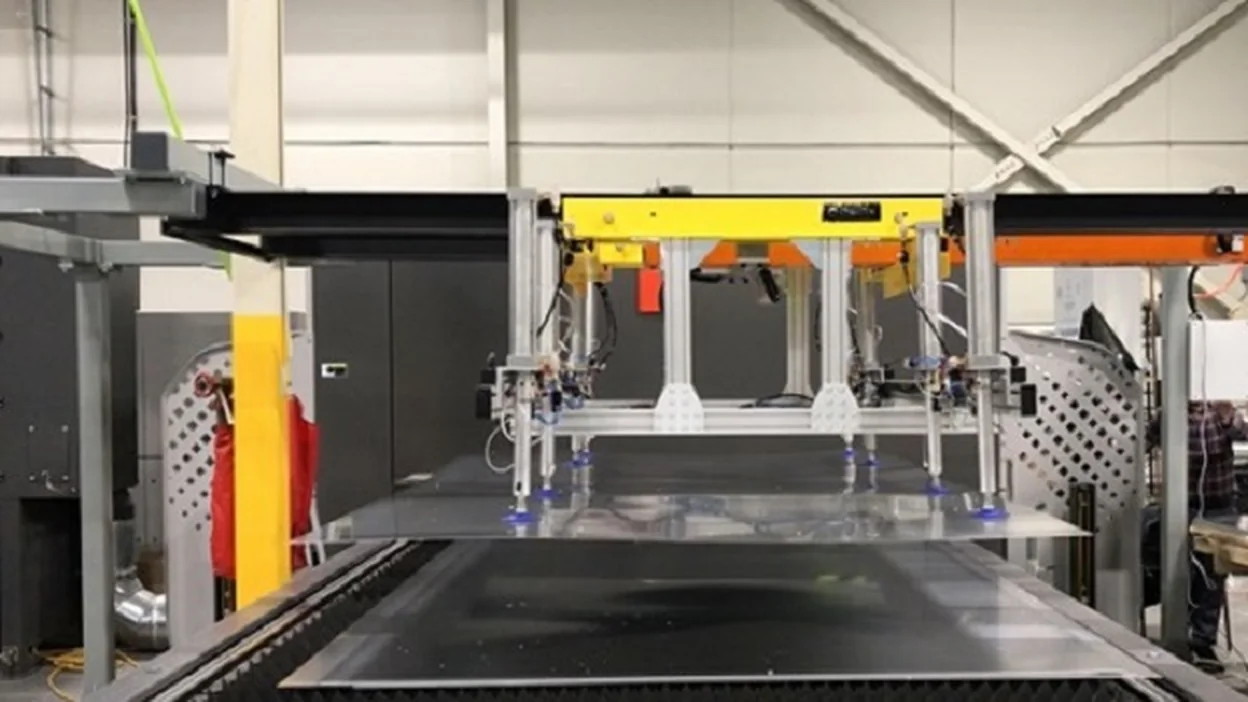
Automatic Sheet Metal Pick and Place Machine
Vacuum gantry de-stacker that feeds blanks to a laser or press without manual lifting
View equipment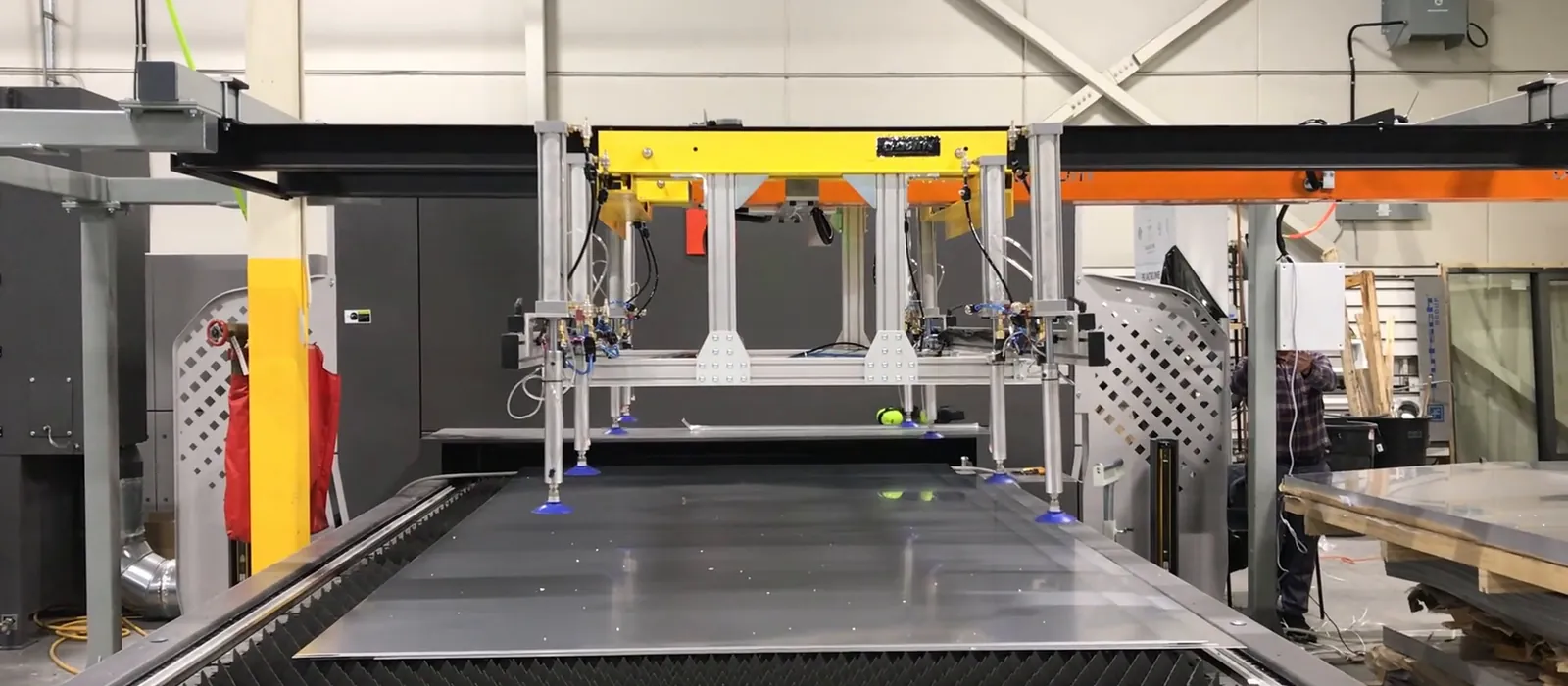
Sheet Metal Automation
Place Processing Automation Machines
Stations that position the part and perform the operation in one controlled cycle
View equipmentQuestions
Questions About This Article
What is the short answer?
Doubles are caused by oil film and surface contact, not by too much vacuum.
Does this apply to equipment we already own?
Most of it does. The engineering described here is not specific to Delkotech machines, although where our equipment is relevant we link to it.
Who should read this?
Engineering, maintenance and production people who have to specify, buy or live with the equipment. It is written to be useful on the floor rather than in a brochure.
Can Delkotech advise on our specific case?
Yes. Email [email protected] with the part, the operation and what is going wrong, and you will get an engineer's answer rather than a sales response.
Talk to an engineer
Ask About Your Own Application
Send the part and the problem. You will get an engineer's answer, including when the answer is that automation is not the right call.