
- Home
- Knowledge Centre
- Selecting Vacuum Cups for Sheet Metal Handling
Design Guide
Selecting Vacuum Cups for Sheet Metal Handling
Why hold time and cup layout matter more than raw vacuum level
Introduction
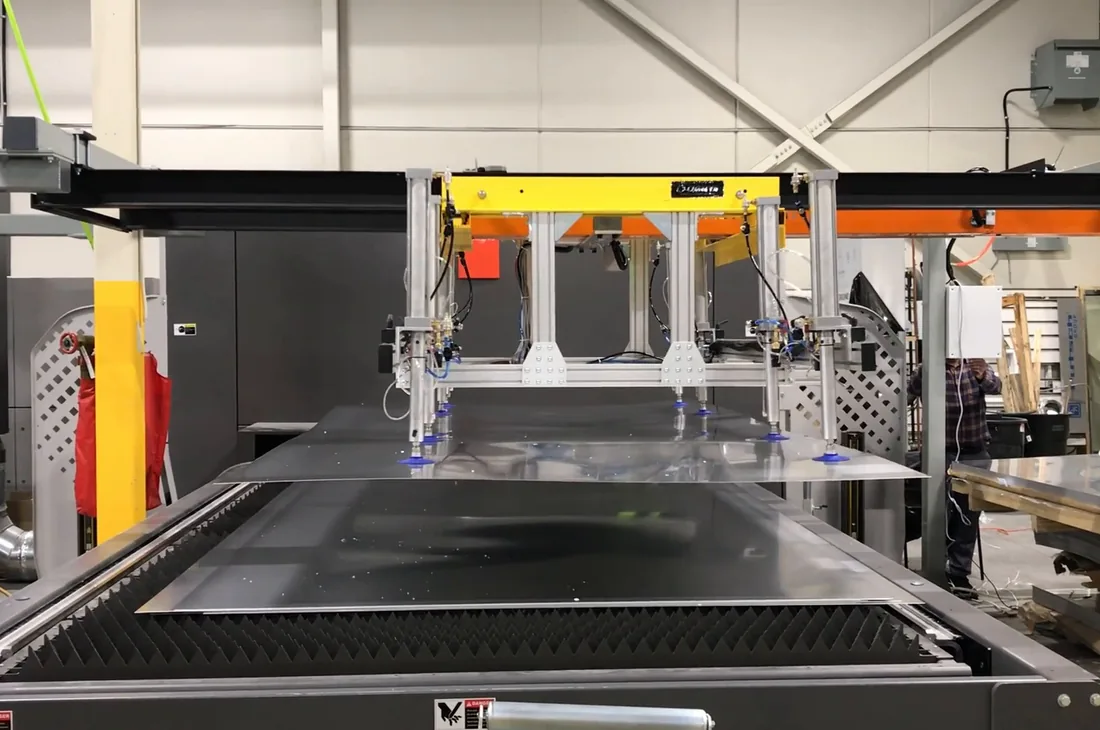
Vacuum handling looks simple until a sheet drops. Almost every reliability problem in a vacuum gantry traces back to cup selection or cup layout rather than to the vacuum generator, which is usually the first thing people blame.
All Articles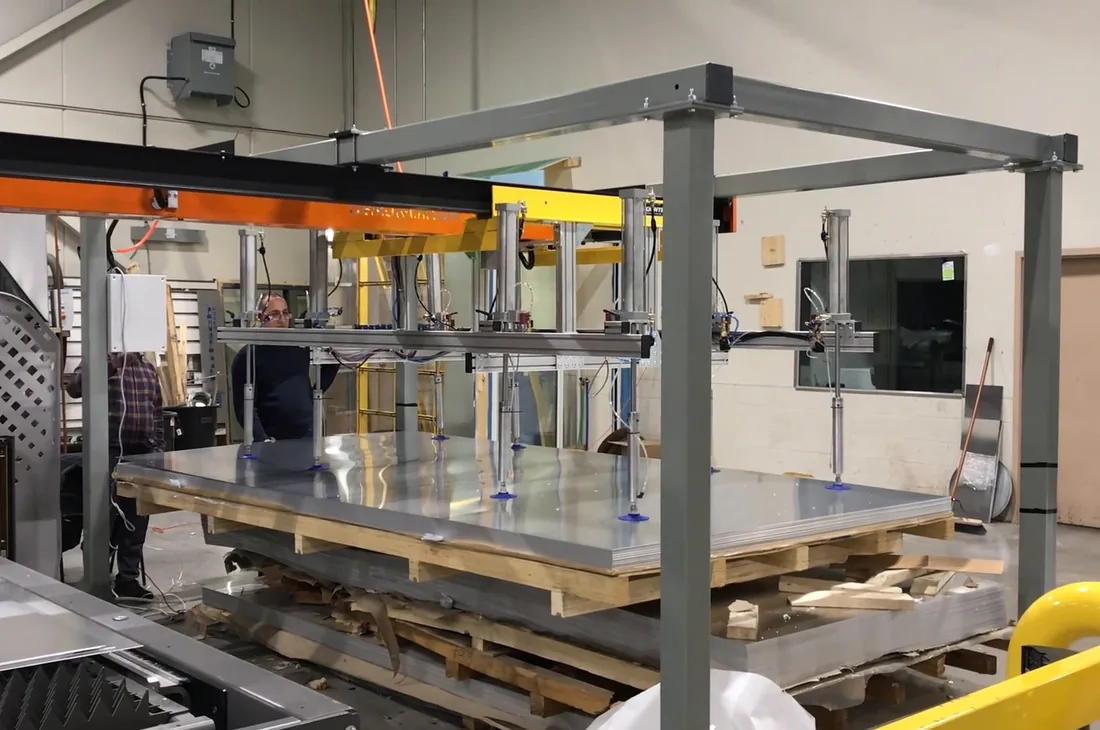
Cup type follows the surface
A flat cup gives the highest holding force per area on a smooth, rigid sheet and is the default for flat blanks.
A bellows cup compensates for surface variation and a slight angle, and it absorbs some of the shock when the cup lands. It gives up some holding force in exchange.
Oily, textured or perforated surfaces change the answer completely. Oil reduces the seal, perforation defeats it locally, and both need to be raised at the application review rather than discovered during commissioning.
Layout carries the load, not the cup count
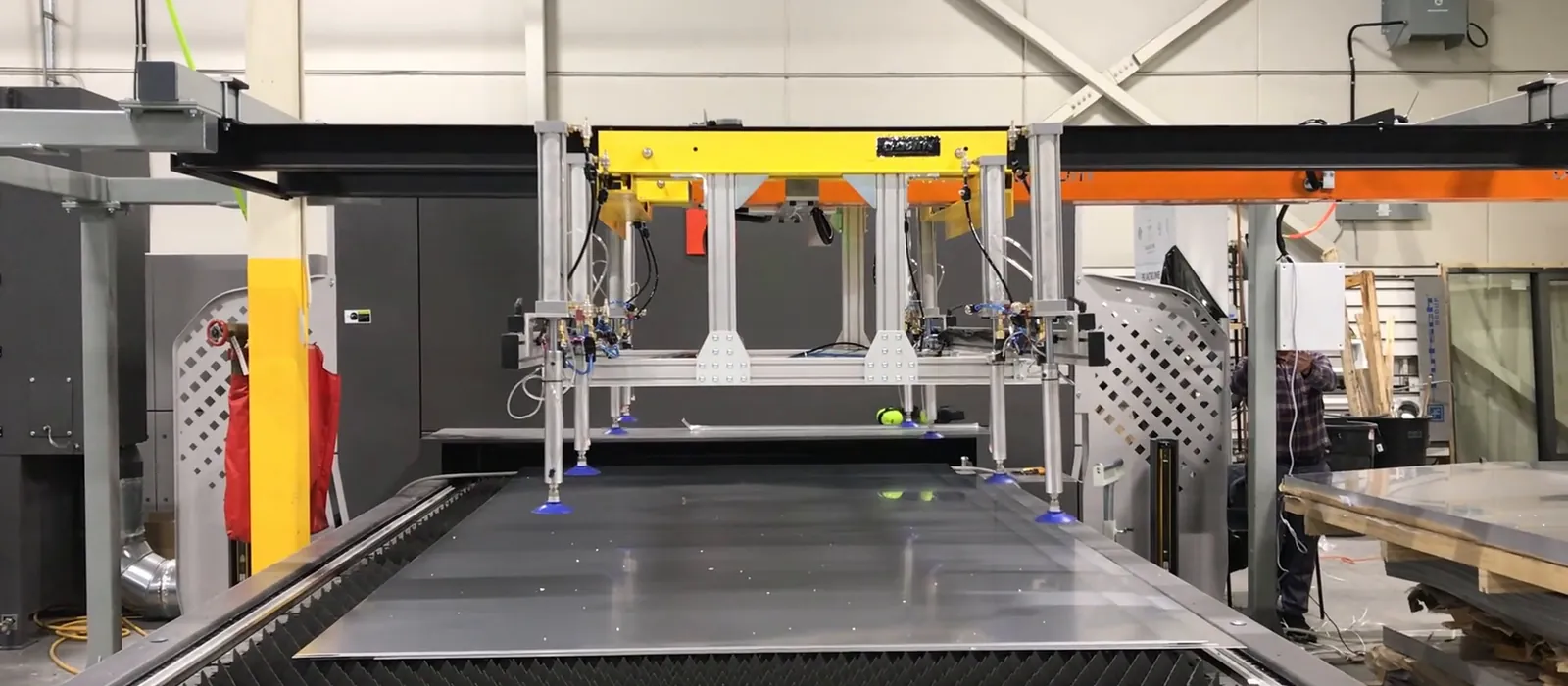
Cups should be spread so the sheet does not sag between them. A sagging sheet peels the cups from the edges inward, which is why a drop usually starts at one corner.
Cups near the edges carry more of the peeling load than cups in the middle. Placing them for even support beats adding cups in the centre where they do less work.
Size for acceleration, not for weight
Holding a static sheet needs far less force than accelerating one. The design case is the fastest move, not the mass at rest.
A safety factor on the theoretical holding force is standard practice, and how large it should be depends on the surface, the acceleration and how much a dropped sheet costs you.
Hold time is the real test
A vacuum circuit that reaches the right level quickly but leaks slowly will pass a static test and fail in production. Measure how long a sheet is held with the generator isolated.
Leak testing the circuit and measuring hold time with the heaviest specified blank should be part of the acceptance test, because that is the number that predicts reliability.
Maintenance is where it degrades
Cup faces pick up oil and swarf, and worn cups lose the seal gradually rather than suddenly. A wipe at shift start and a cup inspection on a cycle based schedule prevent most in service problems.
Takeaways
The Short Version
- Cup type is chosen for the surface, not for the maximum published force
- Layout should prevent sag, because a drop starts at an edge
- Size the vacuum for acceleration, not for the static mass
- Measure hold time with the generator isolated - that is the number that matters
Related
Equipment Discussed

Sheet Metal Automation
Automatic Sheet Metal Pick and Place Machine
Vacuum gantry de-stacker that feeds blanks to a laser or press without manual lifting
View equipmentRobotics and Motion
Robotic Motion Assembly
Robot assembly cells delivered complete with tooling presentation guarding and controls
View equipmentQuestions
Questions About This Article
What is the short answer?
Cup type is chosen for the surface, not for the maximum published force.
Does this apply to equipment we already own?
Most of it does. The engineering described here is not specific to Delkotech machines, although where our equipment is relevant we link to it.
Who should read this?
Engineering, maintenance and production people who have to specify, buy or live with the equipment. It is written to be useful on the floor rather than in a brochure.
Can Delkotech advise on our specific case?
Yes. Email [email protected] with the part, the operation and what is going wrong, and you will get an engineer's answer rather than a sales response.
Talk to an engineer
Ask About Your Own Application
Send the part and the problem. You will get an engineer's answer, including when the answer is that automation is not the right call.