
- Home
- Products
- Sheet Metal Automation
- Place Processing Automation Machines
DK-01 · Sheet Metal Automation
Place Processing Automation Machines
Stations that position the part and perform the operation in one controlled cycle
Overview
What This Machine Does
A place processing machine does two things in one cycle: it puts the part in a known position, and it performs an operation on it while it is held there. Punching, forming, marking, inserting and testing all become repeatable once the location is controlled by the machine rather than by the operator.
Delkotech builds these stations around the part, not around a standard frame. The nest, the clamping and the actuation are designed so the datum is taken once and everything else references it.
They are frequently built as one station inside a larger cell, sharing controls and guarding with the handling equipment either side of them.
From the original specification: Place processing automation machines are listed among Delkotech's services.
Key Benefits
What It Changes on Your Floor
Location is designed, not judged
A nest and clamp remove the operator's judgement from where the part sits, which is where most process variation starts.
One cycle, one handling
Positioning and processing in the same cycle removes a transfer, and every transfer you remove is a chance for the part to shift.
Consistent across shifts
The machine does not get tired at hour seven, which is usually when hand-located operations start drifting.
Fits into a line
Designed as a station, so it can sit between existing equipment with a handshake rather than standing alone.
Operator workload drops
The person loads and unloads. The accuracy is the machine's responsibility.
Application Scenarios
Where It Is Used
Punch and pierce stations
Holding a formed part and adding features that could not be produced flat.
Insertion stations
Placing and seating hardware into a panel at a controlled depth.
Marking and identification
Applying a code in a fixed position so downstream reading is reliable.
In line checking
Confirming a feature is present and in position before the part moves on.
Who It Is For
Plants That Ask for This Machine
- Plants where a secondary operation is done on a bench and varies between operators
- Manufacturers adding a feature to a part that is already formed
- Lines that need a station inserted between two existing machines
- Producers who need the operation recorded, not just performed
Problems It Solves
Bench work varies
Hand-located secondary operations drift. A nest and clamp fix the reference for every part.
Extra handling
Each move between bench and fixture is a chance to mislocate. Combining place and process removes a move.
No record
A bench operation leaves no evidence it was done correctly. A station can count, check and log.
Bottleneck between machines
A manual step between two automatic machines sets the rate of both.
Technical Features
How It Is Built
Part specific nest
Locating features designed from your part drawing and proved against real parts, including the worst case variant.
Clamping
Clamp positions chosen so the part is held without distorting the feature being produced.
Actuation
Pneumatic, servo or hydraulic depending on the force and control the operation needs.
Presence and position checking
Sensors confirm the part is seated before the cycle is allowed to start.
Guarded operator interface
Load position and guarding arranged so the operator is clear of the actuation at all times.
Line handshake
Signals in and out so the station can be dropped between existing equipment.
Specifications
Specification Sheet
Delkotech builds to order, so dimensional and performance values are set against your part at design review, then measured and recorded before shipment. Values not yet fixed for your project are marked TBC rather than guessed.
| Machine type | Single or multi station place and process automation |
|---|---|
| Positioning | Part specific nest with powered or manual clamping |
| Operations | Specified per application - punching, inserting, forming, marking or checking |
| Actuation | Pneumatic, servo electric or hydraulic, selected at design review |
| Cycle time | TBC - confirmed at design review |
| Applied force | TBC - confirmed at design review |
| Station footprint | TBC - confirmed at design review |
| Part size range | TBC - confirmed at design review |
| Control platform | PLC with HMI, specified with the customer |
| Part detection | Presence and seating confirmation before cycle start |
| Guarding | Fixed and interlocked guarding designed at layout stage |
| Electrical supply | TBC - confirmed at design review |
| Compressed air | TBC - confirmed at design review |
| Built at | Delkotech facility, Vaughan, Ontario, Canada |
| Frame and base | Welded steel structure with machined mounting surfaces |
|---|---|
| Nest and locators | Hardened or wear resistant locating elements on contact faces |
| Handles | Sheet metal, formed parts, extrusions and sub-assemblies as specified |
| Contact surfaces | Non marking materials where the part carries a finish |
Manufacturing Process
From Enquiry to Commissioned Machine
Part and operation study
Your part drawing and real samples are reviewed with the operation and the tolerance you need to hold.
Fixture concept
Locating scheme is proposed and agreed before detail design starts.
Design
Mechanical, control and safety design carried out together.
Build and try out
Station built at Vaughan and tried with your parts.
Capability run
Repeat parts produced and measured before shipment.
Installation
Installed, interfaced and run with your operators.
Quality Control
What Is Checked Before It Ships
- Nest checked against the part drawing on a surface plate
- Repeat parts produced and measured against the agreed characteristic
- Sensor logic tested including the failure cases, not only the pass case
- Guarding and interlocks verified and recorded
- Continuous cycle run before shipment
Certifications
Compliance Position
Built to be validated to current regulatory standards. Specific certificates for a given build are agreed at contract stage and listed as TBC until then.
Customization Options
- Nest designed for a part family rather than a single part
- Manual, semi-automatic or fully automatic loading
- Additional in cycle checking
- Data output to your plant systems
- Integration between two existing machines
- Quick change tooling for mixed production
Comparison
Compared With the Alternatives
| Bench fixture and hand tool | Low cost and flexible, but the result depends on the operator and nothing is recorded. |
|---|---|
| Full robot cell | Right when the part has to be moved between several operations. A place processing station is the better answer when one operation is the problem. |
| Buying a standard special purpose machine | Cheaper if your part happens to match what the machine was designed for. A purpose built station is sized for your part instead. |
Use Guide
Running It Well
Seat the part fully
The station checks seating before it cycles. If it refuses to start, the part is not on its locators, and forcing the start is the wrong response.
Keep the nest clean
Swarf and burrs on the locating faces are the most common cause of a part sitting proud.
Check the first part of every batch
One measured part at the start of a batch catches a worn locator early.
Record variant changes
If the station covers a part family, note which setup is loaded so a later question has an answer.
Photographs
The Machine in the Shop
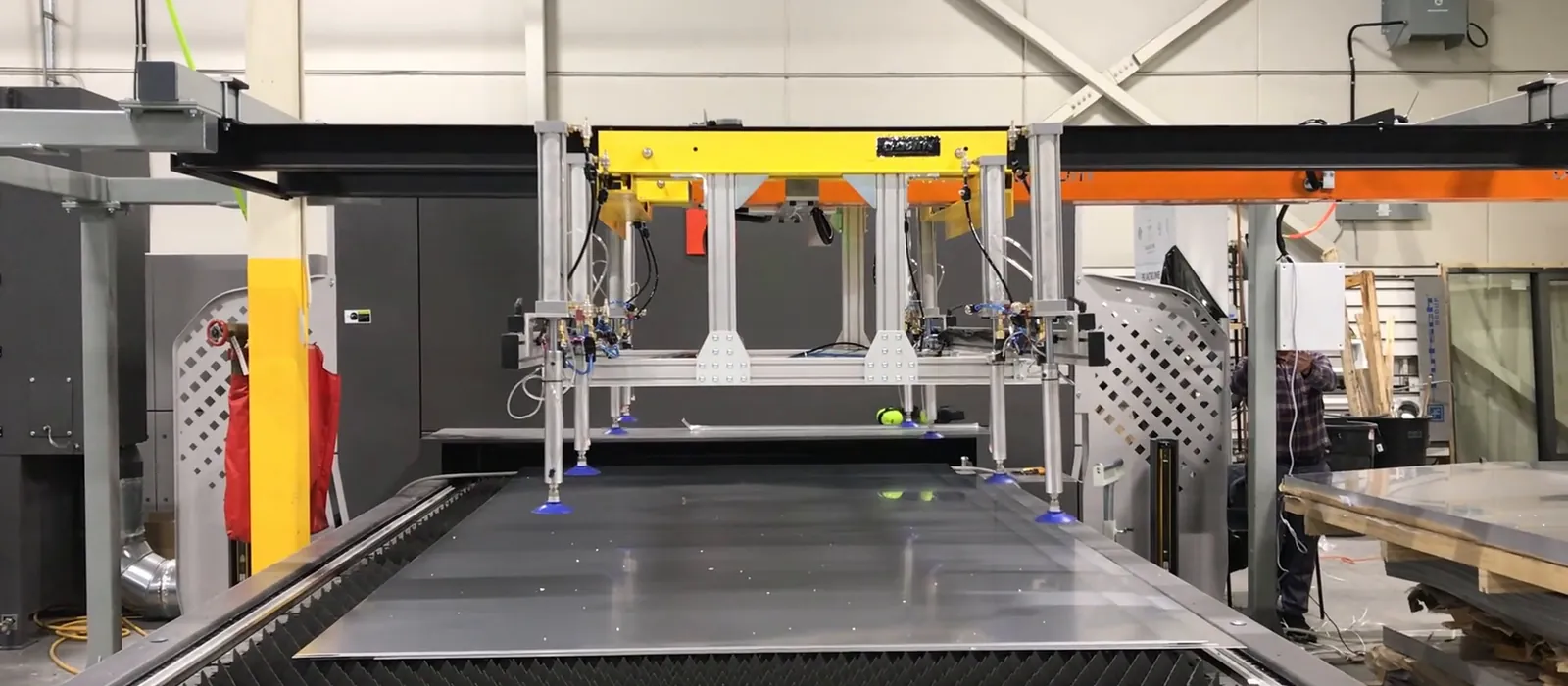
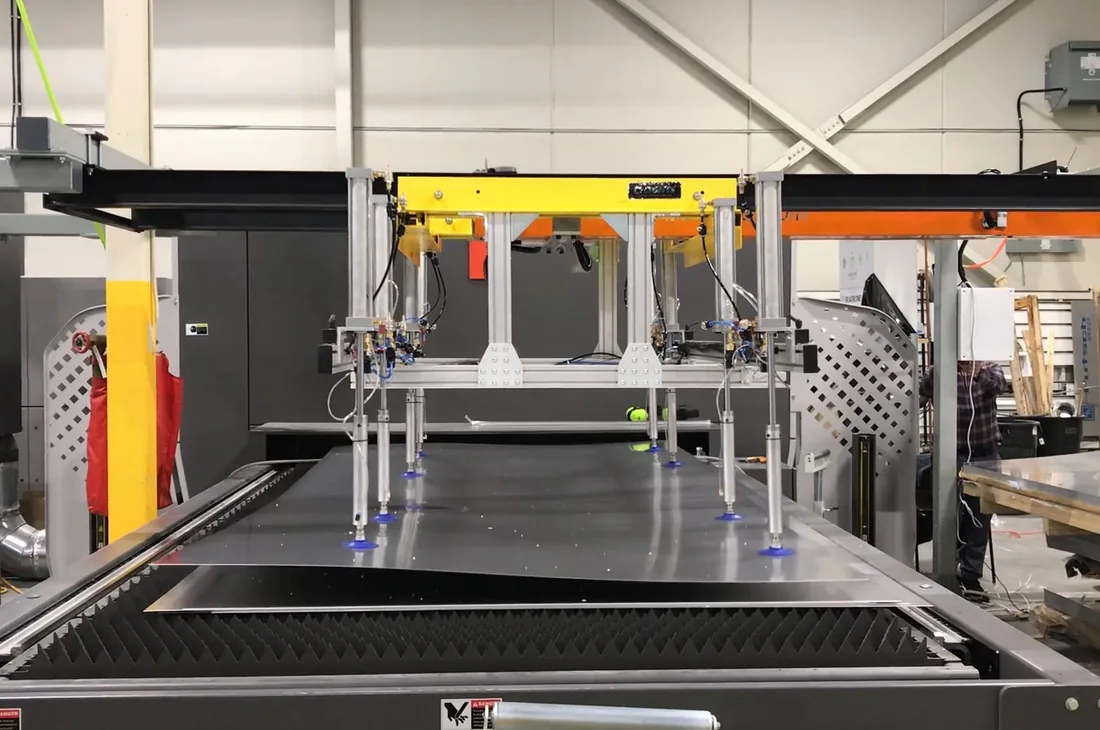
Photographs of Delkotech built equipment. No stock imagery is used on this site.
Questions
Place Processing Automation Machines Questions
Can one station handle more than one part number?
Yes, when the family shares a locating scheme. Send the range of parts you want covered at enquiry and we will tell you whether one nest can carry them or whether a quick change arrangement is needed.
What tolerance can it hold?
That depends on the part, the material and the operation, so we do not publish a number that would be meaningless. During the part study we confirm what the station can hold and record it in the specification.
Can it go between two machines we already own?
That is a common arrangement. We need the make and model of the machines either side and the signals they can offer, then the station is designed with a handshake to both.
Does the operator stay at the station?
Usually for loading and unloading. The actuation is guarded, so the operator is clear of the working area during the cycle.
Can it record what it did?
Yes. Counts, cycle results and check outcomes can be made available to your plant systems. The data contract is agreed before software is written.
How do we start?
Email [email protected] with the part drawing, the operation and your volume, and we will come back with a station concept.
Related
Related Equipment
Sheet Metal Automation
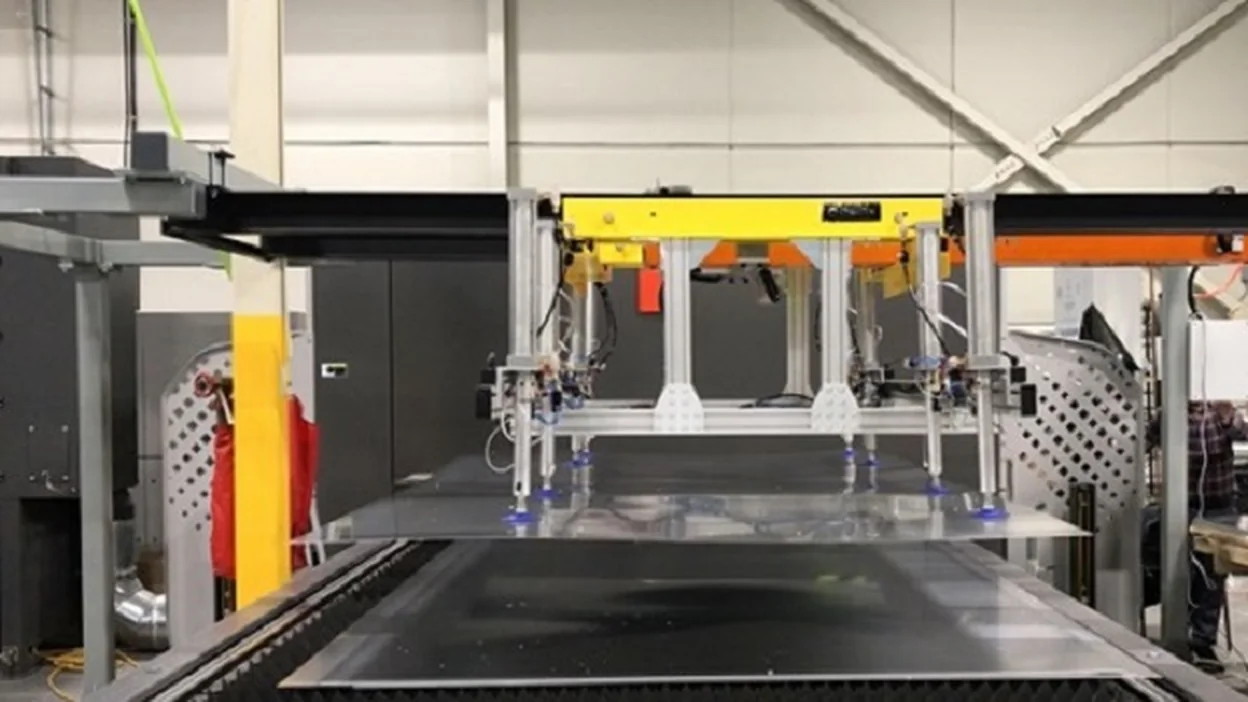
Automatic Sheet Metal Pick and Place Machine
Vacuum gantry de-stacker that feeds blanks to a laser or press without manual lifting
View equipment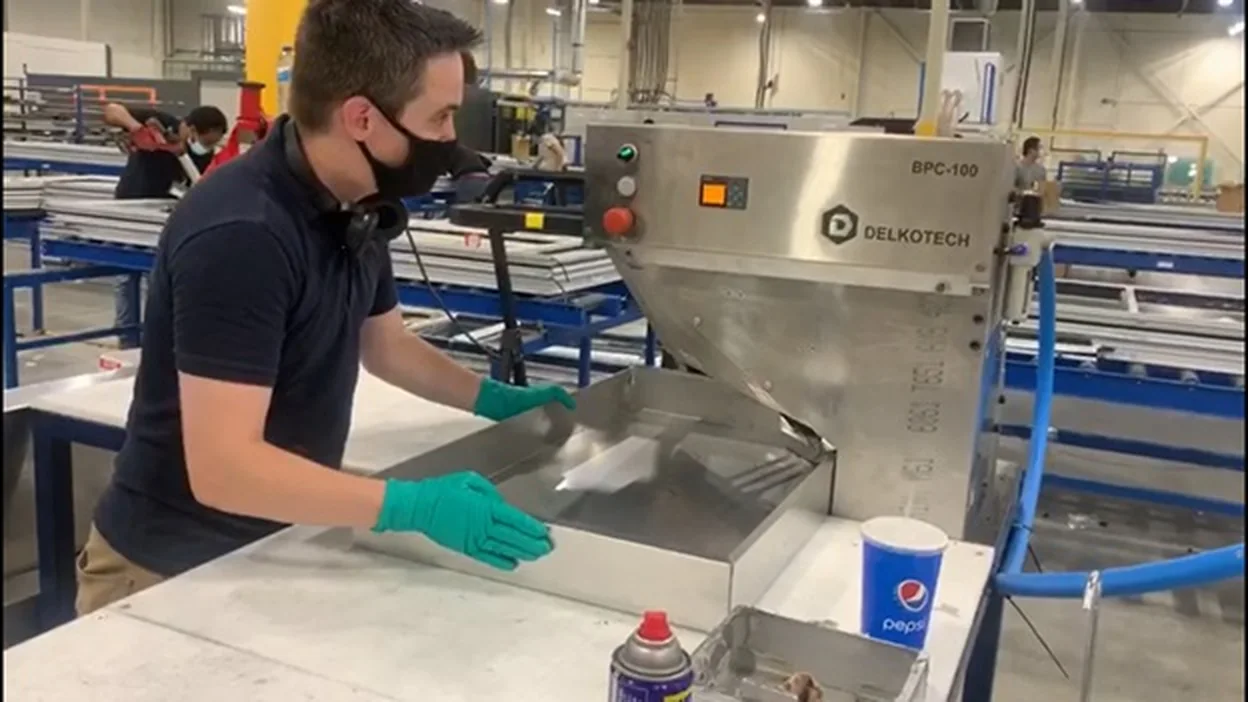
Sheet Metal Automation
Clinching Machine
Cold forming press that joins sheet metal without heat consumables or surface damage
View equipmentDevice Assembly Systems
Combination Device Assembly
Multi station systems that bring several assembly processes into one controlled cycle
View equipmentRelated
Related Articles
Talk to an engineer
Get a Quotation for This Machine
Send the part drawing, the operation and the rate you need. You will get a concept and a defined scope, not a brochure.