
- Home
- Products
- Sheet Metal Automation
- Clinching Machine
DK-01 · Sheet Metal Automation
Clinching Machine
Cold forming press that joins sheet metal without heat consumables or surface damage
Overview
What This Machine Does
Clinching joins two or more sheets by pressing the material into a die so that it interlocks. There is no heat, no filler, no rivet and no fastener inventory. The joint is formed out of the parent material itself.
Because the process is cold and localised, coated and painted sheet can be joined without burning off the coating or leaving a heat affected zone that later corrodes. For pre-finished panels that is often the deciding factor.
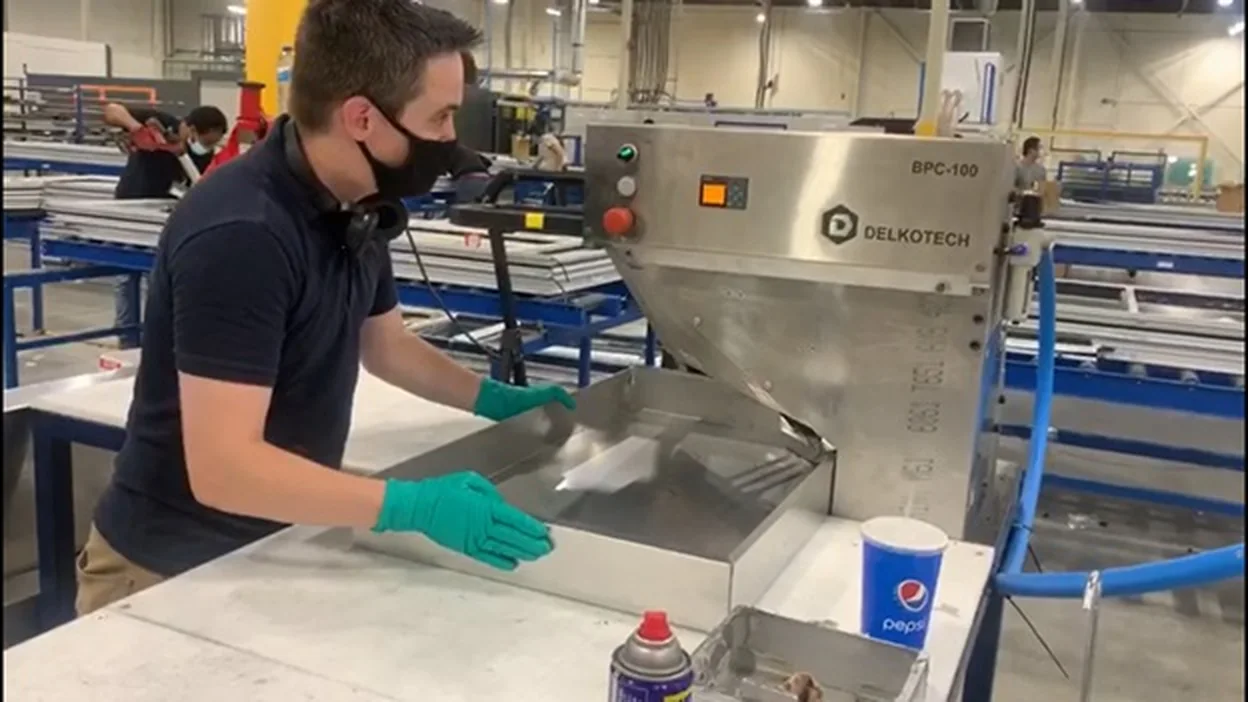
The machine shown here is a Delkotech built press being loaded by an operator at the Vaughan facility. Frame depth, tooling and cycle are set for the panel being joined.
From the original specification: The clinching process is a cost-effective and eco-friendly method of joining sheet metal by localized cold-forming of the materials. Coated and painted sheet metals can be joined together without any damage to the surface finish.
Key Benefits
What It Changes on Your Floor
No consumable cost per joint
No rivets, no welding wire, no gas. The cost per joint after installation is electricity and tooling life.
Coatings survive
Galvanised, pre-painted and coated sheet come out of the joint with the finish intact, which removes a rework or touch up step.
No fume extraction
A cold process does not need the extraction, screening and consumable handling that spot welding brings with it.
Visible joint quality
The formed button is inspectable by eye and by simple gauge, so shop floor verification does not require a destructive test on every batch.
Dissimilar materials
Sheets that would be difficult to weld to each other can often be clinched, because the joint is mechanical.
Application Scenarios
Where It Is Used
Enclosure and cabinet panels
Joining back panels, gussets and stiffeners on pre-finished sheet.
Appliance and HVAC assemblies
Assembling coated sheet where a weld would damage the finish.
Bracket and frame sub-assembly
Attaching brackets to a formed panel without adding fastener inventory.
Automotive trim and closure parts
Joining coated panels where corrosion performance after assembly matters.
Who It Is For
Plants That Ask for This Machine
- Fabricators joining pre-painted or galvanised sheet who are losing time to weld touch up
- Plants paying for rivets, feeding systems and the labour to load them
- Manufacturers who want to remove welding fume from an assembly area
- Producers of enclosures, panels and light assemblies in repetitive batches
Problems It Solves
Welding destroys the coating
Spot welding pre-finished sheet burns the coating and creates a corrosion start point. Clinching leaves the coating in place.
Fastener cost and logistics
Rivets have a piece price, a feeding system, a jam rate and a stores line. A clinch joint has none of these.
Fume and extraction
Welding in an assembly cell brings extraction, screening and maintenance. A cold process removes that whole line item.
Inspection burden
Weld verification often means destructive sampling. A clinch button can be checked visually and dimensionally on the line.
Technical Features
How It Is Built
C frame press structure
Frame depth and throat set by the panel being joined, so the reach covers the joint positions you actually need.
Punch and die tooling
Tooling selected for the material combination, total thickness and required joint strength.
Controlled press stroke
The forming stroke is controlled so each joint sees the same setting depth rather than an operator dependent squeeze.
Operator loading station
Work height, part location and two hand or guarded initiation arranged for the panel size.
Cycle and counting
Joint count per part and per shift available to the controller for traceability.
Tooling change
Punch and die changeable for a different material stack without rebuilding the station.
Specifications
Specification Sheet
Delkotech builds to order, so dimensional and performance values are set against your part at design review, then measured and recorded before shipment. Values not yet fixed for your project are marked TBC rather than guessed.
| Process | Mechanical clinching by localised cold forming, no heat and no consumable |
|---|---|
| Joins | Sheet metal including coated and painted material |
| Joint type | Round or rectangular clinch button, set by tooling |
| Press force | TBC - confirmed at design review |
| Throat depth | TBC - confirmed at design review |
| Maximum total sheet thickness | TBC - confirmed at design review |
| Cycle time per joint | TBC - confirmed at design review |
| Stroke | TBC - confirmed at design review |
| Drive | Selected against required force and cycle at design review |
| Control | PLC controlled stroke with operator interface |
| Initiation | Two hand control or guarded automatic initiation, set at safety review |
| Electrical supply | TBC - confirmed at design review |
| Compressed air | TBC - confirmed at design review |
| Built at | Delkotech facility, Vaughan, Ontario, Canada |
| Joins | Steel, galvanised steel, pre-painted steel, aluminium and coated sheet |
|---|---|
| Tooling | Hardened tool steel punch and die sets |
| Frame | Welded and machined steel |
| Finish compatibility | Coated and painted surfaces are joined without damage to the finish |
Manufacturing Process
From Enquiry to Commissioned Machine
Joint study
Material combination, total thickness, coating and required joint strength are reviewed against your sample panels.
Tooling selection
Punch and die geometry chosen for the stack, then trialled on your material.
Frame sizing
Throat and stroke sized so every joint position on the panel is reachable.
Build
Press, tooling and controls built and assembled at the Vaughan facility.
Sample joints
Buttons formed on your material and checked before the machine ships.
Installation and training
Set up on your floor with operator and maintenance training.
Quality Control
What Is Checked Before It Ships
- Setting depth measured across the stroke range and recorded
- Sample joints formed on customer supplied material
- Button geometry checked against the agreed reference
- Repeatability run to confirm consistent joints over a continuous cycle
- Guarding and initiation circuit verified before shipment
Certifications
Compliance Position
Equipment is built to be validated to current regulatory standards. Joint strength acceptance criteria are agreed with the customer against their own specification. Third party certificates for a specific build are TBC until contract stage.
Customization Options
- Throat depth and frame geometry set to your panel
- Tooling for a specific material and thickness combination
- Single joint station or multi head arrangement
- Manual load station or integration into an automated cell
- Joint counting and traceability output
- Quick change tooling for a mixed product family
Comparison
Compared With the Alternatives
| Resistance spot welding | Established and fast, but it damages coatings, needs extraction and usually requires destructive sampling to verify. Clinching keeps the finish and is inspectable on the line. |
|---|---|
| Self piercing riveting | Stronger in some joints and able to join material combinations clinching cannot. It carries a consumable cost, a feed system and a stores line that clinching does not. |
| Screws and fasteners | Serviceable and removable, which matters for panels that must come apart. For a permanent joint they cost more per joint and add assembly time. |
Use Guide
Running It Well
Trial on your own material
Coating type and thickness change how the button forms. Always set the tooling against the actual production material rather than a similar grade.
Check the setting depth
A simple depth check on the first parts of each batch catches tooling wear before it becomes a weak joint.
Support the panel
Long panels need support so the joint position sits square to the die. Unsupported weight is a common cause of inconsistent buttons.
Plan tooling life
Punch and die wear is gradual and predictable. Track joint counts so tooling is changed on a schedule rather than after a quality problem.
Questions
Clinching Machine Questions
What press force does the machine need?
Force depends on the material, the coating and the total thickness of the stack. Send sample panels or the material specification and we will confirm the tooling and force at design review. The source specification does not publish a fixed tonnage because the machine is built around the joint.
Will clinching damage painted or galvanised sheet?
No. The published description of the process is that coated and painted sheet metals can be joined without any damage to the surface finish, because the joint is formed cold and locally rather than by melting the material.
How do we inspect the joint?
The formed button can be checked visually and dimensionally on the line. Acceptance criteria are agreed against your own specification during the joint study.
Can it join aluminium to steel?
Clinching is a mechanical joint, so combinations that are awkward to weld are often possible. Whether a specific combination works at your thickness has to be trialled on your material.
Is the machine manual or automatic?
Both arrangements are built. A manual load station suits mixed batch work, and the same press can be integrated into an automated cell where volume justifies it.
What maintenance does it need?
Routine work is tooling inspection, lubrication of the stroke and a check of the guarding circuit. The schedule is supplied in the handover documentation.
Related
Related Equipment
Sheet Metal Automation
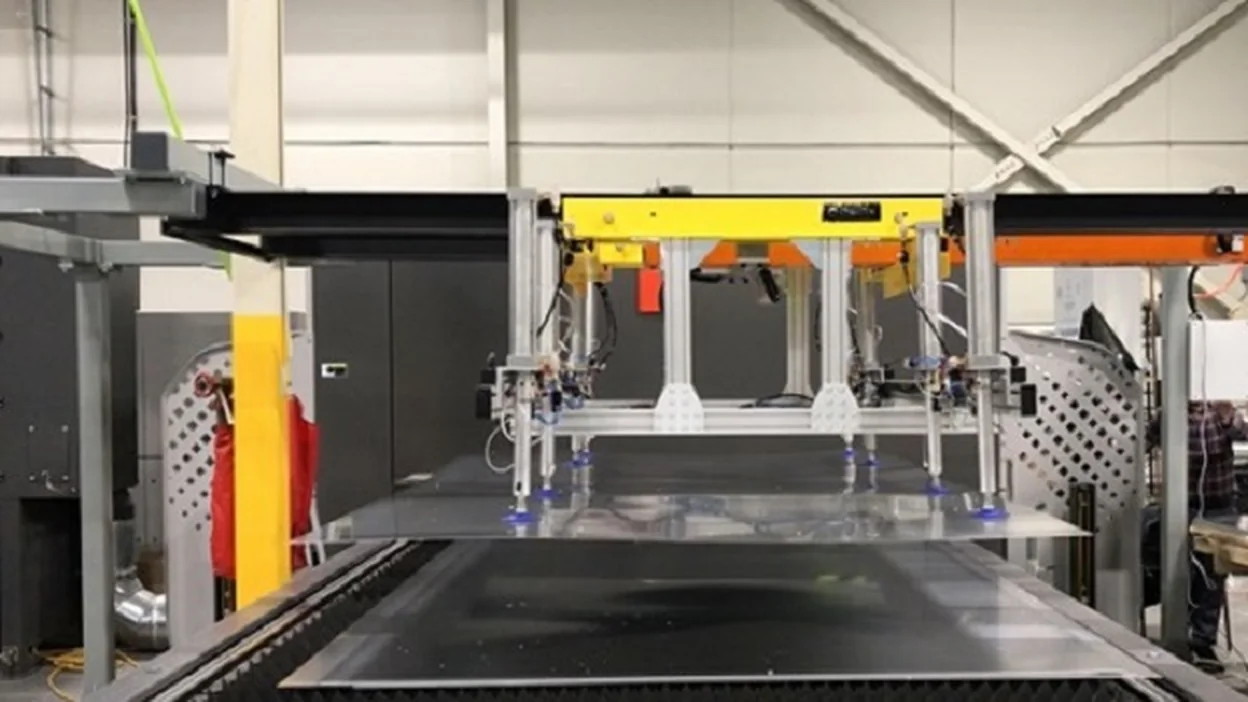
Automatic Sheet Metal Pick and Place Machine
Vacuum gantry de-stacker that feeds blanks to a laser or press without manual lifting
View equipment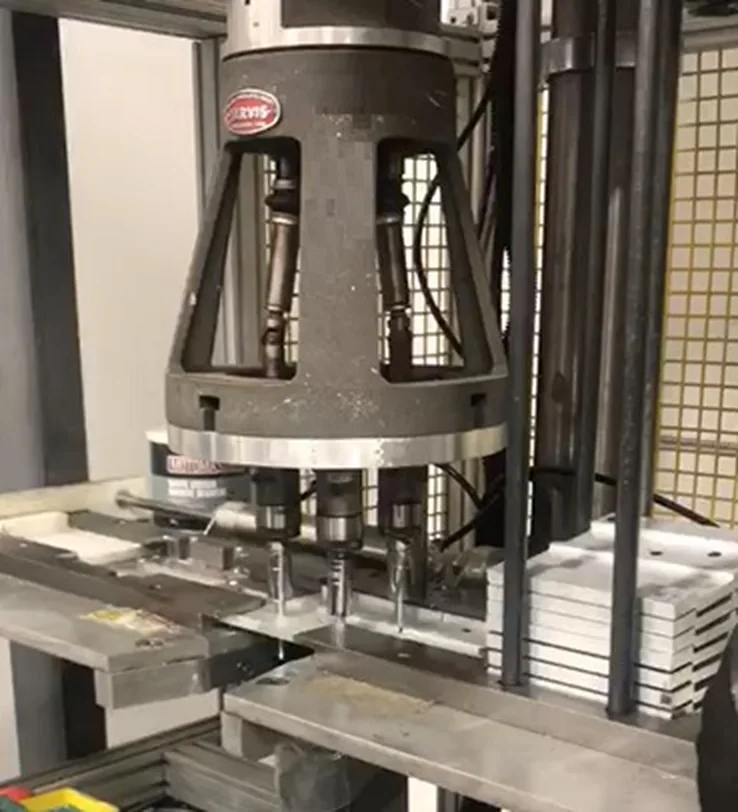
CNC Assembly Machines
Multi Spindle Screw Machines
Drive every fastener in a pattern in one stroke with torque controlled at each spindle
View equipment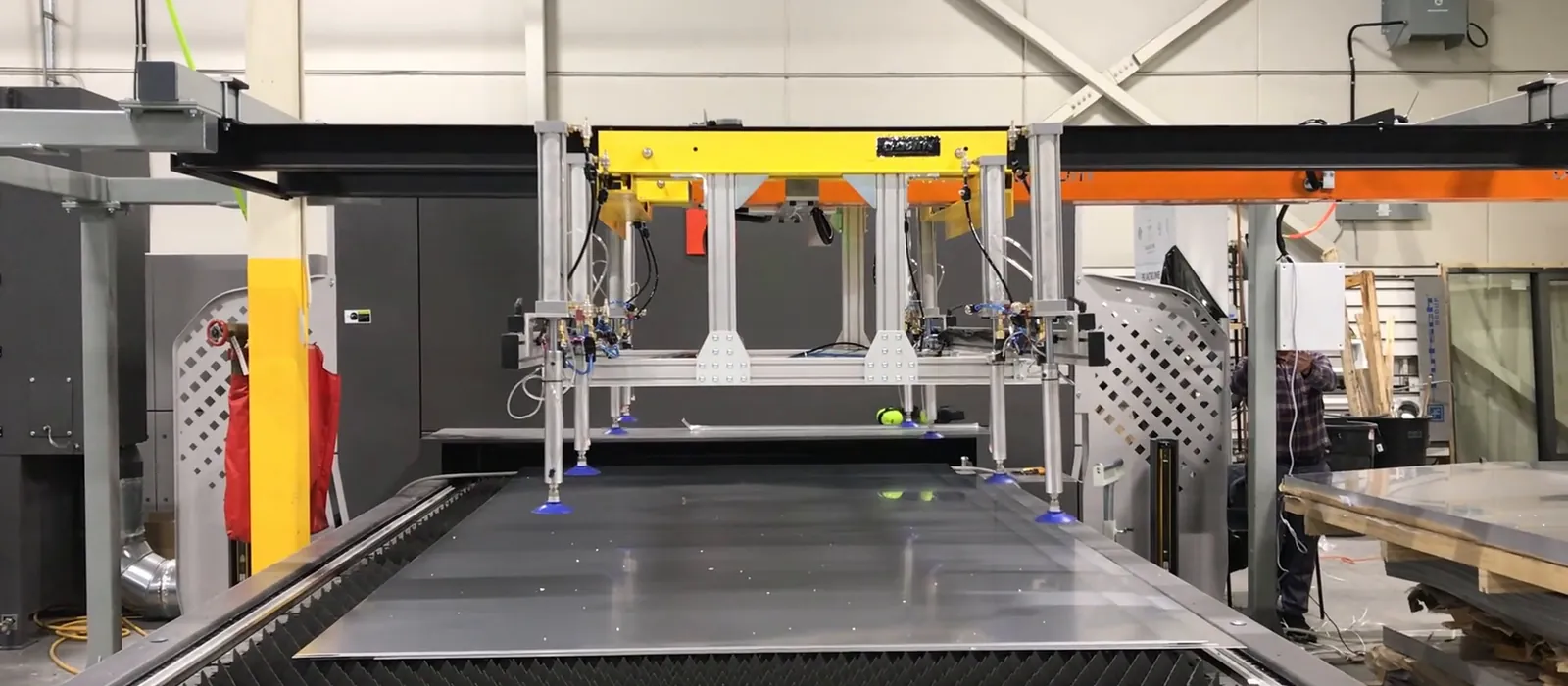
Sheet Metal Automation
Place Processing Automation Machines
Stations that position the part and perform the operation in one controlled cycle
View equipmentRelated
Related Articles
Talk to an engineer
Get a Quotation for This Machine
Send the part drawing, the operation and the rate you need. You will get a concept and a defined scope, not a brochure.