
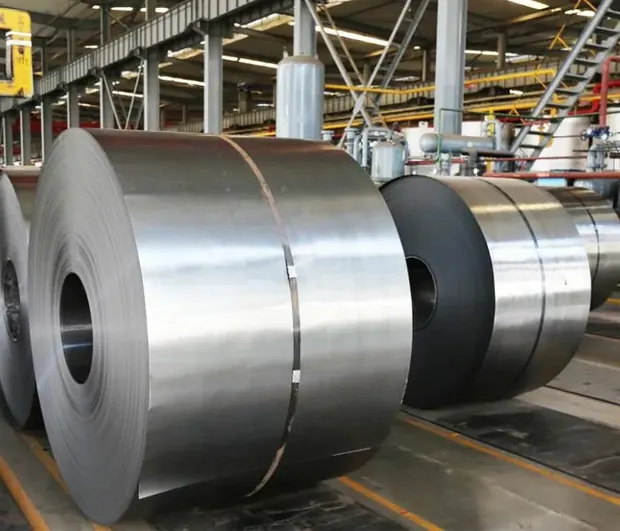
Tinplate Coil
Cold rolled low carbon steel strip tin coated on both sides for can and container making
SpecificationsIndustries
Solutions
Resources
Company

Tinplate temper controls how stiff and how formable the plate is, and tin coating weight controls how much protection the tin layer gives the contents.
Tinplate temper controls how stiff and how formable the plate is, and tin coating weight controls how much protection the tin layer gives the contents. The tempers held here run T2 T2.5 T3 T3.5 T4 and T5 in the single reduced range and DR7 DR7M and DR8 in the double reduced range, with tin coating from 1.1 to 11.2 g per square meter. Getting both right is what separates a can that runs on the line from one that splits at the flange.
Tinplate, written SPTE or ETP, is cold rolled low carbon steel sheet or strip coated on both sides with commercially pure tin. The tin is there to prevent corrosion and rust, and the combination gives the strength and formability of steel with the corrosion resistance, solderability and appearance of tin.
That is why it dominates packaging. The material seals well, keeps light out, takes print and stands up to handling, so it appears in food packaging, pharmaceutical packaging, commodity packaging, instrument packaging and industrial packaging.
Temper is a hardness and stiffness scale. The single reduced tempers run T2 T2.5 T3 T3.5 T4 and T5, moving from softer and more formable toward harder and stiffer. The double reduced tempers DR7 DR7M and DR8 are rolled again after annealing, which raises stiffness and lets the same rigidity be reached at a thinner gauge.
The rule of thumb on the shop floor is simple. Deep drawn parts and rolled edges want the lower tempers. Flat rigid parts that only need to resist denting can take the higher tempers or a double reduced plate and save material weight.
Tinplate is supplied in both BA and CA condition, meaning batch annealing and continuous annealing. The annealing route is part of the temper specification rather than a separate option, and the tempers listed here are all available in BA and CA.
Name the route on the order when your forming process is sensitive to it. Leaving it blank means the mill decides, and two coils that carry the same temper letter can then behave differently on the same press.
Tin coating is supplied from 1.1 to 11.2 g per square meter. The lower end is for dry contents and printed decorative work where the tin is mostly a base for lacquer and appearance. The upper end is for aggressive contents and long shelf life where the tin layer itself is doing the corrosion work.
This is the specification most often left off an inquiry, and it is the one that decides whether the pack survives its shelf life. Tell us the contents and the intended shelf life and the coating weight can be set against that rather than against a default.
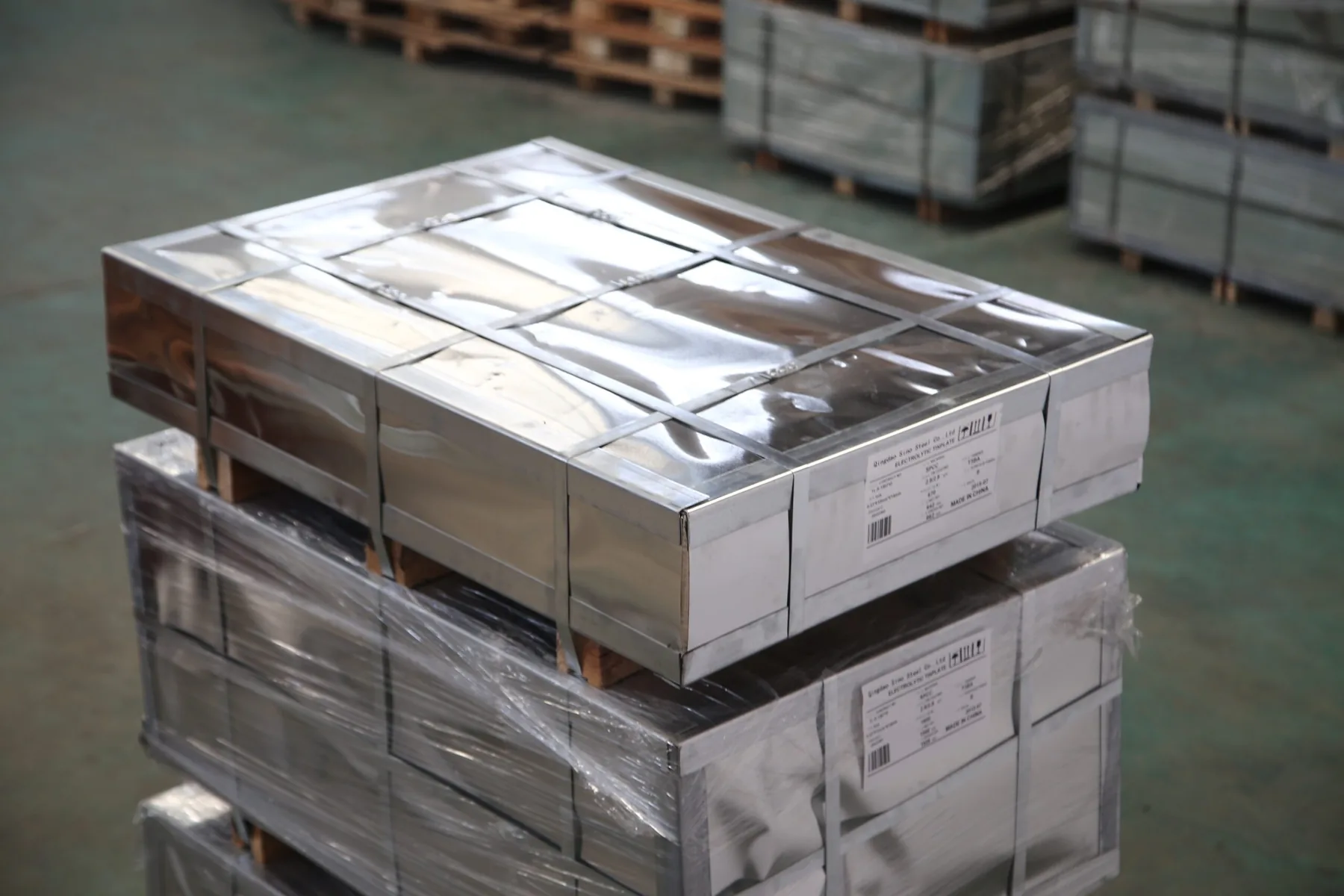
Thickness runs from 0.15 to 0.50mm with a tolerance of plus or minus 0.01mm, and coil width runs from 600 to 1050mm with a tolerance of 0 to 3mm. Coil inside diameter is 420 or 508mm and coil weight is 1 to 5 MT.
Those coil dimensions are not trivia. Your slitter or press feed is built around a specific inside diameter, and the maximum coil weight your crane can lift decides what can be unloaded at your plant. Confirm both before the order is booked.
Surface is supplied in bright, stone or silver finish with passivation treatment, and DOS oil is applied. The finish is a decoration and printing decision, while passivation and oil are what keep the tin surface from staining and sticking between production and use.
If your line degreases before printing, say so. If it does not, the oil film is part of the specification and has to match what your coating shop expects.
The standards carried across the tinplate range are GB/T 2520-2008, JIS G3303-2008, DIN EN 10203-1991 and ASTM A623M-2011. Substrate material is quoted as SPCC, MR or SPCH.
Name the standard your customer audits against and the certificate then reads in the same language as your specification. ISO9001, BV, SGS and RoHS documentation is available with the order.
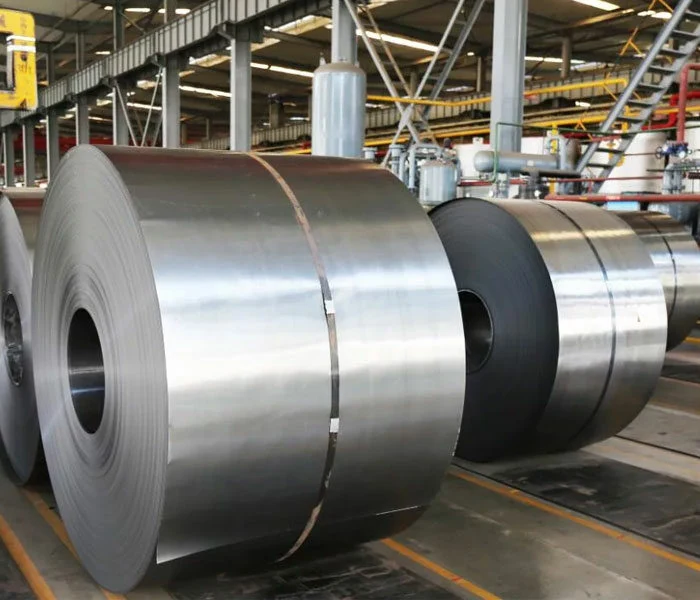
A complete tinplate line reads as form, standard, substrate, temper with annealing route, tin coating weight, thickness, width, finish and coil dimensions. Written that way it can be quoted in one pass and it can be audited later.
Ask for the mill test certificate with the shipment so the temper and coating weight are on record against the batch that made your cans.
Cold rolled low carbon steel strip tin coated on both sides for can and container making
Specifications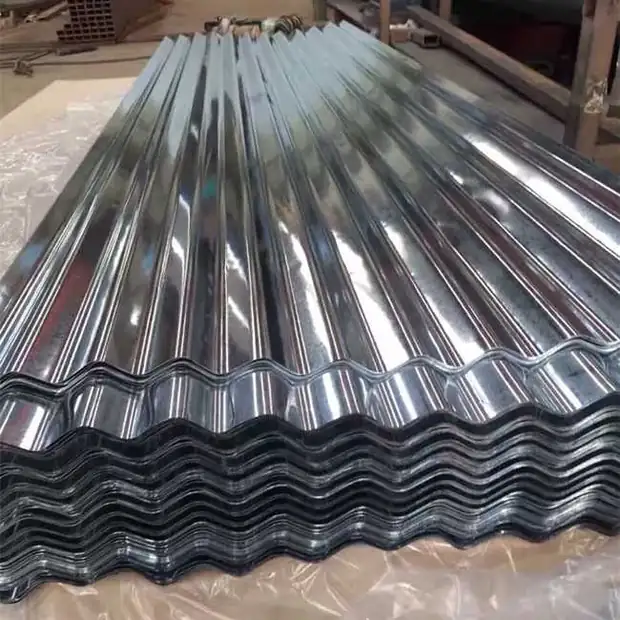
SPTE sheet supplied in the temper your forming and seaming operation actually needs
Specifications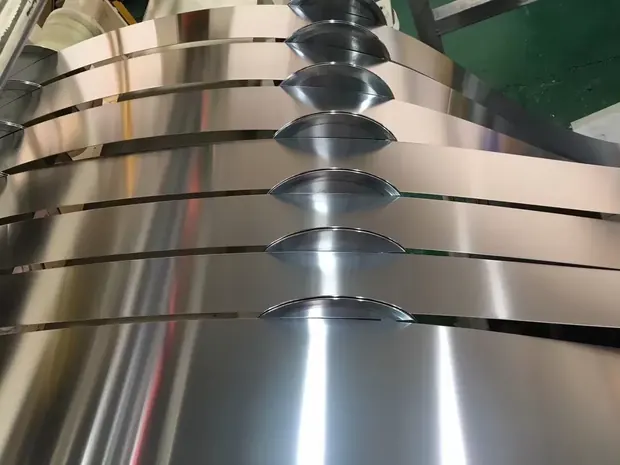
Stocked SPTE strip cut to width for short runs and repeat packaging programs
Specifications
Full width electrolytic tinplate coil wound for continuous can and closure lines
Specifications
Electrolytic tinplate in coil strip and sheet form for can makers metal decorators and roofing fabricators
Read more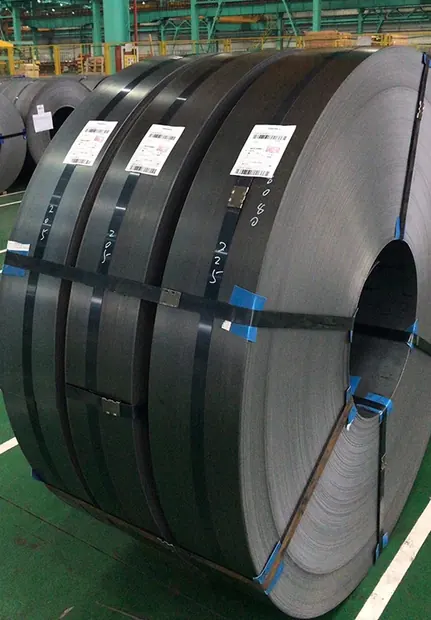
Uncoated mild steel coil for fabricators who roll form slit or press their own parts instead of buying finished sections
Read moreFlat steel bought by the coil for roll forming stamping and decoiling lines rather than by the cut sheet
Read moreCan makers do not buy steel, they buy a strip that will draw without splitting, take a printed lacquer without blisterin
Read more
Construction and infrastructure buyers order steel by the part it becomes: mild steel plate for base plates gussets and
Read moreDrawn and formed parts sit at the softer end of the range, so T2 and T2.5 are the usual starting point, with T3 and T3.5 for general can bodies. Send the part drawing and the draw ratio and the temper can be confirmed before you commit to a coil.
T4 is single reduced and DR8 is double reduced, meaning it is rolled again after annealing. The double reduced plate reaches a higher stiffness, which lets a thinner gauge carry the same rigidity. Both are held here so the choice can be made on part weight.
Coating weight is supplied anywhere from 1.1 to 11.2 g per square meter. Acidic contents and long shelf life push the specification up the range, while dry contents in a lacquered can sit lower. Tell us the product and the shelf life and the coating weight is set against that.
Yes. Coil, strip and cut sheet all come from the same specification, including coated and customized sheet, so a press shop and a decoiling line can be served from one order.
Thickness runs from 0.15 to 0.50mm with a tolerance of plus or minus 0.01mm, and width from 600 to 1050mm with a tolerance of 0 to 3mm.
GB/T 2520-2008, JIS G3303-2008, DIN EN 10203-1991 and ASTM A623M-2011 are all carried. Name the one your customer audits against on the order and the mill test certificate is issued in that language.
If you are still asking "Which temper should I use for a drawn can body?" send us the sizes and the duty and we will answer it against your actual order.