
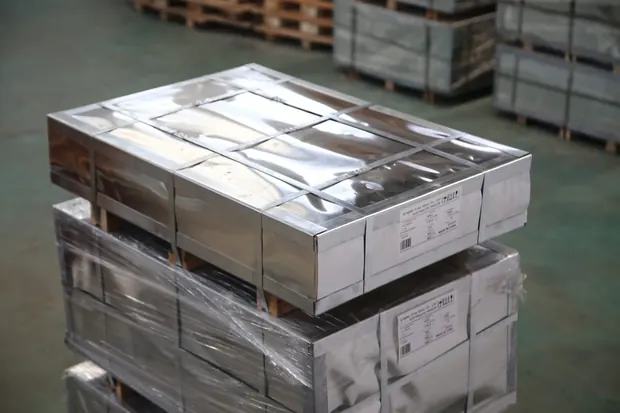
Customized Tinplate Sheet
Gauge temper coating weight and finish set per order rather than taken from stock
SpecificationsIndustries
Solutions
Resources
Company
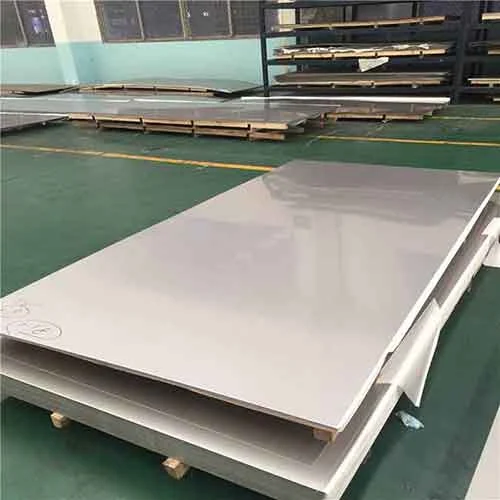
An equipment builder does not want plate, it wants the panel that bolts into the machine. Every step left to the buyer, from breaking down the coil to punching the bolt pattern.
An equipment builder does not want plate, it wants the panel that bolts into the machine. Every step left to the buyer, from breaking down the coil to punching the bolt pattern, is labor competing with assembly work that earns more. Tianyu Metal takes drawings and sample parts and supplies finished components in carbon, alloy, wear resistant, bullet resistant, stainless and coated material, using cutting, bending, welding, decoiling and punching with painted or galvanized surfaces where the product allows. ODM and OEM work is quoted the same way as stock material, with the grade and the certificate named before production starts.
Plate delivered to a machine shop still has to be cut, formed and drilled before it becomes a component. Buying the component instead moves that work off your floor and out of your labor cost.
A recurring order of a few dozen panels sits below the interest of a dedicated fabricator. Processing it alongside the material supply keeps the batch worth producing.
When the specification lives in a sales conversation it changes. Freezing grade, tolerance and hole pattern on the order confirmation gives every later batch the same reference.
Sending fabricated parts out for paint or galvanizing adds a handoff and a party who never saw the drawing. Where the product carries a painted or galvanized surface it is supplied that way from the start.
An OEM audited by its own customer needs to show what the part is made of. The mill test certificate for the parent material is issued with the finished parts.
A part described in words alone gets priced against an assumption. The first sample then differs from what the buyer had in mind and two weeks are gone. Send the drawing, or the old part you are replacing, with the material, the thickness and the quantity per batch. We confirm what can be produced as drawn and identify any feature that has to change before a price is given.
Custom parts often inherit whatever grade the previous supplier used, which may be overspecified for most of the part and marginal at the one point that fails. The grade is chosen against the duty. Wear faces move to AR400 AR500 or AR600, loaded members to S460 S550 or S690, corrosive service to 304 316 or 2205, outdoor structures to galvanized or Zn-Al-Mg coated material, and tooling to P20 D2 or M2.
A lump sum price hides which operations are included, so the buyer discovers at delivery that the holes or the paint were extra. The quotation lists the operations that are in the price, covering cutting, bending, welding, decoiling and punching, plus the surface as natural painted or galvanized, so nothing appears afterwards as a variation.
Custom work repeated across several orders drifts. Batch three no longer matches batch one and the assembly line finds out with a part that will not seat. The confirmed order fixes grade, dimensions, tolerances, hole pattern, bend directions and finish, and that record is what every repeat batch is produced against rather than the memory of the last run.
Parts made by separate suppliers for cutting, forming and coating accumulate errors, and no single party owns the finished dimension. Cutting, bending, punching and welding are carried out on the same order so the finished part is measured as a part, not as a sequence of separate services with a gap between each one.
A fabricated component without material traceability cannot be used by an OEM whose own customer audits the supply chain. A mill test certificate is issued against the material grade and finished dimensions are checked against the drawing before packing. ISO9001 BV SGS and RoHS certifications are on file and copies are released on request.
A pallet of mixed components has to be unpacked and sorted before assembly can begin, which puts warehouse labor in front of production labor. Parts are marked by part number, counted into the packing list and bundled the way you assemble them, with photographs taken before loading so the batch can be checked against the order on arrival.
Gauge temper coating weight and finish set per order rather than taken from stock
Specifications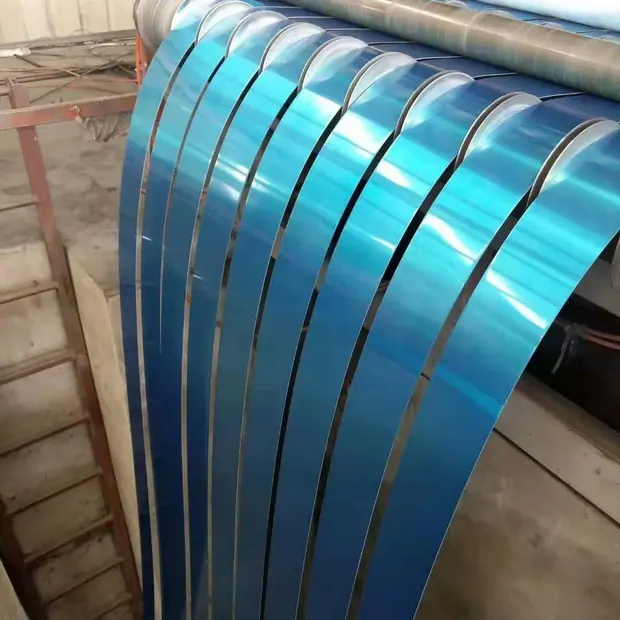
Narrow electrolytic tinplate cut to width for closures crowns and small formed parts
Specifications
Quenched and tempered wear plate for chutes liners buckets and crusher bodies
Specifications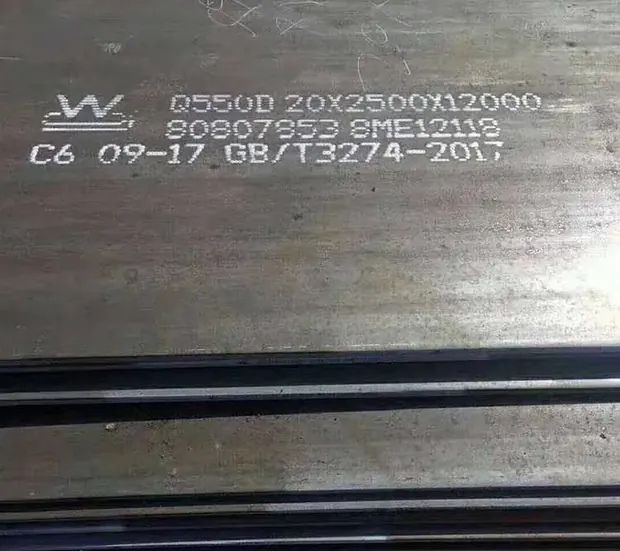
550 MPa structural plate for boilers pressure equipment and heavy welded frames
Specifications
Electrolytic tinplate in coil strip and sheet form for can makers metal decorators and roofing fabricators
Read more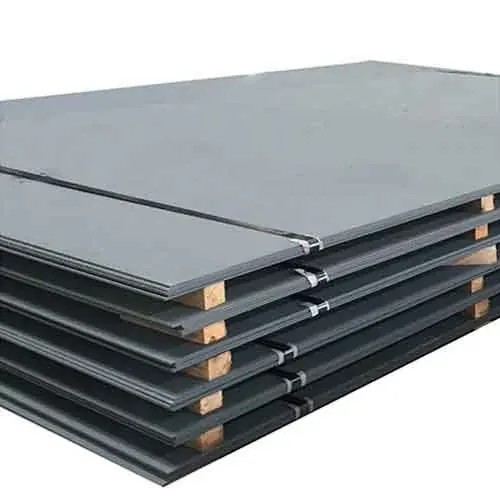
The abrasion resistant branch of the steel plate range for chutes liners buckets and crusher wear parts
Read more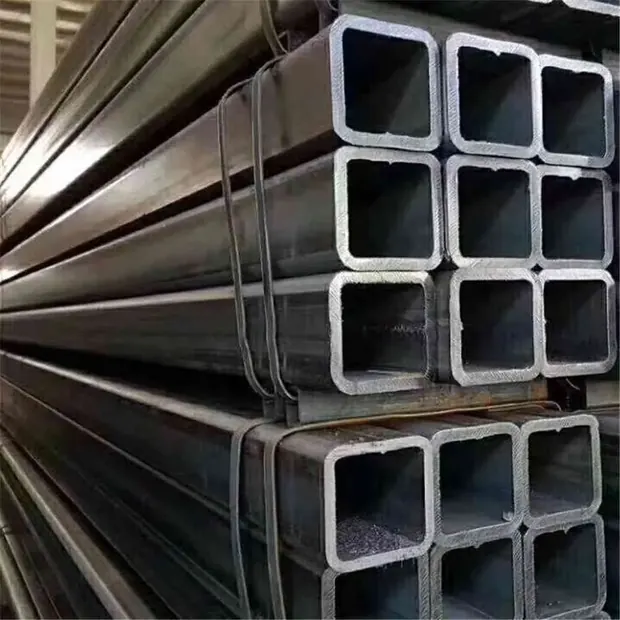
Square and rectangle hollow sections welded or seamless bare or galvanized for frames racking and load bearing steelwork
Read moreCan makers do not buy steel, they buy a strip that will draw without splitting, take a printed lacquer without blisterin
Read more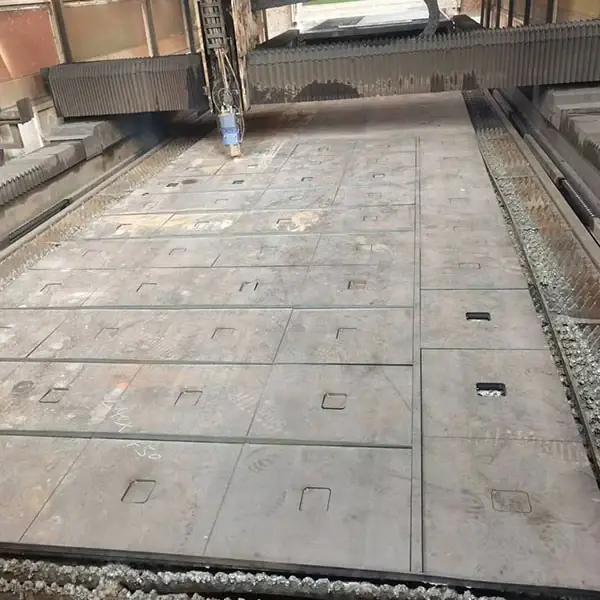
One loader or one tractor needs four different steels and most fabrication shops buy them from four different suppliers.
Read more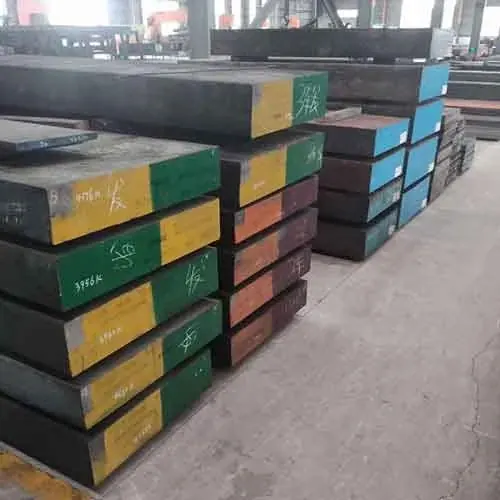
A tool room loses more time waiting for a block than cutting one. Tianyu Metal stocks the four families a die shop actua
Read moreMaterial supplied in your specified grade and dimensions, processed by cutting, bending, welding, decoiling and punching, with a natural painted or galvanized surface where the product carries it. Work outside those operations is declined rather than subcontracted without telling you.
A drawing or a sample of the part being replaced, the material grade or the duty it has to survive, the thickness, the quantity per batch and how often the batch repeats. Tell us which dimension is critical so the tolerance is applied where it matters.
Yes. Tinplate is supplied as coil strip and sheet in 0.15~0.50mm thickness and 600~1050mm width to GB/T 2520-2008 JIS G3303-2008 DIN EN 10203-1991 and ASTM A623M-2011, in coated and customized formats for can and packaging production.
Welding is one of the processing services, so sub assemblies are produced where the design allows it. Send the assembly drawing and we will confirm which joints can be made here and which are better left to your own shop.
Grade, dimensions, tolerances, hole pattern, bend directions and finish are recorded on the order confirmation and every repeat batch is produced against that record, not against the previous run.
Yes. A mill test certificate is issued against the grade of the parent material, so a fabricated component stays traceable for your own quality file and for your customer's audit.
Tell us what the order looks like and we will confirm how we would run it.