
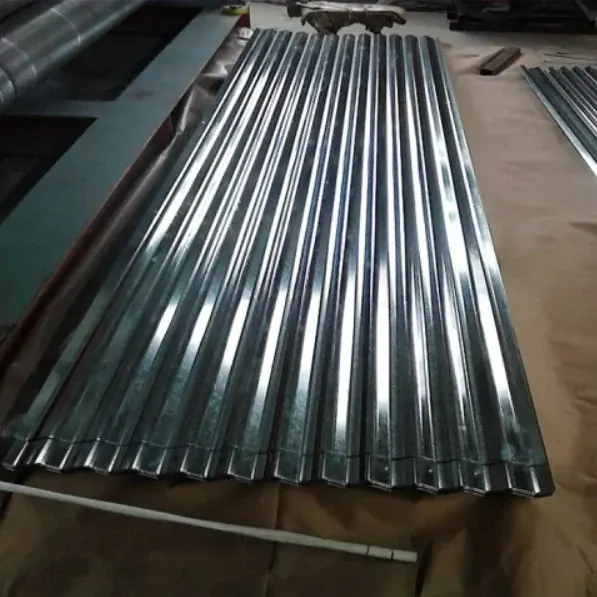
Color Coated Tin Roofing Sheet
Electrolytic tinplate sheet with a printed passivated surface for roofing and panels
SpecificationsIndustries
Solutions
Resources
Company
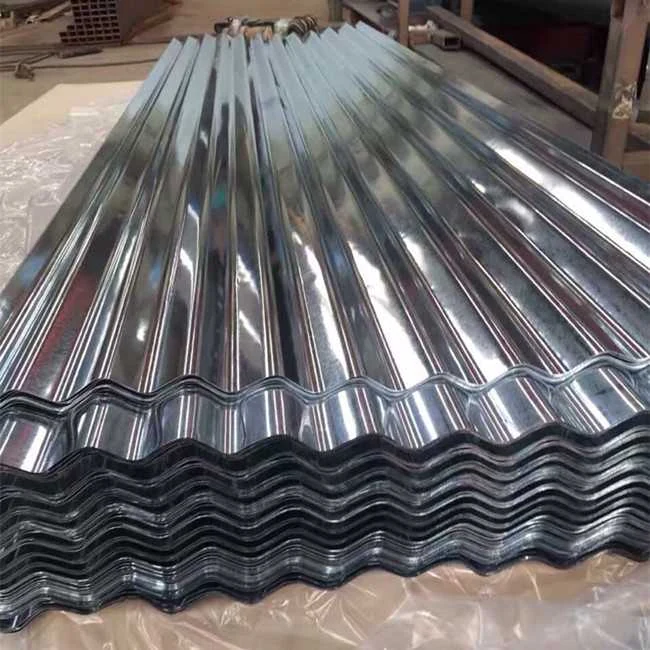
SPTE sheet supplied in the temper your forming and seaming operation actually needs
Tinplate sheet is electroplated tin steel supplied flat and cut to size, combining the strength and formability of a low carbon steel base with the corrosion resistance and solderability of a pure tin surface. Box makers, can producers and metal decorators order it in SPCC, MR or SPCH to GB/T 2520-2008, JIS G3303-2008, DIN EN 10203-1991 or ASTM A623M-2011. The usual procurement problem is temper: a sheet stiff enough to hold a body wall may crack on a deep drawn end, and buying one compromise temper for the whole range costs scrap on both jobs. Ordering across T2, T2.5, T3, T3.5, T4, T5 and the double reduced DR7, DR7M and DR8 in batch or continuous annealed condition lets each part get the sheet it needs.
Nine temper designations from T2 to DR8 are available, in batch annealed or continuous annealed condition. A drawn end and a stiff body wall can be ordered separately instead of both compromising on one grade.
DR7, DR7M and DR8 hold rigidity at the thin end of the 0.15-0.50mm range. That is how wall weight comes out of a pack without the body losing its stacking strength.
The pure tin layer is non-toxic and corrosion resistant, which is why tinplate remains standard for food packaging where the metal meets the contents.
A tinplate pack is fully light-proof and seals tightly, so contents are protected from light and oxygen without an added barrier layer.
The tin surface takes printing directly and holds it, so the pack carries its own decoration and there is no label to apply, lift or peel in storage.
Sheets are supplied 0.15-0.50mm thick to a plus or minus 0.01 mm tolerance so seaming dimensions and press setup stay put through the run.
Buying a single compromise temper produces cracked draws on one part and flimsy walls on another. Ordering across T2 to DR8 puts the right stiffness on each component.
Heavy walls add freight cost on every case shipped. Moving to DR7, DR7M or DR8 lets gauge come down while the body keeps enough rigidity to stack.
Applied labels peel in tropical warehousing and the pack looks damaged before it is sold. Printing directly onto the tin surface removes the label from the problem.
Double seam faults are often a gauge problem rather than a machine problem. A plus or minus 0.01 mm tolerance takes that variable out of the investigation.
Different destinations check against different tinplate standards. Ordering to GB/T, JIS, DIN EN or ASTM keeps the documentation matched to the market.
Body blanks and end shells for food cans where sealing and preservation decide shelf life and the metal is in direct contact with the contents.
Tins and lids for medicine and health products where the pack has to be non-toxic and keep light and moisture out.
Printed boxes and caddies for retail goods where the metal decoration is part of the product presentation.
Rugged metal cases for instruments and tool sets that must resist crushing in transit better than a carton.
Bodies, ends and lids for paint, chemical and adhesive containers where the contents attack lesser materials.
Values below come from the product data published by Shandong Tianyu Metal Products. Confirm the exact grade and size against your order.
| Product Name | Tinplate Sheet |
|---|---|
| Also Known As | SPTE ETP electroplated tin steel plate |
| Material | SPCC MR SPCH |
| Thickness | 0.15-0.50mm |
| Thickness Tolerance | Plus or minus 0.01 mm |
| Size | Cut to requirement |
| Temper | T2 T2.5 T3 T3.5 T4 T5 DR7 DR7M DR8 |
| Annealing | CA continuous annealing or BA batch annealing |
| Tin Coating | 1.1-11.2 g/m2 |
| Surface Treatment | Bright stone or silver finish with passivation treatment and DOS oil |
| Standards | GB/T 2520-2008 JIS G3303-2008 DIN EN 10203-1991 ASTM A623M-2011 |
| Certificate | ISO9001 BV SGS RoHS |
| Place of Origin | China |
| Single temper tinplate bought for all parts | Specifying temper per component stops the same sheet being too hard for the draw and too soft for the wall, which is where most of the scrap sits. |
|---|---|
| Standard temper at a heavier gauge | A double reduced DR grade holds rigidity at lower gauge, so pack weight and freight cost come down without losing stacking strength. |
| Carton and composite packaging | Tinplate is light-proof, rugged and seals tightly, so contents keep longer and the pack survives handling that crushes fibre board. |
| Uncoated cold rolled sheet | The tin layer is non-toxic and corrosion resistant, which is what qualifies the sheet for food and pharmaceutical contact duty. |
Ends that are drawn usually take a softer temper in the T2 to T4 range while bodies that need stiffness often run DR7, DR7M or DR8. Give the draw depth and wall thickness and we will comment on the pairing.
BA is batch annealed and CA is continuous annealed, and the two routes give different formability at the same nominal temper. Both are available across the full T2 to DR8 range.
Yes. Sheets are cut to the size you specify, so the layout you costed is what arrives instead of a standard sheet you have to re-cut.
Tinplate is non-toxic with commercial pure tin on both faces and is used widely for food packaging. Confirm the coating weight against your contents and shelf life before the order is fixed.
Coating is available from 1.1 to 11.2 g/m2. Neutral dry contents sit at the light end and acidic or aggressive contents at the heavy end.
GB/T 2520-2008, JIS G3303-2008, DIN EN 10203-1991 or ASTM A623M-2011, whichever you name on the order. Certification also covers ISO9001, BV, SGS and RoHS.
Often yes, but the forming behaviour changes, so run a first article before switching a production part. Tell us the operation sequence and we will flag where the substitution is likely to bite.
Electrolytic tinplate sheet with a printed passivated surface for roofing and panels
Specifications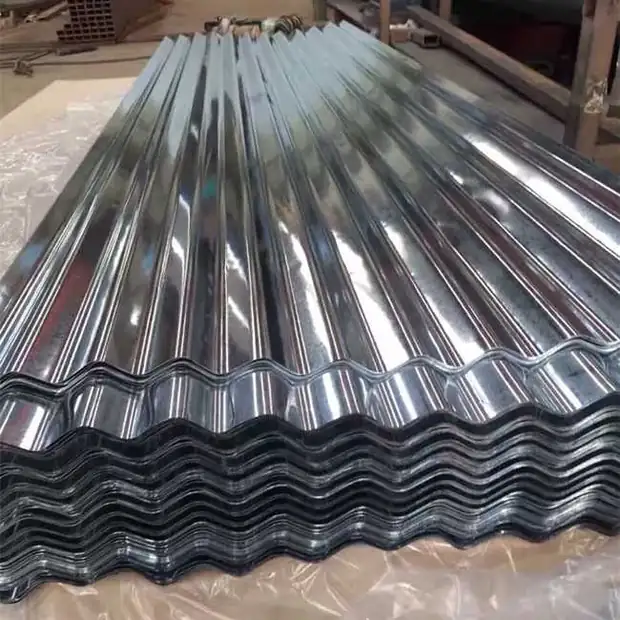
Cold rolled low carbon sheet tinned on both sides for light gauge roofing and panel work
Specifications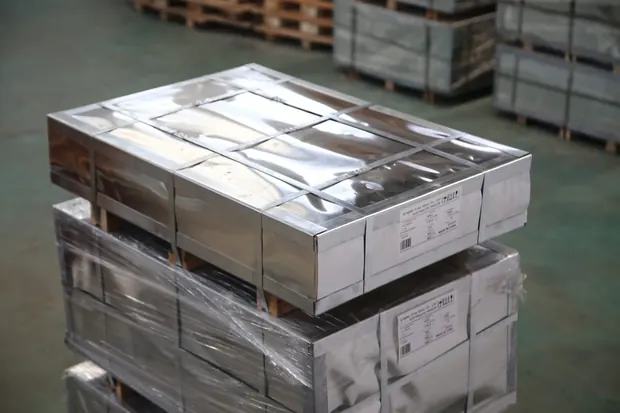
Gauge temper coating weight and finish set per order rather than taken from stock
Specifications
Electrolytic tin coated steel sheet for printed can bodies ends and closures
SpecificationsCan makers do not buy steel, they buy a strip that will draw without splitting, take a printed lacquer without blistering and seam
Read more
Construction and infrastructure buyers order steel by the part it becomes: mild steel plate for base plates gussets and stiffeners
Read moreSend the grade, thickness, width and quantity you need together with your destination port. A cutting list or drawing gets you a firmer number.