
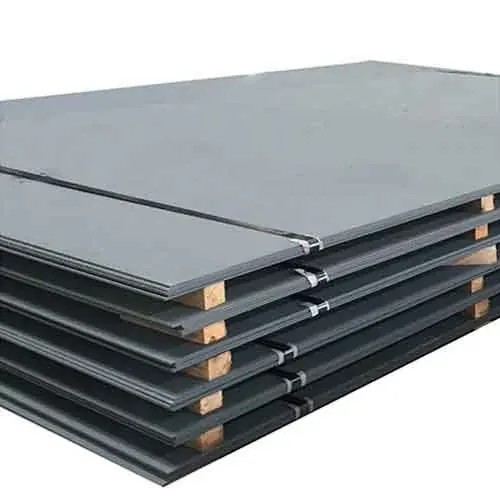
Wear Resistant Steel Plate
Hard alloy wear layer over a tough substrate cut to your liner drawing
SpecificationsIndustries
Solutions
Resources
Company
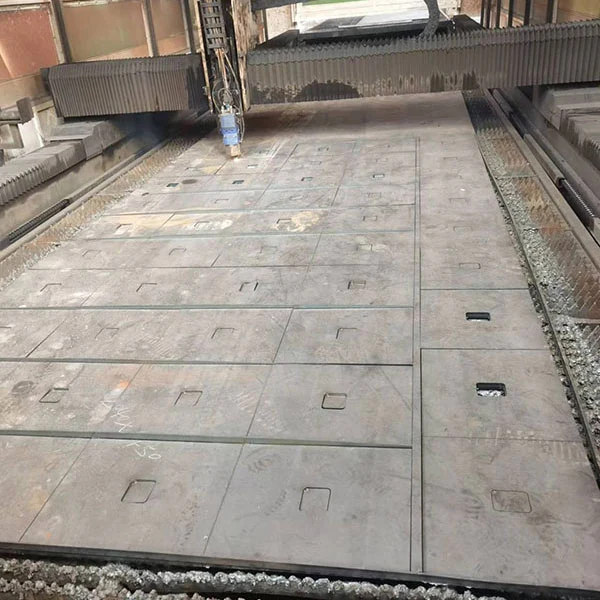
A ball mill does not wear evenly, so it is not built from one material. The shell is high strength low alloy steel with a plate thickness of 15 mm or more so it does not deform under the weight and impact.
A ball mill does not wear evenly, so it is not built from one material. The shell is high strength low alloy steel with a plate thickness of 15 mm or more so it does not deform under the weight and impact of balls and ore. The liners are chosen by duty: high manganese steel such as Mn13 with 12 to 14 percent manganese where impact is extreme, high chromium cast iron where coarse grinding abrasion dominates, and wear resistant rubber for wet fine grinding. Supporting crushers, excavators and loaders use quenched and tempered wear plate in NM360, WNM400, NM450, NM500 and NM600.
Mining equipment such as ball mills operates in an environment of severe abrasion, heavy impact and corrosive conditions. Different components of the same machine therefore have different requirements for abrasion resistance, impact resistance and yield strength.
Specifying a single grade across the shell, the liners and the supporting crushing equipment either overpays on the parts that see little wear or under specifies the parts that fail first. The practical approach is to split the machine into its structural parts and select against the duty each one carries.
The shell is the main structural body of the mill. It must withstand the massive weight and impact forces of the steel balls and the ore, so it needs sufficient strength and rigidity rather than surface hardness.
High strength low alloy steel is the recommended material. The shell plate thickness is typically required to be greater than or equal to 15 mm so that the equipment does not deform during long term operation. On a gold exploration mill this is the specification to fix first, because every internal fitting is set out from it.
Liners are in direct contact with the grinding media and the ore, which makes them the most severely worn components in the mill. High manganese steel such as Mn13 was the first generation wear resistant material and it typically contains 12 to 14 percent manganese.
Its defining property is work hardening. Under severe impact the surface hardness increases significantly, so the liner builds its own hard skin in service. That makes it the right choice where high pressure and strong impact loads dominate, which on most mills means the coarse end of the circuit under heavy ball charge.
High chromium cast iron offers extremely high wear resistance, more than twice that of high manganese steel, and excellent abrasive wear resistance. The trade is toughness, which is relatively lower than high manganese steel.
It is widely used in large ball mills and as the liner material for the coarse grinding chambers of medium and small ball mills. Where the failure mode you actually see is abrasion rather than cracking, this is the material that extends the interval between liner changes.
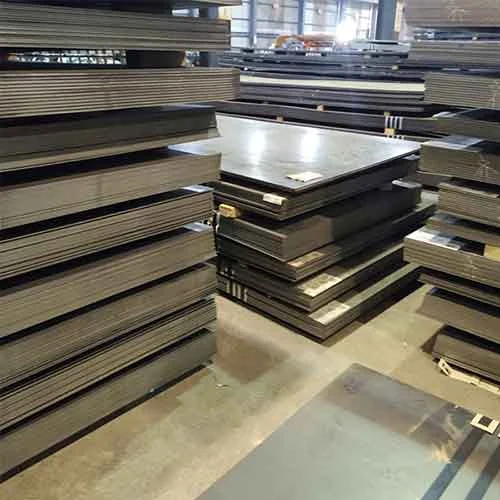
Wear resistant rubber is the newer generation of liner material. It has outstanding elasticity, fatigue resistance and shock absorbing properties, and it is light, which helps reduce the overall energy consumption of the mill.
Its limits are clear: poor impact resistance and no heat resistance. That confines it to fine grinding chambers and wet grinding environments, where the impact energy is low and the benefit of reduced mass and noise is real.
Supporting equipment in gold exploration such as crushers, excavators and loaders is normally built with quenched and tempered wear resistant steel plate for the wear prone parts, including bucket plates, crusher liners and jaw plates.
NM360 and WNM400 are mid to high level quenched and tempered wear plates with high yield and tensile strength, suited to wear parts in mining and construction machinery. NM450, NM500 and NM600 belong to the high hardness series, where the number represents the nominal Brinell hardness grade. The higher the hardness the stronger the wear resistance, so NM500 and NM600 go on the extreme duty parts such as jaw plates for large jaw crushers and concaves for cone crushers.
For a ball mill built for gold exploration, use high strength low alloy steel with a thickness of 15 mm or more for the shell. Then select the liner by the dominant failure mode rather than by a single house standard.
If the impact load is extremely high, high manganese steel Mn13 is the first choice. If the main problem is severe abrasion during coarse grinding, high chromium cast iron is recommended. For wet fine grinding, wear resistant rubber liners can be considered.
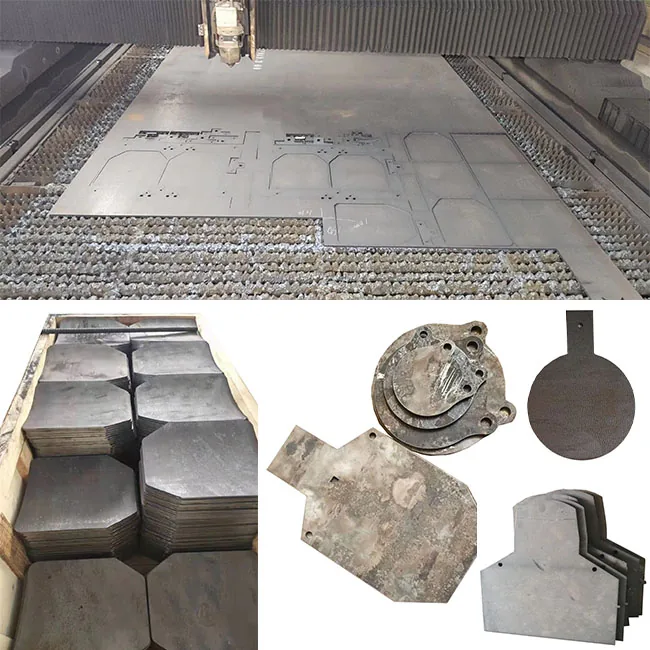
Hard alloy wear layer over a tough substrate cut to your liner drawing
Specifications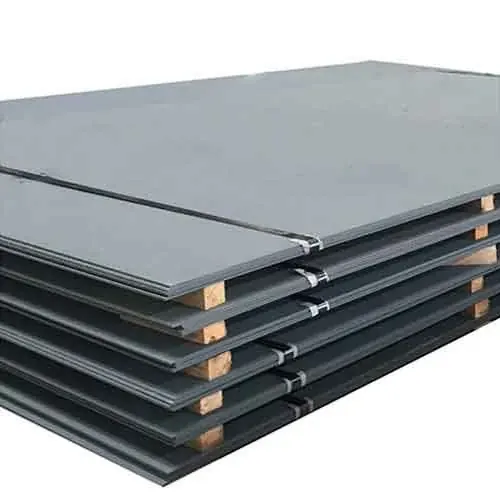
One plate supply covering AR NM XAR RAEX QUARD and FORA wear grades
Specifications
Quenched and tempered wear plate for chutes liners buckets and crusher bodies
Specifications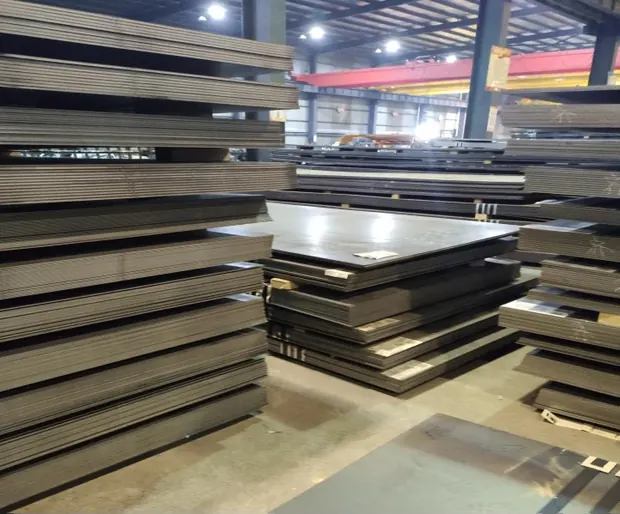
Quenched and tempered 690 MPa plate for boom arms lifting frames and welded structures
SpecificationsThe abrasion resistant branch of the steel plate range for chutes liners buckets and crusher wear parts
Read more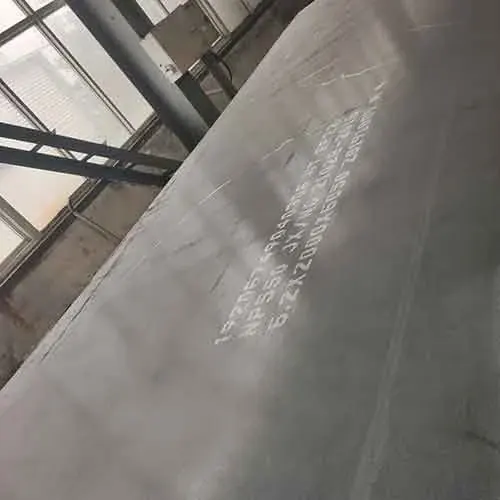
The flat plate program spanning mild structural plate through to armor wear and shipbuilding grades
Read more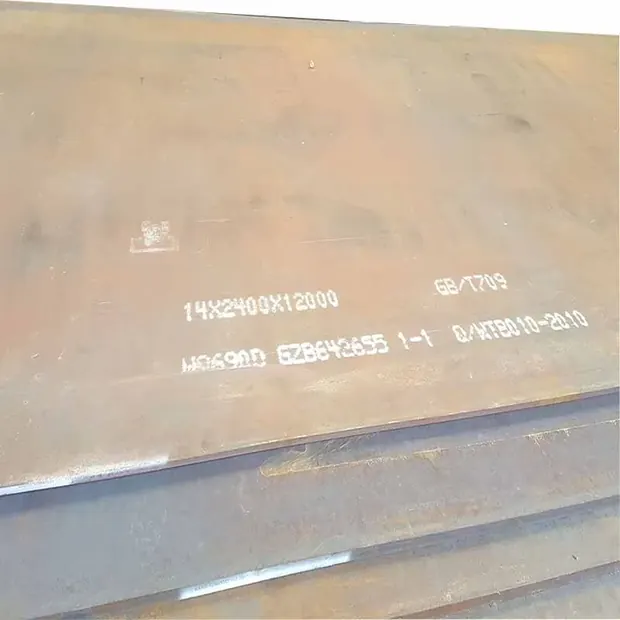
Alloy plate grades for weathering structures high yield fabrication and tooling where plain carbon plate runs out of per
Read more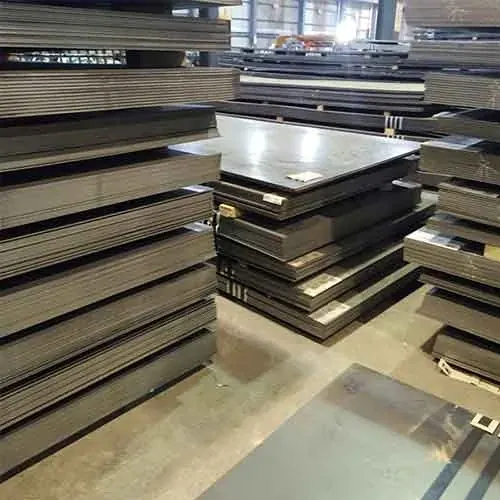
Mines quarries and bulk terminals buy steel to stand between abrasive material and the structure carrying it, so the ord
Read more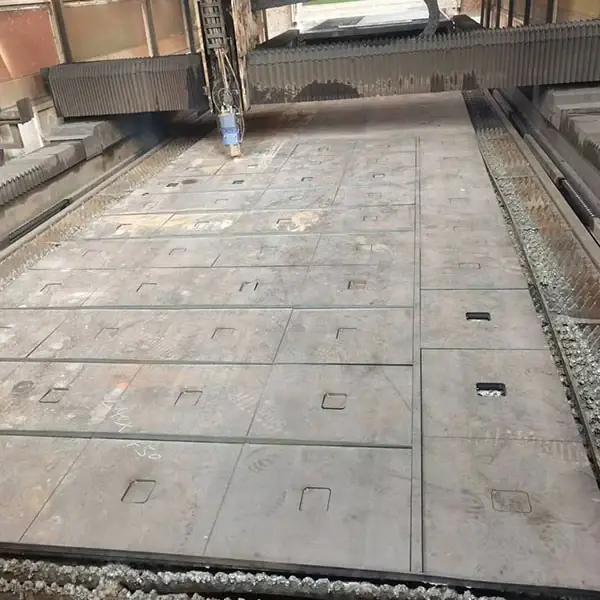
One loader or one tractor needs four different steels and most fabrication shops buy them from four different suppliers.
Read moreThe shell plate is typically required to be greater than or equal to 15 mm in high strength low alloy steel, so that the mill does not deform under the weight and impact of the balls and ore during long term operation.
They fail differently. High manganese steel such as Mn13 work hardens under impact and suits high pressure and strong impact loads. High chromium cast iron has more than twice the wear resistance of high manganese steel but relatively lower toughness, so it suits coarse grinding chambers where abrasion dominates.
High manganese steel of the Mn13 type typically contains 12 to 14 percent manganese. That composition is what gives it the work hardening behavior that raises surface hardness in service.
In fine grinding chambers and wet grinding environments. Rubber has excellent elasticity, fatigue resistance and shock absorption and is light enough to cut equipment energy consumption, but it has poor impact resistance and is not heat resistant.
They represent the nominal Brinell hardness grade of the plate. The higher the number the higher the hardness and the stronger the wear resistance, which is why NM500 and NM600 are used for jaw plates on large jaw crushers and concaves on cone crushers.
Yes. Wear resistant plate is supplied in the quenched and tempered condition and can be cut, bent, welded, decoiled and punched, so liner panels and bucket plates can arrive ready to fit. Ask for the mill test certificate with the shipment.
If you are still asking "What plate thickness should a ball mill shell be?" send us the sizes and the duty and we will answer it against your actual order.