
AR400 AR500 AR600 Steel Plate
Quenched and tempered wear plate for chutes liners buckets and crusher bodies
SpecificationsIndustries
Solutions
Resources
Company
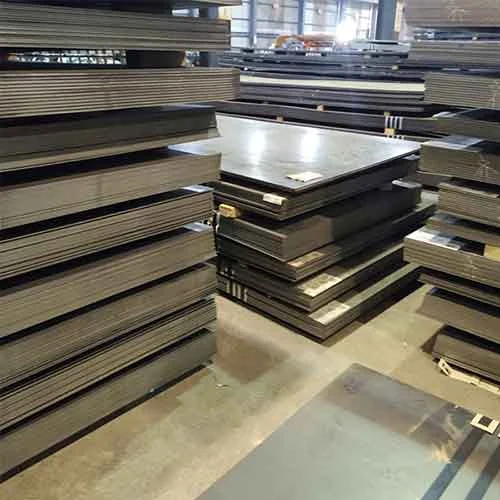
AR400, AR500 and AR600 are the same quenched and tempered abrasion resistant alloy plate at three hardness levels, supplied in 2 to 100mm thickness and cut to size.
AR400, AR500 and AR600 are the same quenched and tempered abrasion resistant alloy plate at three hardness levels, supplied in 2 to 100mm thickness and cut to size. Wear resistance is stated at 15 to 20 times that of ordinary steel plate, 5 to 10 times that of low alloy steel plate and 2 to 5 times that of high chromium cast iron, and the alloy wear layer is recommended for service at or below 600 degrees Celsius. Step the grade up only on the zone that is wearing out first, because every increase in hardness makes the panel harder to cut bend and weld.
AR400, AR500 and AR600 are abrasion resistant alloy steel plates that share one delivery condition and one thickness range. The number rises with the hardness of the plate, and hardness is what resists the sliding and gouging action of ore, slag, clinker and aggregate.
Because the three grades come from the same stock and the same 2 to 100mm thickness range, a fabricator can mix them inside one structure. That is normally cheaper than building the whole chute or bucket from the hardest grade available.
All three grades are quenched and tempered alloy steel plate with high wear resistance and good impact performance. The wear resistant layer resists the wear of the abrasive medium while the substrate carries the load of that medium, which is why AR plate survives lumpy feed instead of shattering under it.
The alloy layer contains a high percentage of metallic chromium, so the plate also has a degree of rust and corrosion resistance. The layer is recommended for use at or below 600 degrees Celsius, and where vanadium, molybdenum and other alloys are added it can withstand high temperature wear at or below 800 degrees Celsius.
AR400 is the entry point of the range and the grade that stays easiest to work. It is the sensible choice for the large structural areas of a wear package where abrasion is present but not concentrated, such as chute backs, hopper walls and the sides of a bucket away from the cutting edge.
Because it is the softest of the three it takes cutting, bending, welding and punching with the least difficulty, so a site crew can fabricate replacement panels with ordinary workshop equipment.
AR500 is the working grade for most mining, quarry and bulk handling wear parts. It is the grade most commonly held in stock and the one most often cross referenced against XAR500, RAEX500, QUARD500, FORA500 and NM500 on a drawing.
Typical applications are the loader, bulldozer and excavator parts named for the range, together with crusher and screen plant liners in metallurgy, coal, cement, electricity, glass, mining, building materials and brick and tile production.
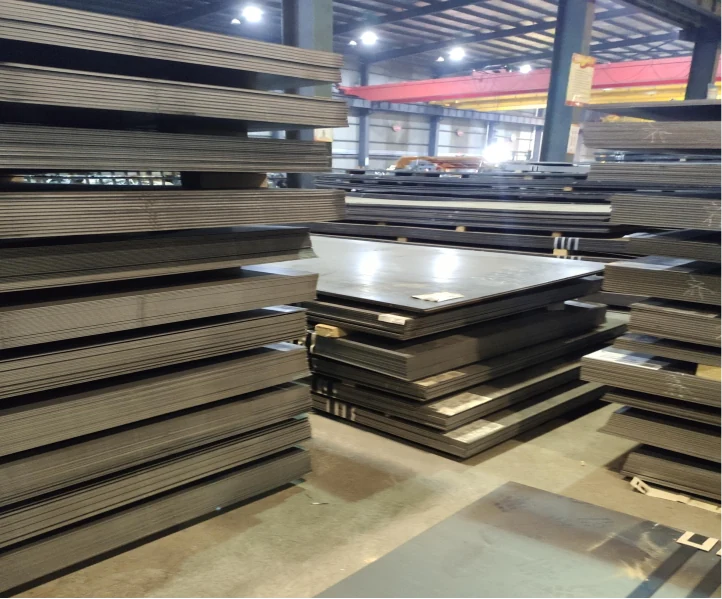
AR600 is the hardest grade in the range and it belongs on the small area that destroys everything else. Feed impact points, the first strip of a liner to meet the feed, the lip of a chute and the parts that are replaced most often are the places where the extra hardness pays back.
Keeping AR600 to those zones and running AR400 or AR500 elsewhere means the wear package fails in one place at a time, on a schedule you control, rather than everywhere at once.
All three grades can be cut, bent, welded and punched, and they can be connected to other structures by welding, plug welding and bolting, which saves time at the repair site. That capability is what separates AR plate from a hardened casting that cannot be joined in the field.
The practical point is that the effort rises with the grade. Where your workshop is not set up for the harder grades, order the panels cut, bent and punched with the plate so the only site operation left is bolting or plug welding them in.
Against ordinary steel plate the wear resistance of AR plate is stated at more than 15 to 20 times, and against low alloy steel plate at 5 to 10 times. Against high chromium cast iron it is stated at 2 to 5 times, and unlike the casting the plate can be cut and welded.
That combination is why AR plate is used across metallurgy, coal, cement, electricity, glass, mining, building materials and brick and tile plants where the same part has to resist wear and still be repairable.
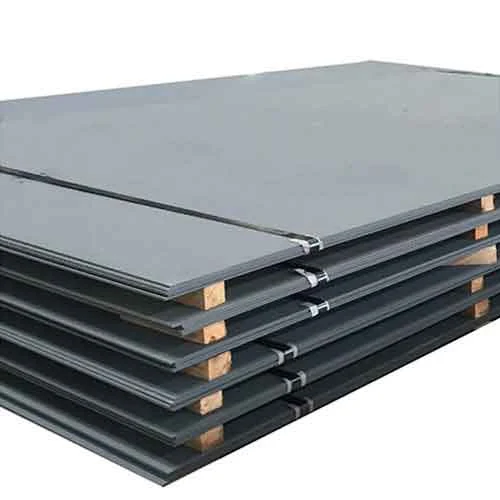
Quenched and tempered wear plate for chutes liners buckets and crusher bodies
Specifications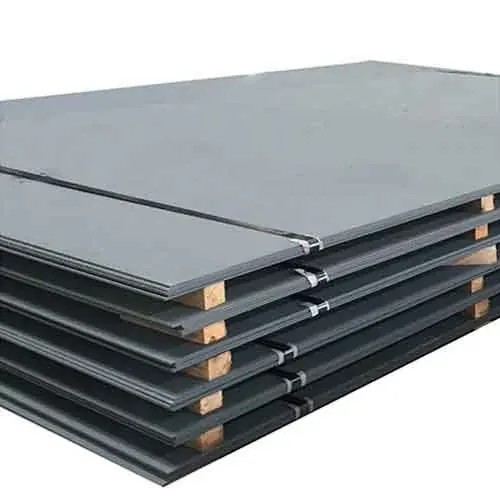
Hard alloy wear layer over a tough substrate cut to your liner drawing
Specifications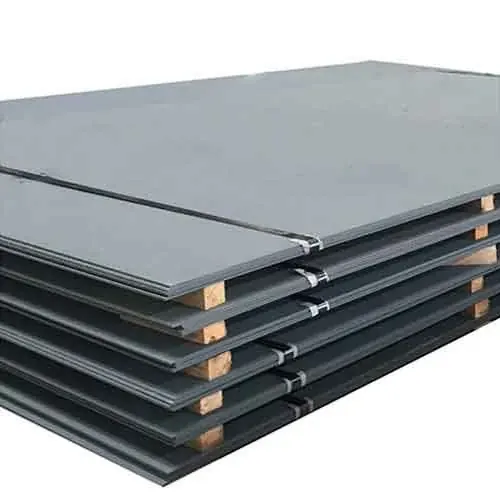
One plate supply covering AR NM XAR RAEX QUARD and FORA wear grades
Specifications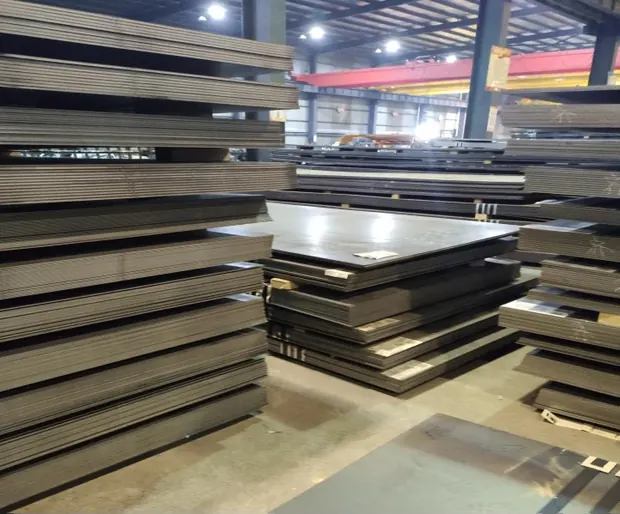
Quenched and tempered 690 MPa plate for boom arms lifting frames and welded structures
SpecificationsThe abrasion resistant branch of the steel plate range for chutes liners buckets and crusher wear parts
Read more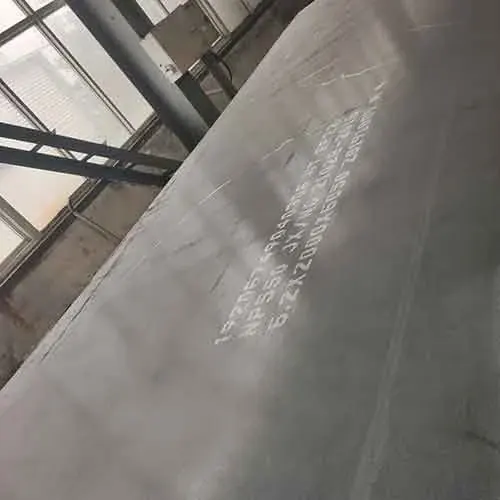
The flat plate program spanning mild structural plate through to armor wear and shipbuilding grades
Read more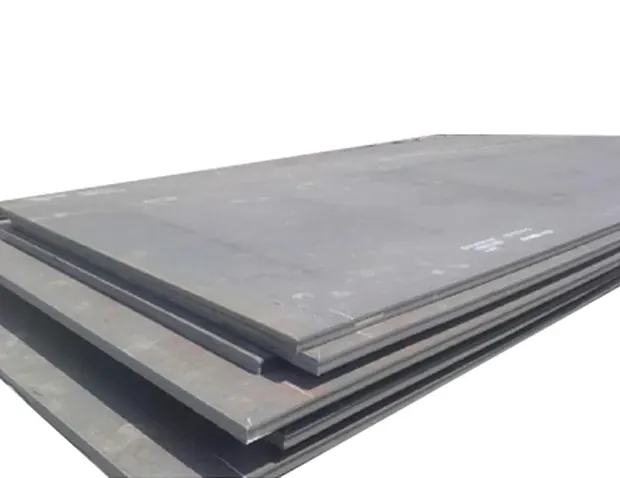
Low carbon and medium carbon plate for structural fabrication road plates bridges and machined engineering parts
Read more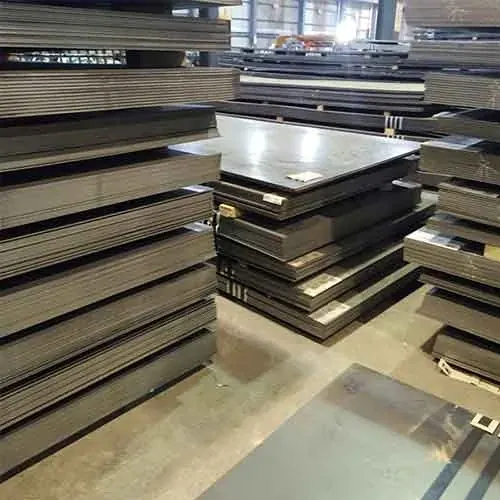
Mines quarries and bulk terminals buy steel to stand between abrasive material and the structure carrying it, so the ord
Read more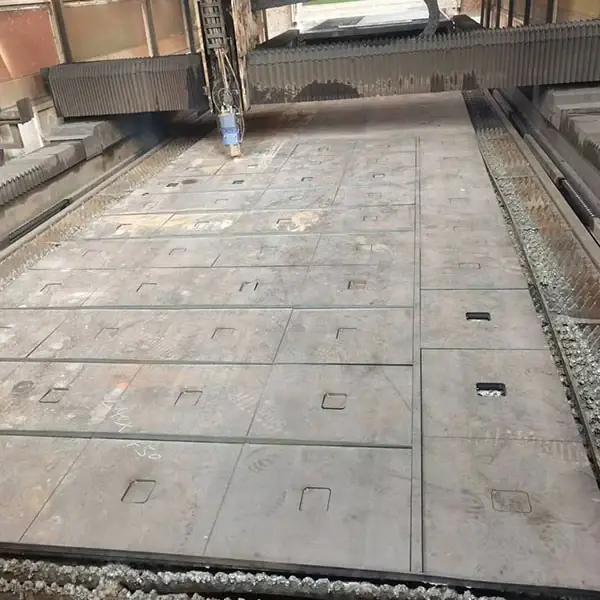
One loader or one tractor needs four different steels and most fabrication shops buy them from four different suppliers.
Read more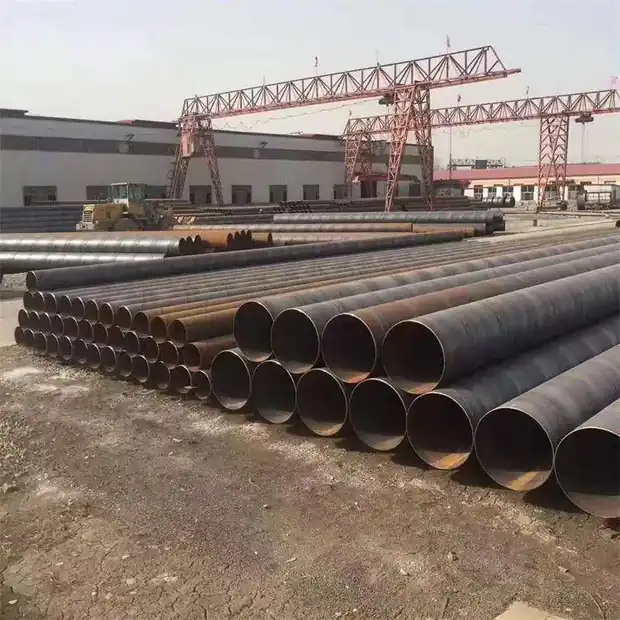
Energy projects are audited on documents as much as on steel. A boiler header, a cooling water line, a coal transfer chu
Read moreYes. All three grades are supplied in 2 to 100mm thickness in the quenched and tempered condition, with size customized to your cutting list and a natural or painted surface.
Rarely. Hardness costs fabricability, so the usual approach is AR600 on the concentrated wear zone and AR400 or AR500 on the rest of the structure. All three grades come from the same stock so mixing them in one package is straightforward.
Wear resistance is stated at more than 15 to 20 times that of ordinary steel plate, 5 to 10 times that of low alloy steel plate and 2 to 5 times that of high chromium cast iron. Actual life depends on the feed material and the impact energy in your plant.
The alloy wear resistant layer is recommended for use at or below 600 degrees Celsius. Where vanadium, molybdenum and other alloys are added to the layer it can withstand high temperature wear at or below 800 degrees Celsius.
The stock covers AR500 alongside NM400, NM500, XAR500, RAEX500, QUARD500 and FORA500, so a drawing written to any of those designations can be quoted from the same range. Send the drawing and we will confirm the grade to be supplied.
Yes. AR plate can be cut, bent, welded and punched, and connected to other structures by welding, plug welding or bolting, which is why it is used for repairs carried out on site rather than in a workshop.
If you are still asking "Do AR400 AR500 and AR600 come in the same thickness range?" send us the sizes and the duty and we will answer it against your actual order.