
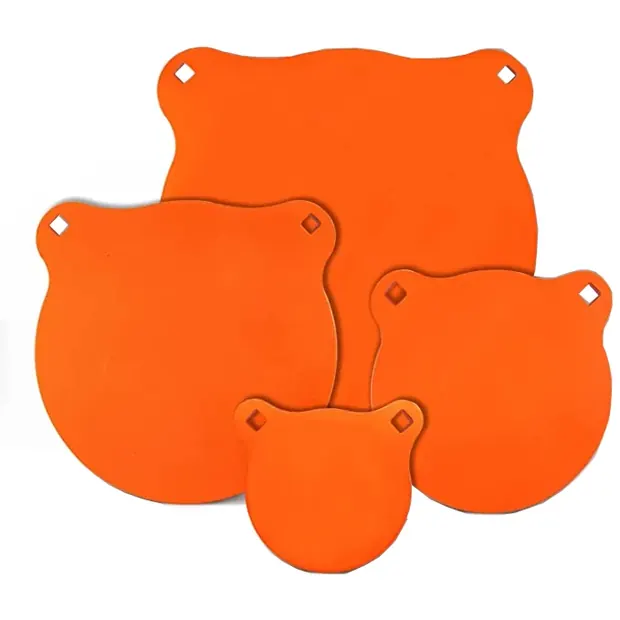
AR400 AR500 AR600 Steel Plate
Quenched and tempered wear plate for chutes liners buckets and crusher bodies
SpecificationsIndustries
Solutions
Resources
Company
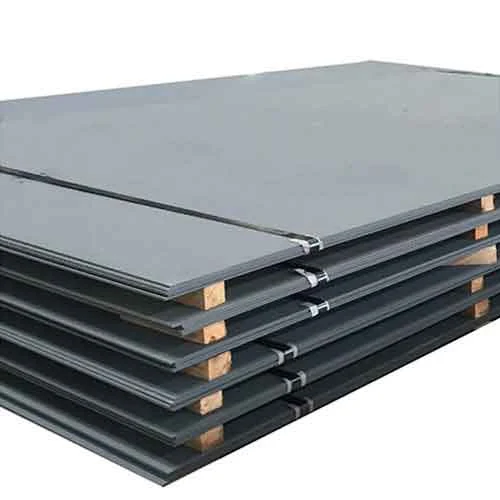
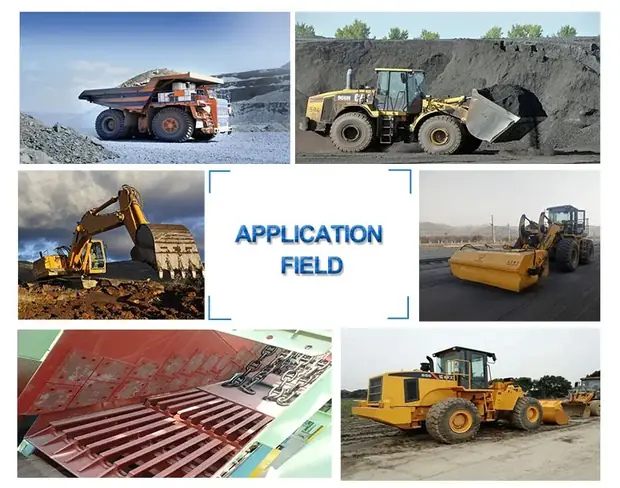
Hard alloy wear layer over a tough substrate cut to your liner drawing
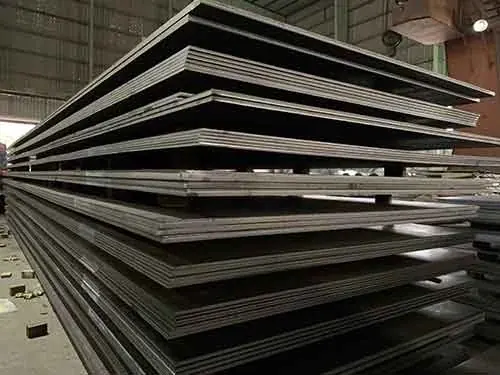
Wear resistant steel plate is an abrasion resistant alloy plate that carries a hard wear layer over a tougher substrate and is supplied in 2-100mm thickness in the Q+T condition. Maintenance and equipment engineers in metallurgy, coal, cement, electricity, glass, mining, building materials and brick and tile plants specify it wherever sliding grit and falling rock open up mild steel. Because it can be cut, bent, welded, plug welded and bolted, a worn panel is changed in place instead of the whole assembly going out for rebuild, which saves time at the repair site. Panels are cut to your size so material arrives ready to fit rather than as full plates your workshop still has to process.
The alloy wear resistant layer resists the wear medium while the substrate bears the load of that medium. Lumpy feed deforms the panel instead of splitting it the way it splits a fully hardened liner.
Wear resistance is stated at more than 15-20 times that of ordinary steel plates, 5-10 times that of low alloy steel plates and 2-5 times that of high chromium cast iron.
The alloy wear resistant layer is recommended for use at or below 600 degrees Celsius. Where vanadium, molybdenum and other alloys are added to that layer it withstands high temperature wear at or below 800 degrees Celsius.
The alloy layer of the composite plate contains a high percentage of metallic chromium, so the panel keeps a degree of rust and corrosion resistance in wet chutes and open hoppers.
Bending, welding, decoiling, cutting and punching are available on the order. Panels can arrive profiled and drilled so the site crew only has to lift and fix them.
Size is cut to your requirement, so a small liner package does not force you to buy and store a full plate for every replacement.
Ordinary plate in an abrasive duty often opens up before the next planned stop and forces an unplanned outage. Moving that zone to wear resistant plate pushes the failure point past the maintenance window.
High chromium cast iron holds up against abrasion but cracks under lumpy feed and cannot be welded back. The composite plate keeps a tough substrate under the hard layer and can be welded and bolted.
Components that cannot be cut or welded have to travel to a workshop. This plate accepts cutting, bending, welding, plug welding, bolting and punching, so repairs are completed where the equipment stands.
Many plants have wear points that also run hot, which rules out plate that softens. The alloy layer is rated for service at or below 600 degrees Celsius and up to 800 degrees Celsius with vanadium and molybdenum additions.
Wet handling washes protective coatings off quickly. Metallic chromium in the alloy layer gives the wear face its own rust and corrosion resistance.
Bucket floors, blade backs and wear strips on earthmoving machines working in soil rock and slag.
Chutes, hoppers and duct linings in coal yards and electricity generating plants where fine abrasive dust cuts mild steel.
Transfer points, feed boxes and mixer faces on cement and building material production lines.
Slag handling and furnace area panels where abrasion is combined with temperature within the recommended limits for the alloy layer.
Screen decks, chute liners and dump body floors taking continuous impact from falling rock.
Augers, press faces and clay handling components on brick and tile plants where the mix is constantly abrasive.
Values below come from the product data published by Shandong Tianyu Metal Products. Confirm the exact grade and size against your order.
| Product Name | Abrasion resistant steel plate wear resistant steel plate or sheet |
|---|---|
| Place of Origin | China |
| Size | Customized size |
| Thickness | 2-100mm |
| Technique | Q+T |
| Surface | Nature or painted |
| Application | Loader bulldozer excavator |
| Processing Service | Bending welding decoiling cutting punching |
| Wear Resistance | 15-20 times ordinary steel plate 5-10 times low alloy steel plate 2-5 times high chromium cast iron |
| Service Temperature | At or below 600 degrees Celsius standard and at or below 800 degrees Celsius with alloy additions |
| Certificate | Mill test certificate |
| Sample | Available |
| Ordinary steel plate | Wear resistance is stated at more than 15-20 times that of ordinary steel plates in the same abrasive duty. |
|---|---|
| Low alloy steel plate | Wear resistance is stated at 5-10 times that of low alloy steel plates while the plate is still cut welded and punched with normal workshop equipment. |
| High chromium cast iron | Wear resistance is stated at 2-5 times that of high chromium cast iron, and unlike the casting the plate can be welded plug welded and bolted into the existing structure. |
| Painted mild steel liners | Paint is worn off in service, whereas the metallic chromium sits inside the alloy layer and keeps working as the surface wears. |
Thickness runs from 2mm to 100mm and size is customized, so you can order finished liner panels rather than full plates.
Wear resistance is stated at more than 15-20 times ordinary steel plates, 5-10 times low alloy steel plates and 2-5 times high chromium cast iron. Real life depends on the feed material and the impact energy at your transfer point.
Yes. The plate can be cut, bent, welded and punched and connects to other structures by welding, plug welding or bolting, which is why it is used for repairs on site.
The alloy wear resistant layer is recommended for use at or below 600 degrees Celsius. With vanadium, molybdenum and other alloys added it withstands high temperature wear at or below 800 degrees Celsius.
The alloy layer contains a high percentage of metallic chromium, so it has a certain amount of rust and corrosion resistance. It is not a stainless material and should still be stored dry.
A mill test certificate is issued for the material supplied and travels with the shipment. Ask for the mill test certificate on the order so it is raised in the name you need.
Samples are available. Tell us the thickness and the panel size you want to trial and we will confirm what can be released.
Quenched and tempered wear plate for chutes liners buckets and crusher bodies
Specifications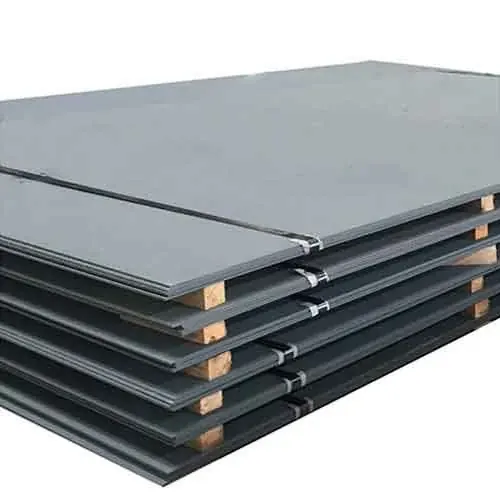
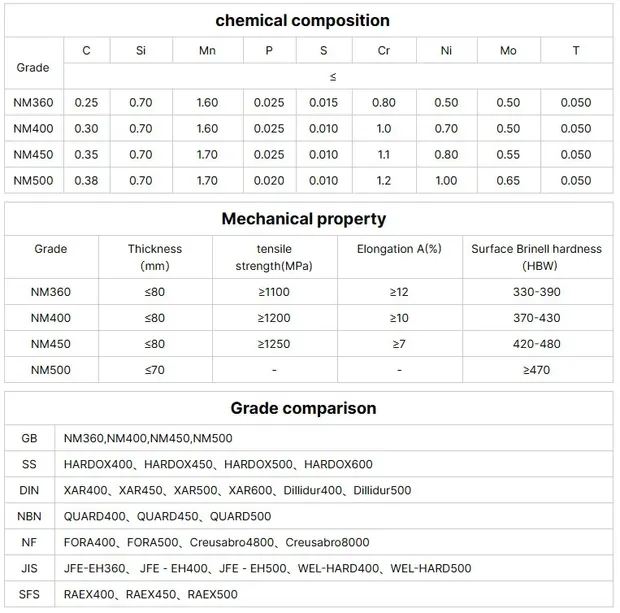
One plate supply covering AR NM XAR RAEX QUARD and FORA wear grades
Specifications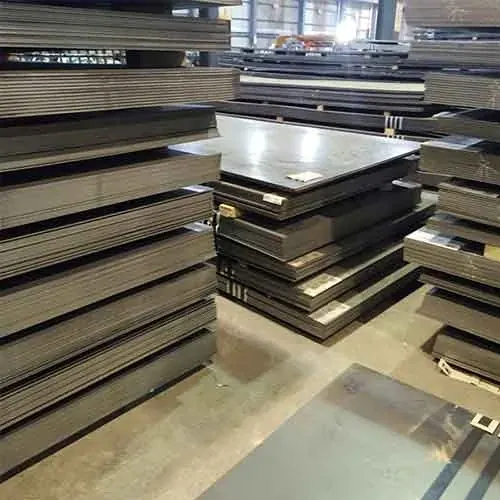
Mines quarries and bulk terminals buy steel to stand between abrasive material and the structure carrying it, so the order is usua
Read more
One loader or one tractor needs four different steels and most fabrication shops buy them from four different suppliers. The struc
Read more
Energy projects are audited on documents as much as on steel. A boiler header, a cooling water line, a coal transfer chute and a s
Read moreSend the grade, thickness, width and quantity you need together with your destination port. A cutting list or drawing gets you a firmer number.