
Fine vs Coarse Thread Drywall Screws: How to Specify Correctly
The single most common drywall fastener error, why it happens, and the two-question test that prevents it.
The rule in one line
Coarse thread goes into timber. Fine thread goes into light-gauge steel. Almost every drywall fastener failure we are asked to investigate comes back to that sentence being applied backwards, and the reason it happens so often is that the two screws look nearly identical in a bucket.
Why coarse thread works in wood
Wood is fibrous and compressible. A coarse pitch has widely spaced flanks that clear timber fibre as the screw advances, so the screw seats in fewer turns and the surrounding fibre springs back around the thread to grip it. Put a fine thread into the same stud and the closely spaced flanks pack the fibre solid, drive torque climbs, and the hole strips before the head ever reaches the board.
Why fine thread works in steel
Steel does not compress. What holds a screw in a 25-gauge stud is the number of thread flanks actually engaged in that thin sheet — and a coarse pitch may only manage one. Fine thread puts several flanks into the same thickness so each one carries a small share of the load. That is why our fine-thread line is specified for 25 ga and lighter.
Where the rule runs out
Once the gauge gets heavier, a sharp point stops piercing cleanly. It wanders, work-hardens the steel and eventually snaps. At that point neither thread pitch is the answer — the fix is a drill point, which cuts its hole first and lets the thread follow.
The two-question test
Before you order: is the substrate timber or steel? And if steel, will a sharp point pierce it? Those two answers select between three products and eliminate almost every drywall fastener callback.
Products in this guide
The lines this applies to
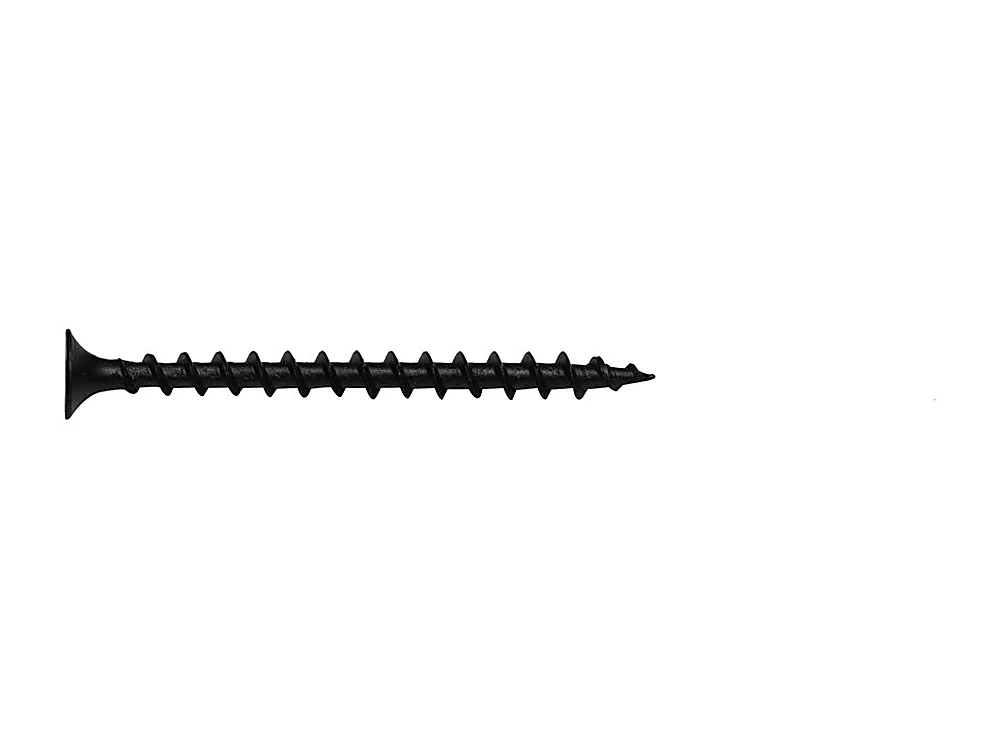
Drywall Screw, Phillips Bugle Head, Coarse Thread
Standard drywall-to-wood-stud screw. Sharp point bites quickly into softwood; bugle head sinks below the paper without breakthrough.
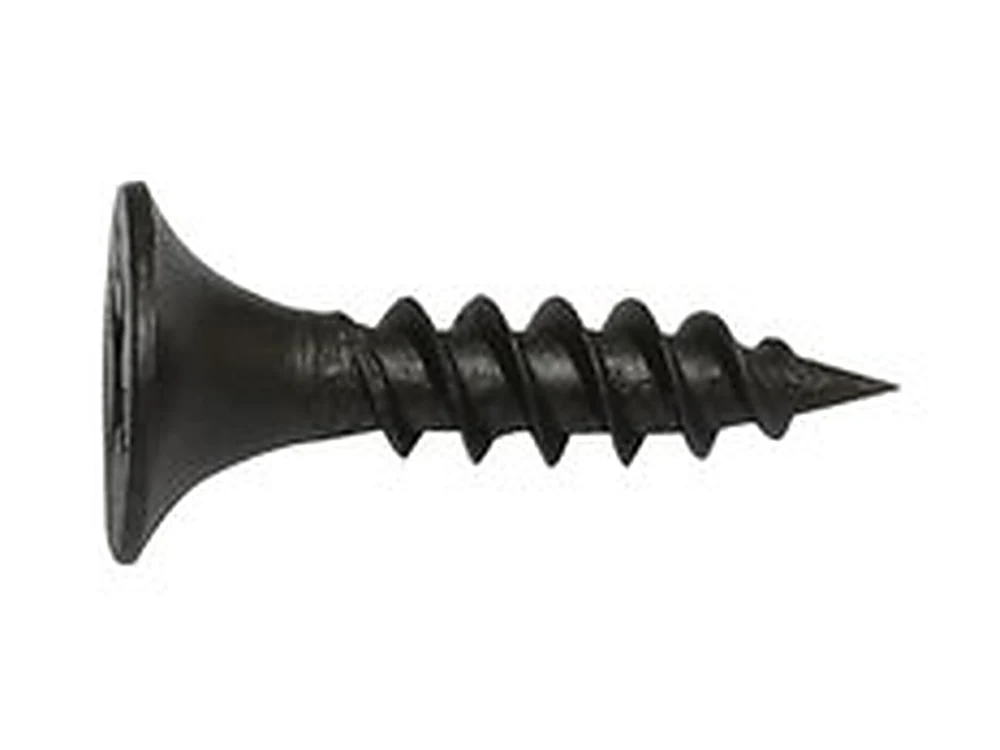
Drywall Screw, Phillips Bugle Head, Fine Thread
Fine thread for fastening drywall to light-gauge metal studs (25 ga and lighter). Reduces stripping; higher pull-out in metal.
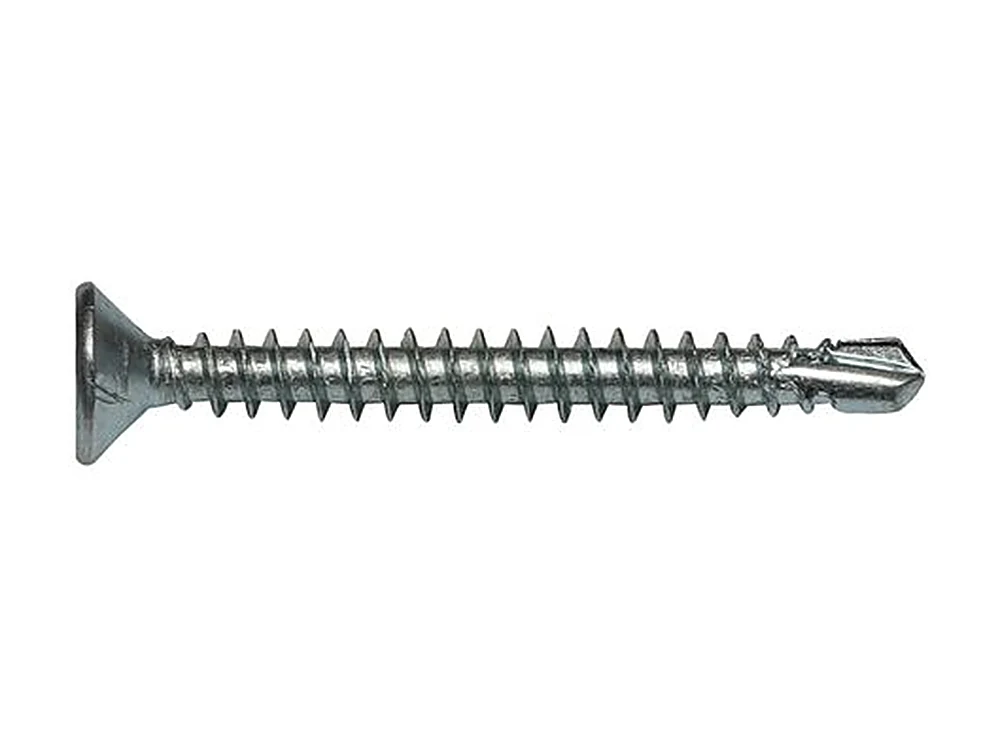
Drywall Screw, Phillips Bugle Head, Self Drilling
Drill point eliminates pre-drilling on heavier-gauge steel studs. Combines the bugle head with a hardened mini-drill tip.
Talk it through with an engineer
Send us the application and we will specify the fastener — substrate, thickness, exposure and volume are all we need.