
Why Drywall Screws Have Bugle Heads
A curved head profile that compresses paper instead of cutting it — and what happens when the radius is wrong.
A head shaped by one requirement
The bugle head exists because gypsum board has a paper face that carries a surprising amount of the board's strength. The screw has to finish just below that face without breaking it. A flat countersunk head would cut through the paper like a knife; the bugle's curved underside compresses it into a shallow dimple instead.
Why the dimple matters
That dimple is what makes the finish possible. Joint compound fills it in one pass and sands flat. A torn fixing needs mesh, two passes and sanding, and it will still telegraph through paint in raking light — so a head profile problem becomes a finishing labour cost, which is always larger than the fastener bill.
What has to be controlled
Three dimensions do the work: head diameter sets how wide the dimple spreads, bugle radius controls whether the paper compresses or tears, and drive depth determines whether a gun can find a consistent stop. We hold all three constant across every length in the family, which is why a 25 mm and a 152 mm screw finish the same way.
The over-drive failure
Even a correct bugle head fails if it is driven too deep. Past a certain point the head passes through the paper and into the gypsum core, and the fixing's pull-through capacity collapses — the screw is now holding crumbly plaster, not board. This is a tool-setting problem rather than a fastener problem, and it is why drywall guns have depth-stop noses.
Where else bugle heads appear
Cement board, soffit panels and fibre-reinforced sheathing use the same logic: a soft face that must be compressed rather than cut. The thread and finish change with the substrate; the head does not.
Products in this guide
The lines this applies to
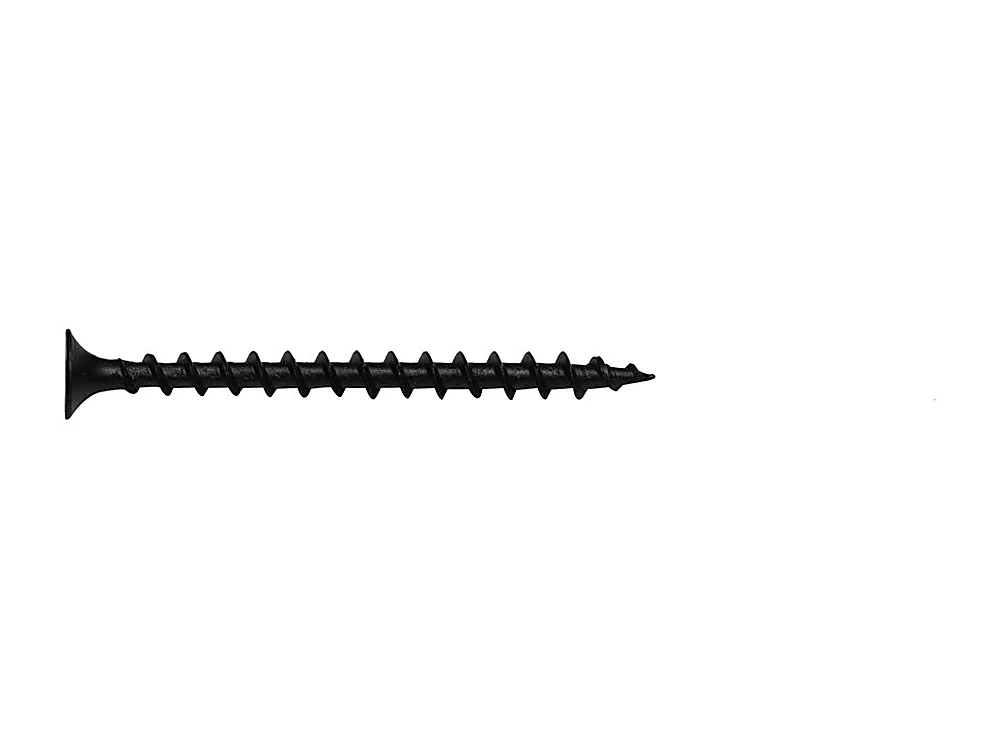
Drywall Screw, Phillips Bugle Head, Coarse Thread
Standard drywall-to-wood-stud screw. Sharp point bites quickly into softwood; bugle head sinks below the paper without breakthrough.
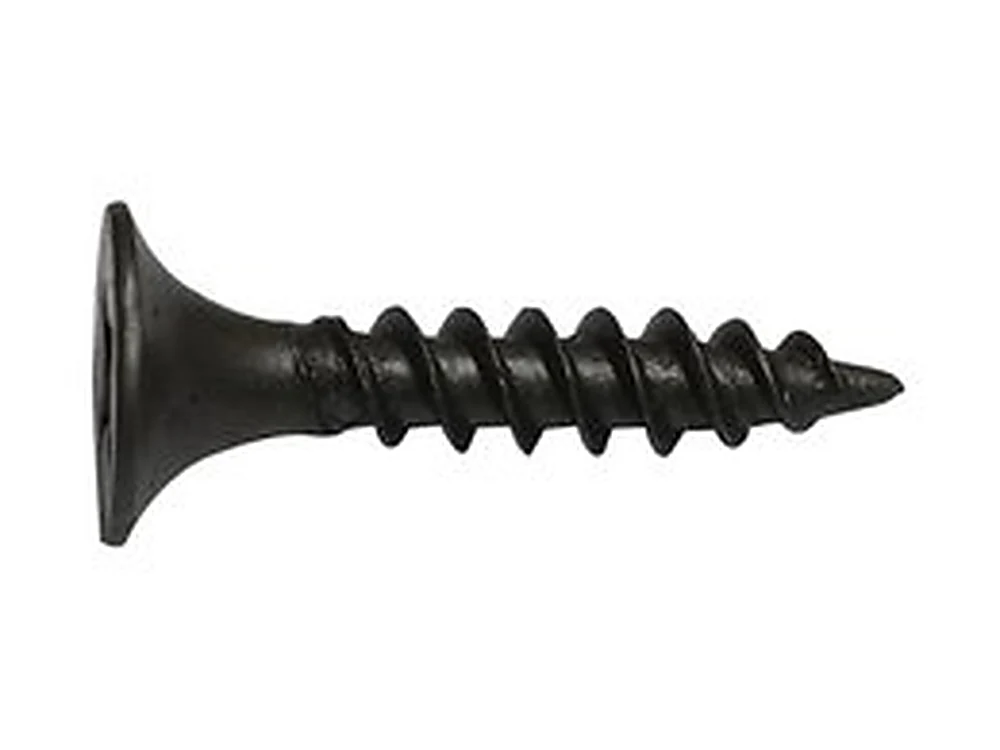
Drywall Screw, Hi-Lo Thread, Magni
Alternating tall and short thread profile for higher pull-out in soft substrates. Magni grey coating for outdoor or humid environments.
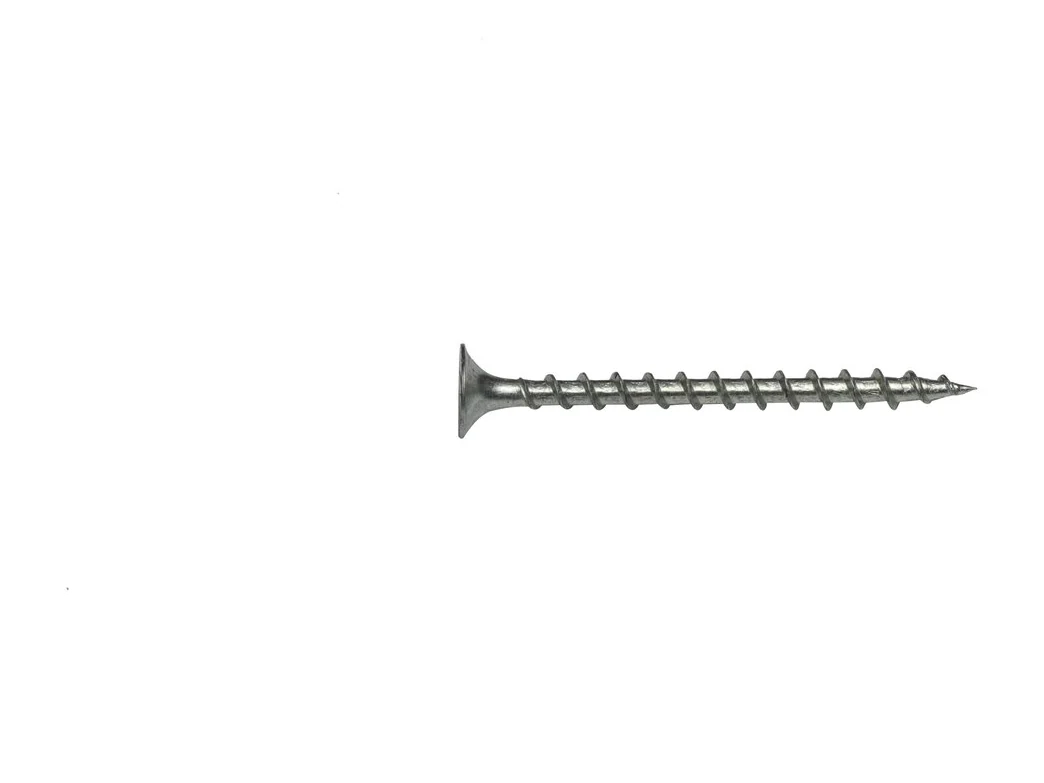
Drywall Screw, Phillips Bugle Head, Coarse Thread, Gray
Same coarse profile in grey phosphate finish — preferred by some markets for visual differentiation on the job site.
Talk it through with an engineer
Send us the application and we will specify the fastener — substrate, thickness, exposure and volume are all we need.