
Sanitary Valves And Fittings
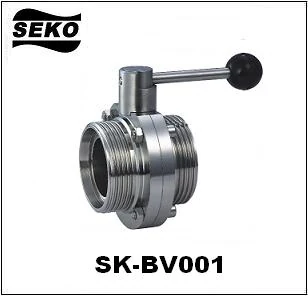
Sanitary Butterfly Valve
Manual or pneumatic butterfly valves DN15 to DN200 in SS304 or SS316L.
View specifications →Product Lines
Centrifugal PumpsSanitary PumpsMicro Gear And Magnetic Drive PumpsPeristaltic And Dosing PumpsRubber Lobe PumpsProgressing Cavity PumpsGear PumpsHigh Temperature PumpsSubmersible Aerators And MixersStainless Steel Tanks And VesselsHigh Shear EmulsifiersMagnetic MixersDefoaming MachinesVinegar AcetatorsSanitary Valves And FittingsSanitary Manhole CoversStainless Steel Pipe FittingsIndustries
Water Supply And DrainageWastewater And SewageWater TreatmentChemical And PetrochemicalFood And BeveragePharmaceutical And BiotechPulp And PaperMining And MarineSolutions
Sanitary Process Line PackagesWastewater Aeration And MixingThermal Oil And Hot Water CircuitsChemical Dosing And TransferKnowledge CenterDocumentationAboutContactSanitary Valves And Fittings
A flexible diaphragm separates the product from the stem and bonnet, which is why these valves are specified on sterile and aggressive duty.
Overview
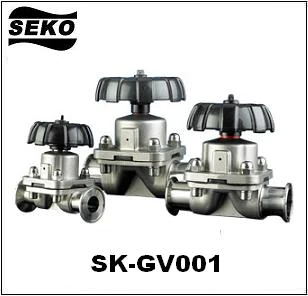
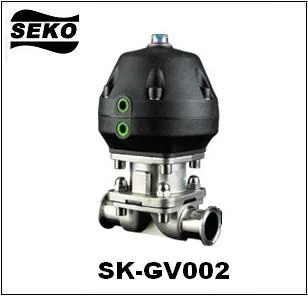
Sanitary diaphragm valves in SS304 or SS316L, models SK-GV001 and SK-GV002, with manual handwheel or pneumatic actuator. The diaphragm seals the flow path from the operating mechanism, so there is no stem passing into the product.
Sizes run DN15 to DN200 with weld, clamp or threaded connections to DIN, SMS, 3A, ISO and IDF, polished to Ra below 0.4 um, with working pressure to 1.0 MPa and a temperature band of minus 5 to 95 degrees Celsius.
| Finish | Mirror or Matt Polish; Ra<0.5um |
|---|---|
| Standard | DIN, SMS, 3A, ISO, IDF |
| Connection Type | Weld, Clamp |
| Polish | Mirror Polish Ra<0.5um |
| Max. Working pressure | 1.0 MPa (10 bar) |
| Min.Working pressure | Vacuum |
Key Benefits
The diaphragm isolates the operating parts, which removes the leak path and the crevice a stem creates.
Widely specified in pharmaceutical and biotechnology lines for exactly that reason.
The diaphragm is a replaceable element, so servicing is a planned change rather than a valve replacement.
Handwheel or pneumatic actuator on the same body.
Application Scenarios
Sterile and purified water duty where crevice free construction is required.
Media that would attack a conventional stem seal.
Small valves where tight shut off and clean geometry matter more than pressure drop.
A diaphragm removes the stem from the flow path entirely.
With the mechanism outside the wetted area there is nothing for cleaning solution to have to reach.
Replacing the diaphragm restores the valve rather than scrapping it.
Technical Features
Specifications
Published valve data. Diaphragm material is chosen for the product, the temperature and the cleaning cycle.
| Finish | Mirror or Matt Polish; Ra<0.5um |
|---|---|
| Standard | DIN, SMS, 3A, ISO, IDF |
| Connection Type | Weld, Clamp |
| Polish | Mirror Polish Ra<0.5um |
| Max. Working pressure | 1.0 MPa (10 bar) |
| Min.Working pressure | Vacuum |
| Working Temperature | -5 to 95 degrees Celsius |
| Other Parts | Adopt |
| Application | Dairy, beer, food, beverage, pharmacy, biotechnology, etc |
| Working principle | manual operation or driving device operation |
| Operation | Manual or pneumatic |
Materials And Process
| Sanitary butterfly valve | A butterfly valve is cheaper and has lower pressure drop. A diaphragm valve suits sterile duty and aggressive media. |
|---|---|
| Ball valve | A ball valve has a cavity around the ball. A diaphragm valve has no such trap in the flow path. |
Use Guide
Select the diaphragm compound against product, temperature and cleaning chemistry together.
Closing force is set by the design. Overtightening shortens diaphragm life sharply.
Mount so the valve drains, which matters in sterile lines.
Change diaphragms at planned intervals, keeping a spare set on site.
Answers
Because the diaphragm keeps the stem and bonnet out of the product, which suits sterile duty and aggressive media.
DN15 to DN200 with weld, clamp or threaded connections.
Yes, manual handwheel and pneumatic actuator versions are both supplied.
Up to 1.0 MPa, which is 10 bar, with vacuum on the low side.
On a planned interval set from your duty. Steam sterilisation and hot caustic shorten life, so log the changes.
Related Equipment
Other valves and fittings for hygienic lines.
Sanitary Valves And Fittings
Manual or pneumatic butterfly valves DN15 to DN200 in SS304 or SS316L.
View specifications →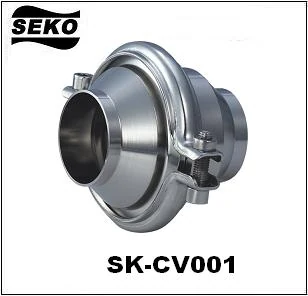
Sanitary Valves And Fittings
Non return valves SK-CV001 and SK-CV002 for hygienic lines.
View specifications →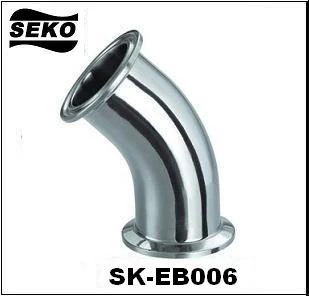
Sanitary Valves And Fittings
Clamp end elbows SK-EB003 SK-EB004 and SK-EB006 in 45 and 90 degrees.
View specifications →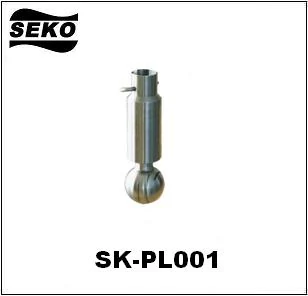
Sanitary Valves And Fittings
Fixed spray balls SK-PL001 and SK-PL002 for tank cleaning.
View specifications →Send the product, the temperature and the cleaning cycle and we will confirm the diaphragm material.