
Defoaming Machines
Defoaming Machine
DP series mechanical defoamer for open and closed vessels.
View specifications →Product Lines
Centrifugal PumpsSanitary PumpsMicro Gear And Magnetic Drive PumpsPeristaltic And Dosing PumpsRubber Lobe PumpsProgressing Cavity PumpsGear PumpsHigh Temperature PumpsSubmersible Aerators And MixersStainless Steel Tanks And VesselsHigh Shear EmulsifiersMagnetic MixersDefoaming MachinesVinegar AcetatorsSanitary Valves And FittingsSanitary Manhole CoversStainless Steel Pipe FittingsIndustries
Water Supply And DrainageWastewater And SewageWater TreatmentChemical And PetrochemicalFood And BeveragePharmaceutical And BiotechPulp And PaperMining And MarineSolutions
Sanitary Process Line PackagesWastewater Aeration And MixingThermal Oil And Hot Water CircuitsChemical Dosing And TransferKnowledge CenterDocumentationAboutContact
2 models closed and open tank versions
Machines that break foam mechanically with centrifugal force, separating gas from liquid and returning the liquid to the tank instead of losing it over the top.
The Range
Both machines work the same way. The difference is where they mount: DP-F on a closed fermenter, DP-K over an open tank or pool.
Defoaming Machines
DP series mechanical defoamer for open and closed vessels.
View specifications →Defoaming Machines
DP series foam breaker for closed fermenters and open pools.
View specifications →Foam carrying liquid out of the vessel is lost product. Breaking the foam mechanically and returning the liquid cuts that loss.
A mechanical foam breaker uses centrifugal force rather than chemistry, so nothing is added to the fermentation.
When foam has to be allowed for, the vessel runs below its capacity. Controlling foam lets the batch size go back up.
Why This Line
The machine uses centrifugal power to break foam during the fermentative process and separate liquid from gas.
The separated foam liquid returns to the fermentation tank, which reduces the loss of escaped liquid.
DP-F is applied to closed tanks, DP-K is designed for open tanks and pools.
Application Scenarios
High aeration rates create persistent foam that has to be controlled without adding chemicals.
Aerated acetic fermentation where foam forms continuously through the batch.
Washing systems that foam heavily and carry liquid out of the circuit.
Selection Guide
DP-F for a closed fermenter with a mounting nozzle, DP-K for an open tank or pool.
How fast it forms, how stable it is and how much aeration drives it. Stable protein foam needs more than a light foam.
Tank volume, headspace height and the available mounting connection.
Stainless wetted parts and the cleaning regime the vessel already uses.
Answers
No. It breaks foam mechanically using centrifugal force, so no chemical defoamer enters the fermentation.
It is separated from the gas and returned to the fermentation tank, which is how the machine reduces the loss of escaped liquid.
DP-F is for closed tanks. DP-K is designed for open tanks and pools. The process vessel decides.
Fermentation for yeast raising, amino acids and vinegar, and washing systems in pulp and paper.
That depends on how stable the foam is. Many plants use the machine to cut chemical dosing sharply rather than remove it entirely. Send the process detail and we will say what is realistic.
Engineering Notes
Installation Guide
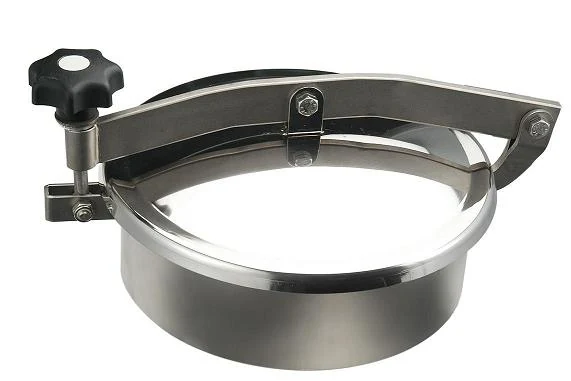
A vessel is judged by how easily it opens, how completely it cleans and how well the seal survives. All three are decided by parts that cost a fraction of the tank.
Read the guide →The process, the vessel type and the aeration rate decide which machine and how it mounts.