
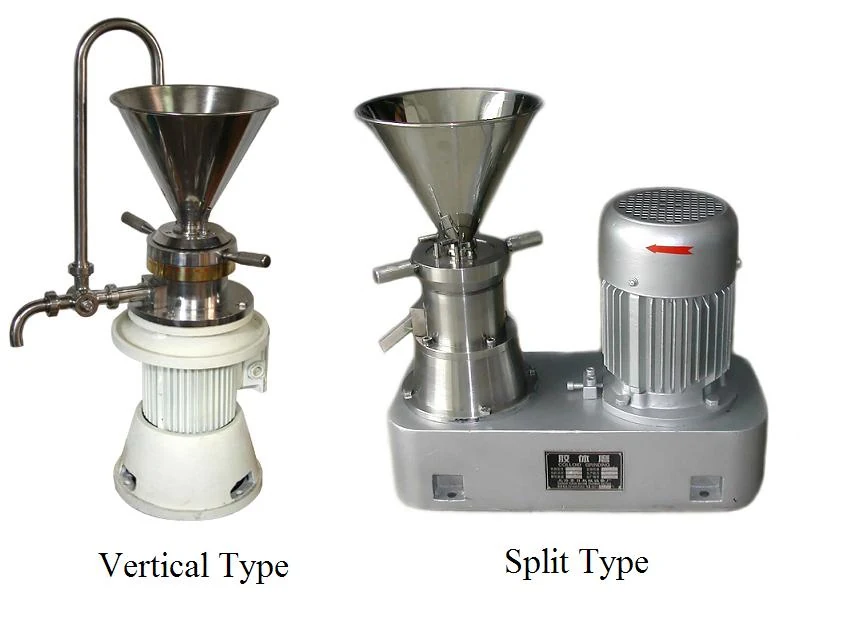
Colloid Mill
Colloid Mill
Wet grinding mill for superfine emulsions and pastes.
View specifications →Product Lines
Centrifugal PumpsSanitary PumpsMicro Gear And Magnetic Drive PumpsPeristaltic And Dosing PumpsRubber Lobe PumpsProgressing Cavity PumpsGear PumpsHigh Temperature PumpsSubmersible Aerators And MixersStainless Steel Tanks And VesselsHigh Shear EmulsifiersMagnetic MixersDefoaming MachinesVinegar AcetatorsSanitary Valves And FittingsSanitary Manhole CoversStainless Steel Pipe FittingsIndustries
Water Supply And DrainageWastewater And SewageWater TreatmentChemical And PetrochemicalFood And BeveragePharmaceutical And BiotechPulp And PaperMining And MarineSolutions
Sanitary Process Line PackagesWastewater Aeration And MixingThermal Oil And Hot Water CircuitsChemical Dosing And TransferKnowledge CenterDocumentationAboutContact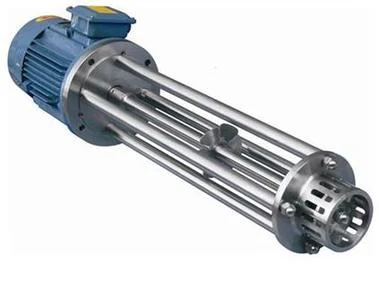
3 machines batch inline and mill 304 or 316 wetted parts
Rotor and stator machines that mix, disperse, shear and homogenise viscous liquids and pastes, either in the vessel, in the pipeline or through a mill gap.
The Range
The batch emulsifier works inside the vessel, the inline emulsifier sits in the pipeline and pumps while it shears, and the colloid mill grinds between rotor and stator for the finest particle size.
Colloid Mill
Wet grinding mill for superfine emulsions and pastes.
View specifications →
Batch emulsifier
Vessel mounted rotor stator emulsifier with four stator options.
View specifications →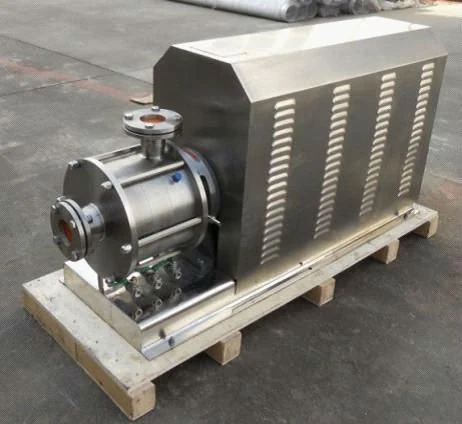
Inline emulsifier
Pipeline mounted emulsifier that shears and pumps at the same time.
View specifications →An agitator alone cannot break droplets small enough to stay dispersed. Rotor stator shear reduces droplet size so the emulsion holds.
Powder and liquid mixing heads pull powder below the surface and shear it into the liquid instead of leaving lumps on top.
Quick opening construction and hygienic design let the head be opened and cleaned without stripping the machine.
Why This Line
Different stators to suit different working conditions, from coarse dispersion to fine emulsification, on the same drive.
All wetted parts in grade 304 or 316 stainless steel with mirror or matt polish to Ra below 0.8 um and a mechanical seal for sanitary operation.
Explosion proof three phase motors are available where solvents or flammable product are in the vessel.
Application Scenarios
Batch emulsifier mounted on the tank, shearing the whole batch to a target droplet size before discharge.
Inline emulsifier fixed in the line for continuous work, transferring low viscosity material while it emulsifies.
Colloid mill for wet processing of superfine grain, homogenising, emulsifying, mixing and grinding semi liquids and latex emulsions.
Selection Guide
A batch machine treats a vessel of product. An inline machine treats the stream as it passes, which suits continuous lines.
Droplet or particle size, or simply the product that has to come out. That decides stator type and number of passes.
Viscosity at process temperature and the batch size set the motor rating and the head diameter.
Solvent based product usually means an explosion proof motor and the right elastomer in the seal.
Answers
The batch machine mounts on the vessel and shears the whole batch. The inline machine sits in the pipeline, works continuously and also moves the product, which is why it is sometimes called an emulsifying pump.
Grade 304 or 316 stainless steel on all wetted parts, with mirror or matt polish to Ra below 0.8 um.
Yes. A powder and liquid mixing head is available in this line for exactly that duty.
No. A colloid mill grinds between a rotor and stator with an adjustable gap for wet superfine processing. It goes further on particle size than an emulsifier head, which is why food, chemical and pharmaceutical plants use it for pastes and fine emulsions.
The design is hygienic with quick opening for easy cleaning. Tell us the cleaning chemistry and temperature so the seal elastomer matches.
Engineering Notes
Material Guide
The difference is molybdenum and carbon content. What that means on your plant is chloride resistance and how the material behaves after welding.
Read the guide →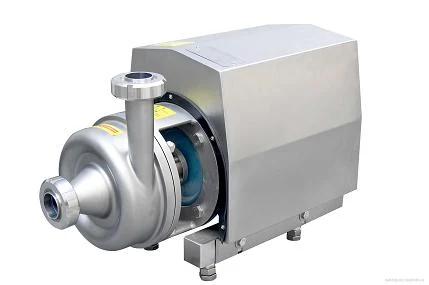
Process Guide
The pump has to move product gently and then take hot caustic at full flow. Those two requirements pull in opposite directions, and the elastomer usually loses.
Read the guide →Viscosity, batch size and target particle size decide the head, the stator and the motor. Send those and we will quote the machine.