
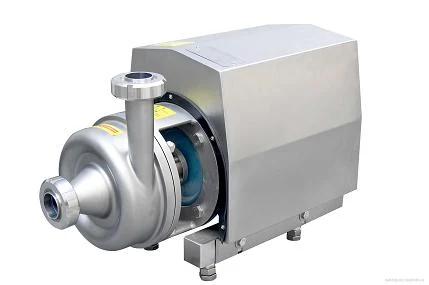
Sanitary centrifugal pump
Milk Pump
Sanitary centrifugal pump for milk beer and beverage transfer.
View specifications →Product Lines
Centrifugal PumpsSanitary PumpsMicro Gear And Magnetic Drive PumpsPeristaltic And Dosing PumpsRubber Lobe PumpsProgressing Cavity PumpsGear PumpsHigh Temperature PumpsSubmersible Aerators And MixersStainless Steel Tanks And VesselsHigh Shear EmulsifiersMagnetic MixersDefoaming MachinesVinegar AcetatorsSanitary Valves And FittingsSanitary Manhole CoversStainless Steel Pipe FittingsIndustries
Water Supply And DrainageWastewater And SewageWater TreatmentChemical And PetrochemicalFood And BeveragePharmaceutical And BiotechPulp And PaperMining And MarineSolutions
Sanitary Process Line PackagesWastewater Aeration And MixingThermal Oil And Hot Water CircuitsChemical Dosing And TransferKnowledge CenterDocumentationAboutContact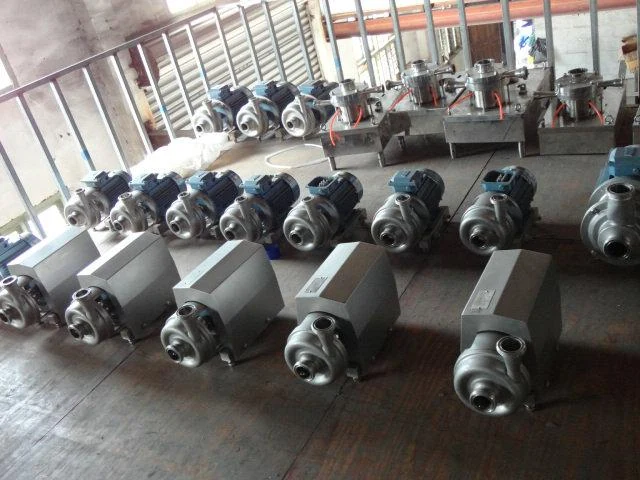
2 models SS304 and SS316L clamp connections
Pumps with SS304 or SS316L wetted parts, mirror polished surfaces and clamp connections, built for product that has to pass a swab test after cleaning.
The Range
The milk pump handles thin liquids at higher flow. The rotary lobe pump moves viscous and shear sensitive product at lower speed without breaking it up.
Sanitary centrifugal pump
Sanitary centrifugal pump for milk beer and beverage transfer.
View specifications →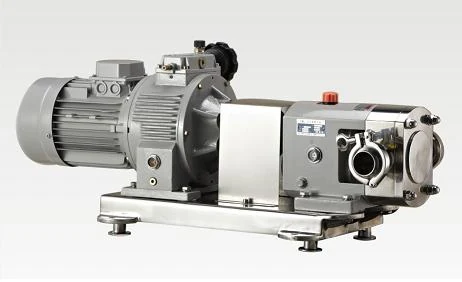
Rotor lobe pump
Sanitary lobe pump for viscous and shear sensitive product.
View specifications →A high speed impeller breaks emulsions and damages shear sensitive product. The lobe pump moves the same liquid at low speed in defined cavities instead.
Crevices, dead legs and rough surfaces hold residue. Mirror polished wetted parts and clamp connections let CIP solution reach every surface.
A pump with the wrong connection forces adapters into a hygienic line. These pumps take the same clamp standard as the fittings on this site.
Why This Line
Wetted surfaces polished to a mirror finish so cleaning solution removes product film instead of polishing around it.
Mechanical seal arrangements intended for sanitary duty, which can be flushed and inspected during a cleaning cycle.
Clamps, elbows, tees and reducers are built here too, so the pump and the line share one standard and one material grade.
Application Scenarios
Moving product between mixing, storage and fermentation vessels without heating or aerating it.
Supplying a filling machine at a steady pressure so fill volumes stay inside tolerance.
Returning cleaning solution from the vessel to the CIP skid at the flow the spray device needs.
Selection Guide
Thin product like milk or beer suits a sanitary centrifugal pump. Anything that will not pour easily belongs on a lobe pump.
Emulsions, cultures and particulate product break down in a centrifugal impeller. A lobe pump carries them in cavities instead.
Clamp, weld or thread, to DIN, SMS, 3A, ISO or IDF. This has to match the existing line, not the catalogue default.
Tell us the CIP chemistry and temperature so the elastomer is right: silicone, EPDM or fluoroelastomer.
Answers
SS304 is common for general food contact. SS316L is specified where chlorides, acids or pharmaceutical requirements are in play. Both are available on these pumps.
Yes. The wetted surfaces are polished for CIP and the clamp connections come apart for inspection without cutting the line.
Mirror polish is standard on sanitary parts, with matt polish available. The fittings on this site are polished to Ra below 0.5 um.
Yes. Clamps, elbows, tees, reducers, valves, sight glasses and spray balls are all built in the same works to the same standards.
Use the rotary lobe pump for product with particulate. A sanitary centrifugal pump will damage the pieces and can block on fibre.
Engineering Notes
Process Guide
The pump has to move product gently and then take hot caustic at full flow. Those two requirements pull in opposite directions, and the elastomer usually loses.
Read the guide →
Material Guide
The difference is molybdenum and carbon content. What that means on your plant is chloride resistance and how the material behaves after welding.
Read the guide →
Buying Guide
Five standards, similar looking parts, different dimensions. Measuring one existing fitting saves more time than any catalogue.
Read the guide →Tell us the product, its viscosity and the cleaning regime, and we will recommend the pump and the elastomer with it.