The Pump Has Two Jobs
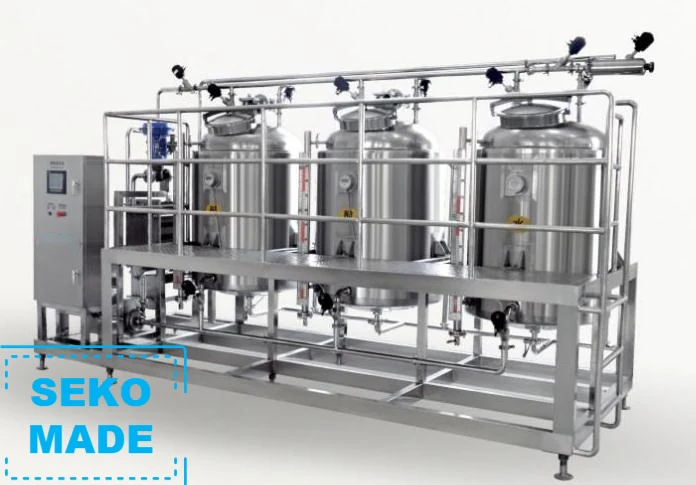
During production the pump moves product at a flow the line needs, gently enough not to damage it. During cleaning the same pump circulates hot caustic and acid at a flow high enough to scour the pipework.
Specify for production alone and the CIP cycle will be too slow to clean properly. Specify for CIP alone and the product suffers during production.
Materials And Finish Come First
SS304 is common for general food contact. SS316L is specified where chlorides, acids or pharmaceutical requirements are involved. The fittings around the pump should match, otherwise the line has two corrosion behaviours.
Surface finish decides whether cleaning works. Mirror polish on wetted surfaces, to Ra below 0.5 um on the fittings in our range, leaves nowhere for product film to key onto.
See the Milk Pump specification →
Elastomers Fail Before Steel Does
The gasket is where most CIP related failures show up. Match it to the product and to the cleaning chemistry and temperature, not to whatever was on the shelf.
- Silicone for wide temperature range on many food duties
- EPDM for hot water, steam and caustic based cleaning
- Fluoroelastomer where oils, fats and aggressive chemicals are present
- Keep a set of spare gaskets on site, because a failed gasket stops production not just cleaning
Connection Standard Is Not A Detail
A pump supplied to one standard and a line built to another means adapters, and adapters mean dead legs where cleaning solution does not reach. Confirm the standard by measuring an existing fitting before ordering.
Our valves and fittings are available to DIN, SMS, 3A, ISO and IDF from DN15 to DN200, so the pump and the line can share one standard.
See the Tri-Clamp specification →
Shear Sensitive Product Changes The Pump
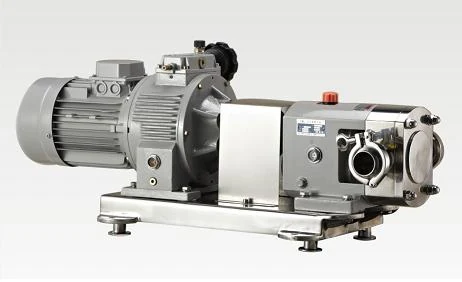
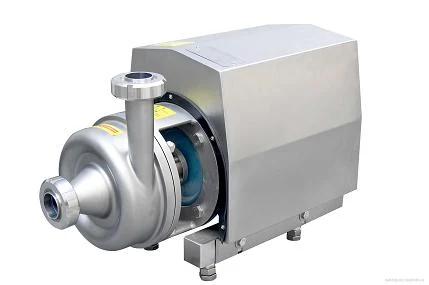
If the product carries fragile solids or is an emulsion, a sanitary centrifugal pump will damage it. A rotary lobe pump moves the same product in defined cavities at low speed, which is why dairies and sauce plants use them for anything thicker than milk.
Both pump types can be cleaned in place. The choice is about the product, not the cleaning.