How food waste composting machines work
The mechanism behind a 12 to 24 hour cycle - what the machine actually controls, and why that turns months into hours.
A compost pile works because microbes break organic matter down. It takes weeks or months because nothing about a pile is controlled: temperature drifts, moisture is whatever the weather provides, and oxygen only reaches the outside of the heap.
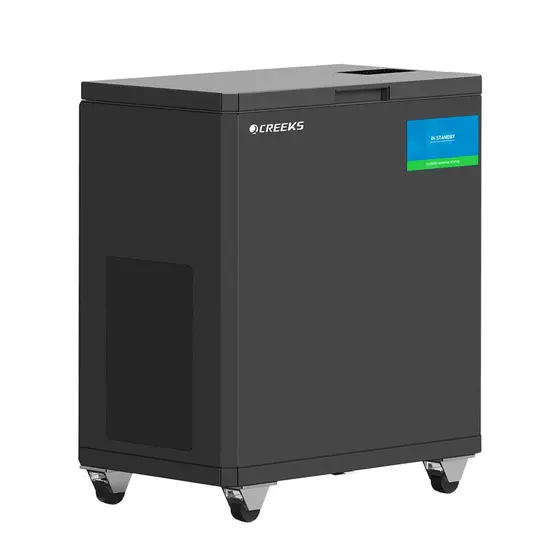
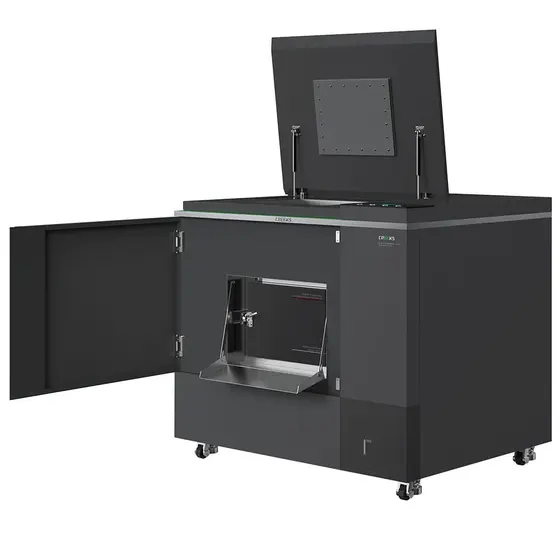
A composting machine controls all three. Microbial treatment bacteria are given a set temperature range, regulated humidity and a continuous oxygen supply through stirring. Under those conditions the same biology runs far faster - which is why a Creeks machine completes a cycle in 12 to 24 hours rather than a season.
Most of the volume that disappears is water. Food waste carries up to 98% moisture, and evaporating it is what produces the 85-90% volume reduction quoted across the range. The remaining fraction is organic matter that has been broken down into a nutrient-bearing material.
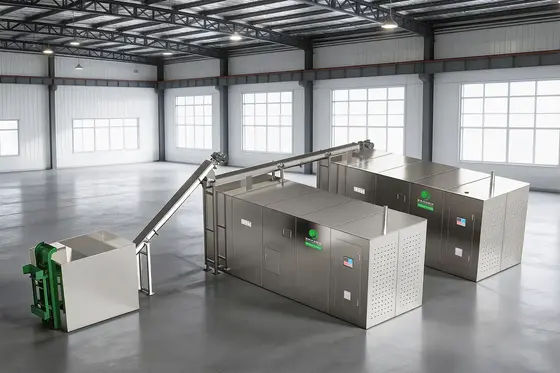
On industrial systems the process is more explicit: the CR-10T holds fermentation between 65 and 75 degrees C with auxiliary heating, and continuous gap stirring keeps fresh air in the chamber. The principle is identical at every size - only the engineering changes.
Ask the factory
Sizing questions are easier to answer with your numbers in front of us. Send your daily waste weight and site type and we will reply with a specific model.