
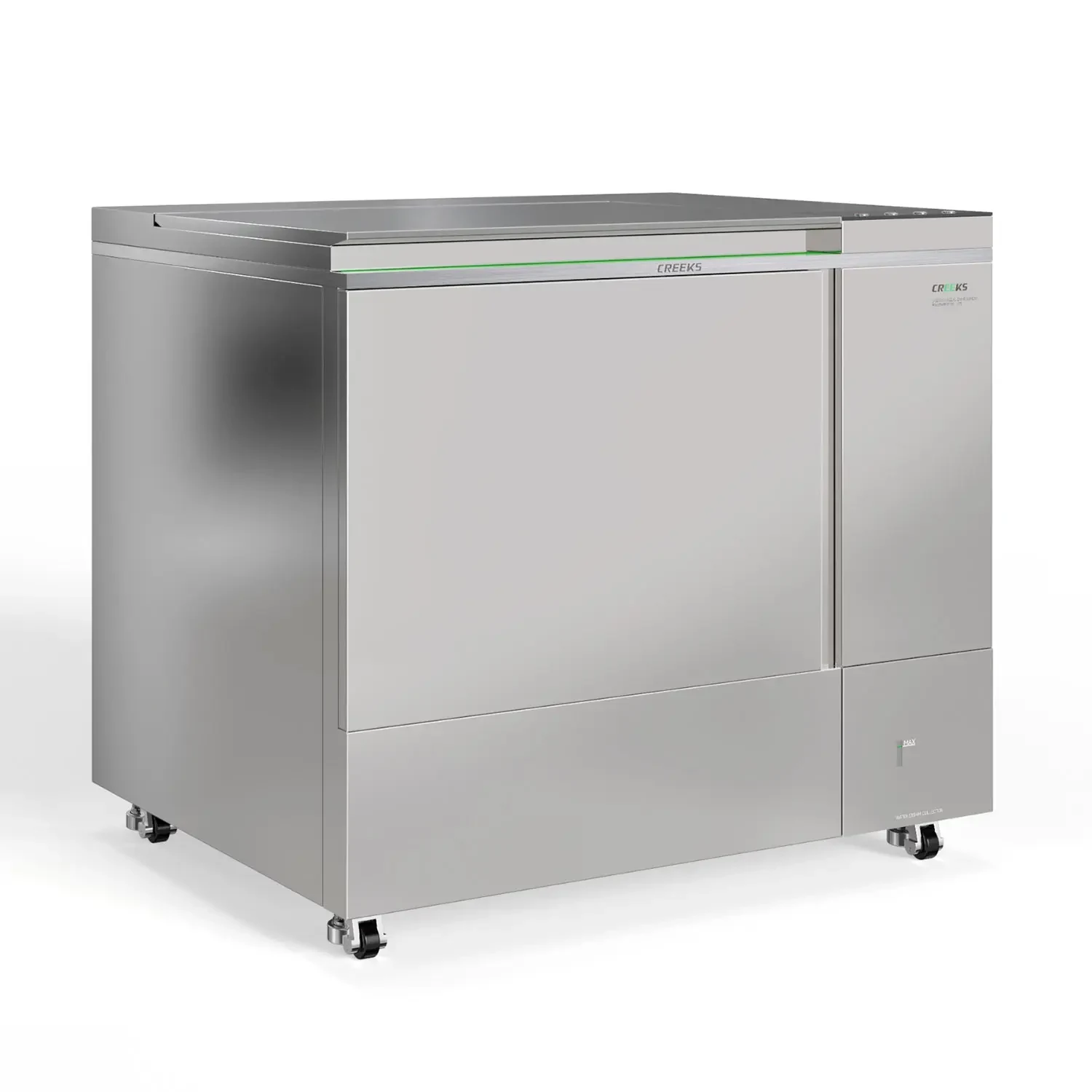
Composter
Organic Waste Composting Machine
Aerobic composting with no water input - power in, compost out
Creeks organic waste composting machines break down food scraps, garden waste and other biodegradable materials in as little as 24 hours, where traditional composting takes weeks or months. The process is naturally aerobic and needs no water - the machine only needs power to run, and solar panels can be attached to improve the energy picture further. The result is a fertile, nutrient-rich output that raises soil fertility in fields, pots and green areas, and a waste stream that no longer has to be trucked to a central facility.
No forms. Message us on WhatsApp or by email and you will be talking to the factory in Suzhou.
What it solves
- Centralised organic waste management that is slow, costly and far away
- Transport costs and waste taxes charged on wet material
- Composting timescales measured in months rather than hours
- Organic waste treated as pollution instead of as raw biomass
Key benefits
- Compost in as little as 24 hours through shredding, heating and aeration
- Natural aerobic process with no water required
- Power-only operation, with solar panels as an option
- Cuts transport costs and waste taxes by processing on site
- Output increases soil fertility in agricultural fields, pots and green areas
- Range of capacities and sizes for restaurants through to institutions
Technical data
Technical features
- Advanced shredding, heating and aeration working together
- Natural aerobic decomposition with no water addition
- Electrically driven, compatible with solar supply
- Capacities and sizes across the household, commercial and industrial ranges
- Designed for on-site installation close to the waste source
Who it is for
Operators who want decentralised composting - small-scale, at the point the waste is produced, giving back a fertile output instead of paying to send it away.
Where it is used
- Restaurants, canteens and hospitality facilities
- Hospitals and schools running their own grounds
- Events, festivals and celebrations
- Growers and green-space managers using the compost directly
Quality control
Machines are function-tested under load before shipment across every capacity in the range, and each ships with documentation matching its configuration. The aerobic process is verified during commissioning, when the microbial charge is introduced.
Customisation
Capacity, supply voltage, control language and installation arrangement are matched to the site. Where a site wants to run on renewable power, we confirm the electrical profile so the solar sizing can be done properly.
How it is operated
- Measure the daily organic waste volume at the site
- Select the capacity that matches it with a margin for peak days
- Install indoors, ventilated, near the waste source
- Charge the microbial medium at commissioning
- Load waste daily and let the aerobic cycle run
- Apply the compost to fields, pots or green areas
How it compares
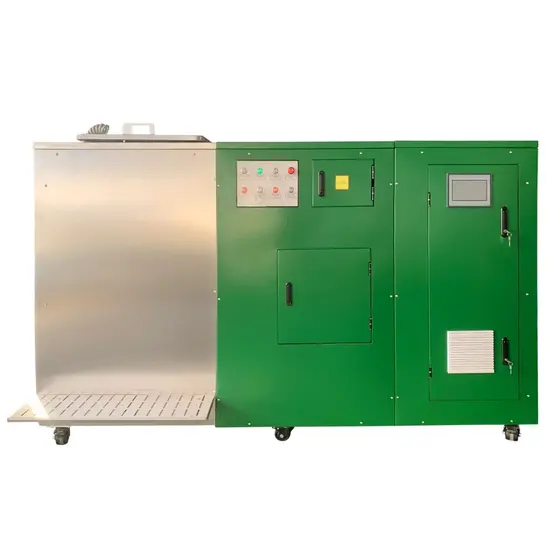
This is the range overview. For a specific unit: CR-5 to CR-100 covers 5-100 kg/day on single phase, CR-200 to CR-1000 covers 200-1000 kg/day on three phase, and CR-2000 to CR-10T covers the industrial band.
Frequently asked questions
How fast is the process compared with traditional composting?
As little as 24 hours, against weeks or months for a conventional compost pile.
Does the machine need a water supply?
No. The aerobic process needs no water - only power.
Can it run on solar power?
Solar panels can be attached to improve the energy picture. We provide the electrical profile so the array can be sized correctly.
What can go in?
Food scraps, garden waste and other biodegradable materials.
What is the output good for?
It is rich in nutrients and raises soil fertility in agricultural fields, pots and green areas.
How does on-site composting save money?
Small-scale composting cuts transport costs and waste taxes, and returns a usable product rather than a disposal bill.
Which capacity should we choose?
Send us your daily waste weight and the type of site, and we will point you at the specific model rather than a range.
Quote for the Organic Waste Composting Machine
Tell us your daily waste volume, power supply and destination port. We reply with a specification and price.