
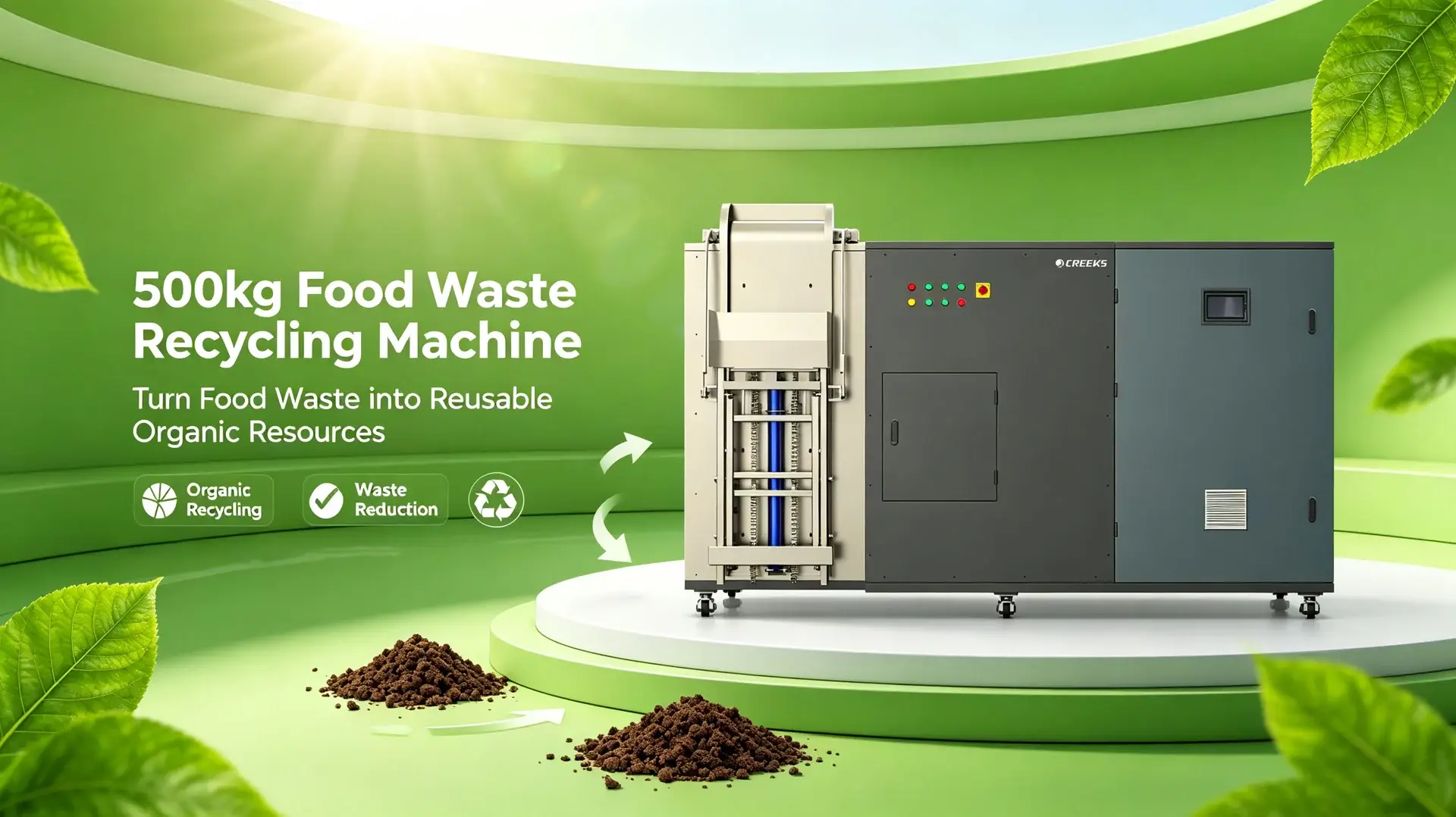
Overview
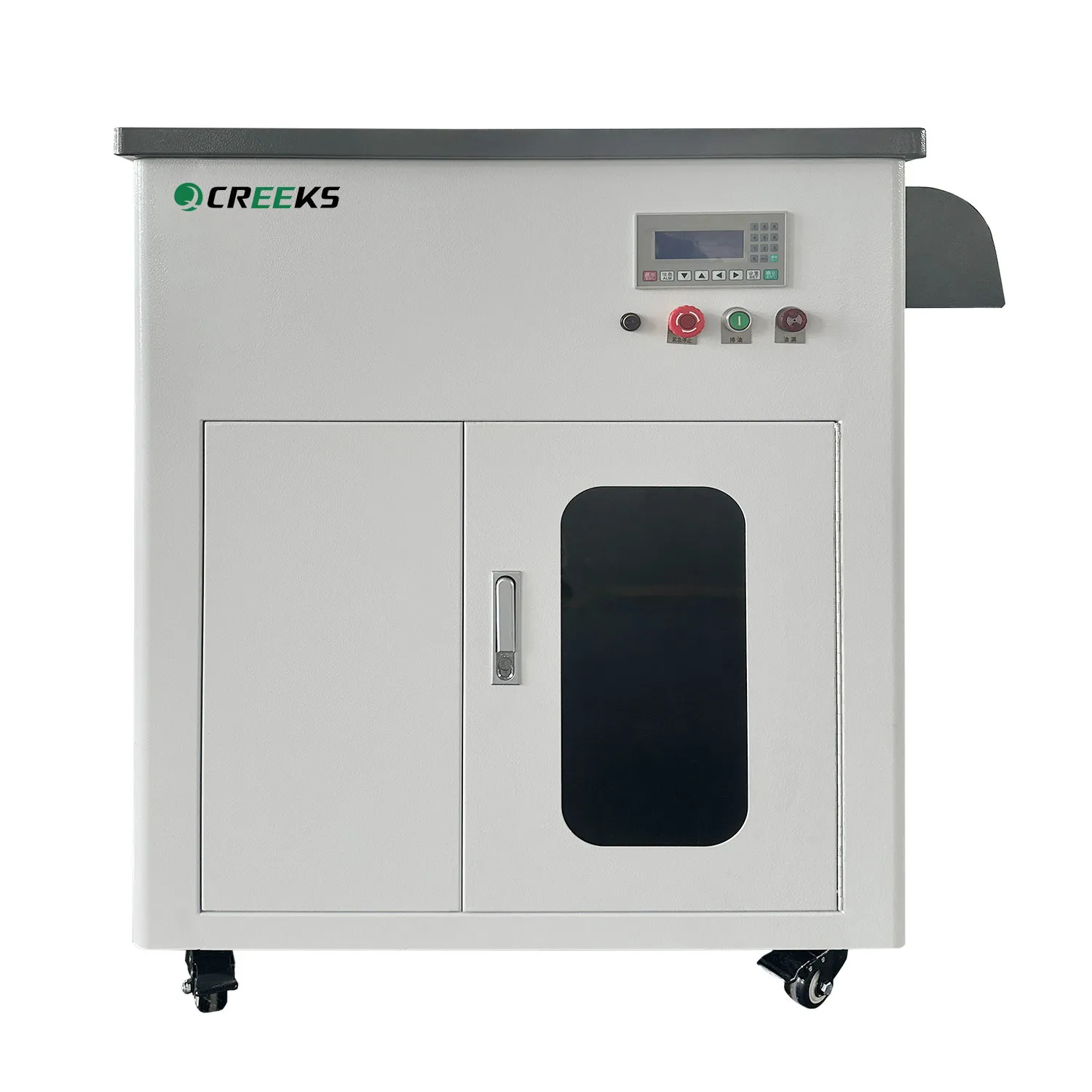
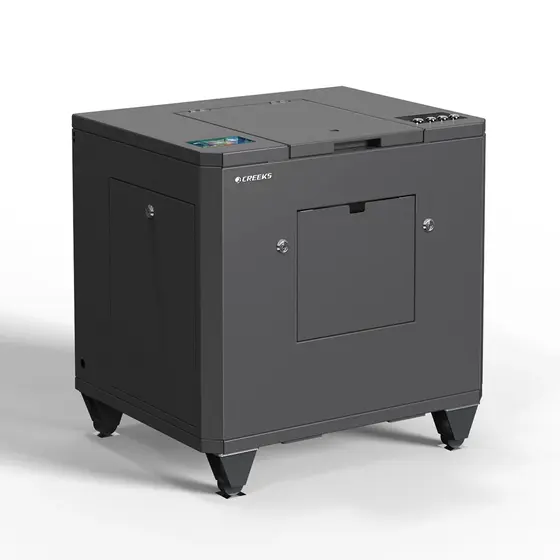
Not every site needs a composter. Some need water out of the waste; some need oil out of it. The CRH-10 food waste dryer evaporates moisture to leave a sterile, storable dry biomass at 5-15% of the original volume. The CRO-300S kitchen waste reduction machine separates oil, water and solid residue at 150-300 kg an hour, which keeps grease out of the drains and kitchen waste handling HACCP-compliant. Both are commonly installed alongside a composter rather than instead of one.
Choosing within this range
Choose the dryer when the goal is a light, sterile product that stores for weeks. Choose the separator when oil content is the problem, or as pre-treatment ahead of a composter. Sites with heavy oil loads and a composting target usually run both.
Frequently asked questions
What is the difference between drying and composting?
Drying removes water to leave a sterile dry biomass. Composting decomposes the organic matter biologically and produces organic fertilizer.
Does the dried output smell?
No. It is sterilised and stabilised, so it can be stored for many weeks without degrading.
Why separate oil and water first?
It protects drains, supports HACCP compliance and gives any downstream composter a cleaner, dewatered input.
What supply do these machines need?
CRH-10 runs on 1.5 kW at 220 V or 110 V; CRO-300S runs on 220 V at 3000 W with heating.
Get a quotation for this range
Send your daily waste weight and we will come back with the exact model, footprint and price.