
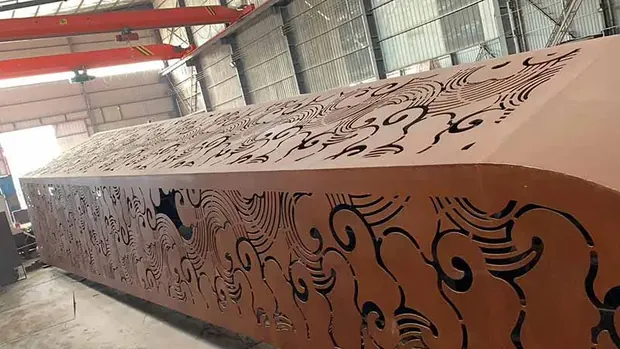
Corten Steel Plate
Atmospheric corrosion resistant plate that builds its own protective rust instead of paint
SpecificationsIndustries
Solutions
Resources
Company

Pre-hardened low alloy tool steel that goes straight to machining without heat treatment
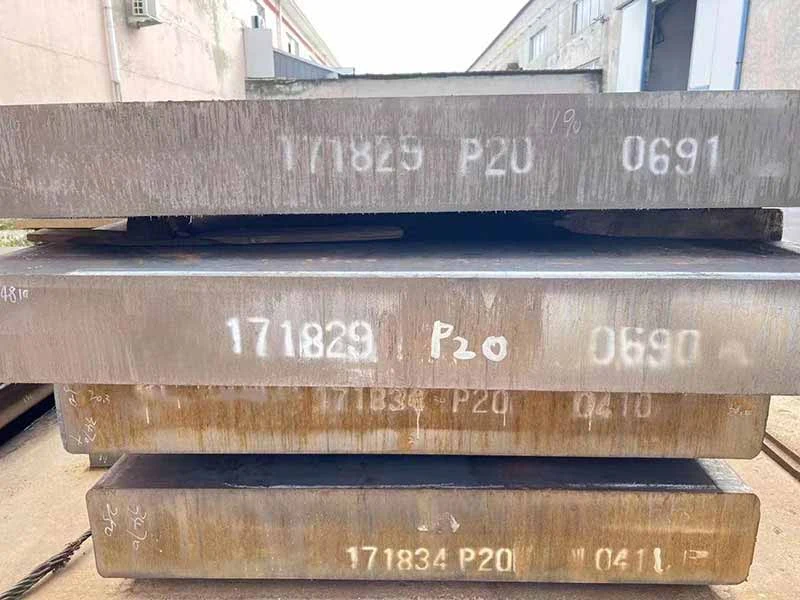
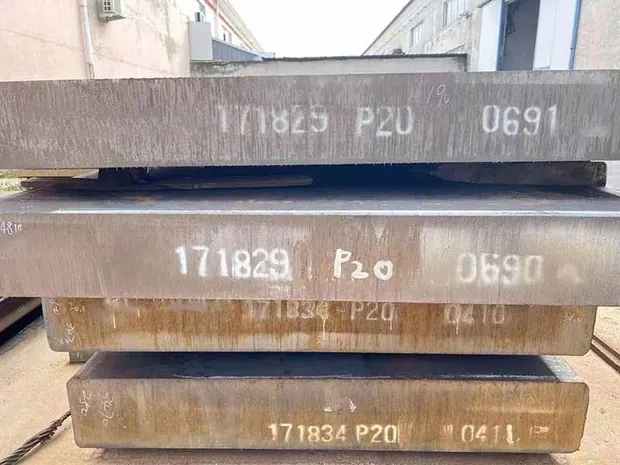
P20 mold steel is a low-alloy pre-hardened tool steel used for plastic injection molds, die casting dies and mold frames. The P in P20 stands for plastic, and the grade is specified by moldmakers who need toughness, wear resistance and machinability in the same block, along with hardness retention at elevated working temperatures. Because it arrives pre-hardened, the cavity can be cut, polished and put into the press without a separate hardening cycle, which removes the distortion risk and the queue time that heat treatment adds to a tooling program. It is supplied here in 0-1000mm thickness under the equivalent designations 3Cr2Mo, 1.2311, 618, 718 and 35CrMo7.
The steel is supplied in a pre-hardened state and can be used directly for mold processing without heat treatment. That shortens the construction period of the tool and removes a hardening distortion step.
The steel is pure, which suits plastic molds that have to be polished or etched. Mirror polishing performance is one of the stated advantages of the grade.
Forging and rolling give a dense structure, and ultrasonic inspection is used to confirm there are no pores. Surface defects are screened before the block is released.
P20 retains hardness at elevated temperature, so cavity faces hold their form in hot plastic and die casting duty rather than softening in service.
3Cr2Mo, 1.2311, 618, 718, 35CrMo7 and P20 are quoted from the same material, so a drawing written to any of those callouts can be filled without a substitution argument.
Blocks are released as raw material, milled or ground. Ordering ground blanks removes the roughing pass from a CNC schedule that is already tight.
Hardening after machining moves the geometry and forces rework on a finished cavity. A pre-hardened block is machined to final size at working hardness, so the tool leaves the shop the shape it was cut.
Sending a block out to harden adds transport and queue days to a program that is usually already late. Pre-hardened supply removes that step entirely.
Pinholes and inclusions show up on a mirror-polished cavity face after hours of polishing labour. Steel that is ultrasonically inspected with no pores or surface defects cuts that scrap risk.
A European drawing calling 1.2311 and an Asian drawing calling 35CrMo7 describe the same material. Supplying against all the equivalent designations avoids the substitution approval loop.
Cut to size supply against your block list means paying for the block you use instead of the plate it came from.
The core application of the grade, where toughness and polishability decide how long a cavity holds surface finish.
Die casting tooling where the steel has to keep hardness while working against molten metal temperatures.
Frames, bolsters and support plates that carry clamping load and need stable machining behaviour rather than maximum hardness.
Cavities that will be chemically etched for grain patterns, where inclusions in the steel would show as defects in the texture.
Thick sections up to 1000mm for single cavity or large part tooling where the block is machined from solid.
Values below come from the product data published by Shandong Tianyu Metal Products. Confirm the exact grade and size against your order.
| Product Name | P20 Mold Steel |
|---|---|
| Grade | P20 1.2311 3Cr2Mo 35CrMo7 618 718 |
| Steel Type | Low alloy pre-hardened tool steel |
| Thickness | 0-1000mm |
| Size | Customized size |
| Technique | Annealed quenched and tempered |
| Surface | Raw material milling grinding |
| Application | Plastic molds and mold frames |
| Processing Service | Bending welding decoiling cutting punching |
| Place of Origin | China |
| Sample | Available |
| Certificate | Mill test certificate |
| Through hardened tool steel supplied annealed | P20 is supplied pre-hardened so the cavity is finished at working hardness and never goes back for a hardening cycle that could move the geometry. |
|---|---|
| Plain carbon steel plate for mold frames | P20 holds hardness at elevated temperature and polishes to a mirror finish, which unalloyed carbon plate will not do on a cavity face. |
| Stainless mold steel | P20 is chosen where polishability, machinability and toughness matter more than corrosion resistance in the molding of non-corrosive plastics. |
| Cold work die steel | P20 is aimed at plastic molds and mold frames rather than blanking and forming dies, and trades peak hardness for machinability and toughness. |
No. It is supplied pre-hardened and can go directly into mold processing, which is the main reason it is used to shorten tooling lead time.
Thickness runs from 0-1000mm and the size is customized, so you can order finished blocks instead of cutting them out of plate yourself.
They are the equivalent designations quoted for this material along with 35CrMo7. Send the callout on your drawing and we will quote against it.
Yes. The steel is pure and has good mirror polishing performance, which is why it is used for molds that require polishing or etching.
Ultrasonic inspection is used after forging and rolling to confirm the structure is dense with no pores, and the surface is examined for defects.
Yes. Surface is available as raw material, milled or ground, so you can start from a squared blank instead of a rolled face.
Samples are available. Tell us the thickness and surface condition you want to trial and we will confirm what can be released.
Atmospheric corrosion resistant plate that builds its own protective rust instead of paint
Specifications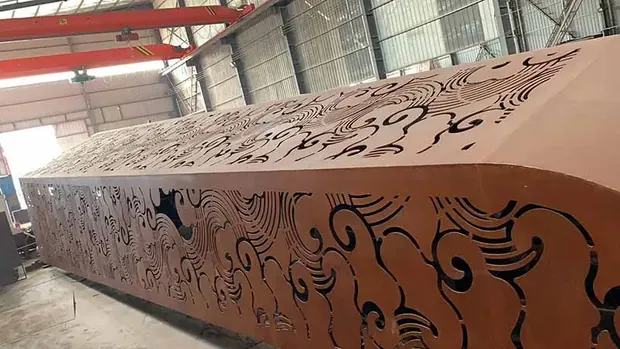
SPA-H grade weathering plate for bare exposed and long recoating interval structures
SpecificationsAtmospheric corrosion resistant plate that forms its own protective rust layer
Specifications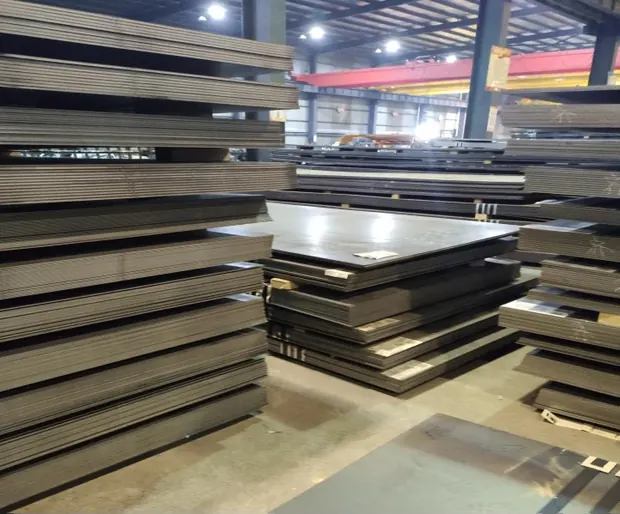
Quenched and tempered 690 MPa plate for boom arms lifting frames and welded structures
Specifications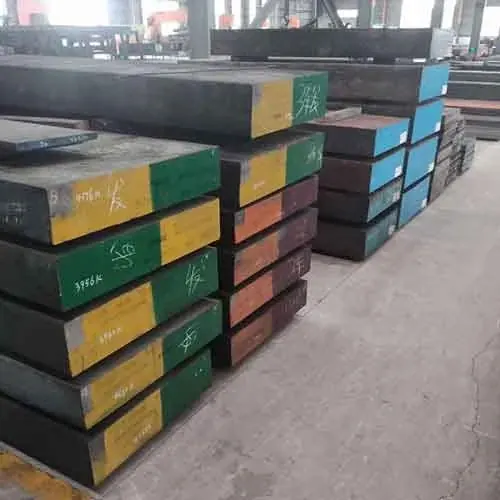
A tool room loses more time waiting for a block than cutting one. Tianyu Metal stocks the four families a die shop actually orders
Read more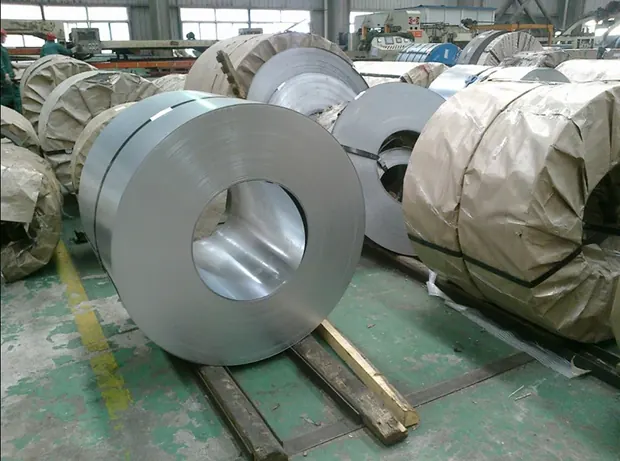
Vehicle and trailer components fail on fatigue, not on a single overload, so the grade behind each part matters more than the pric
Read more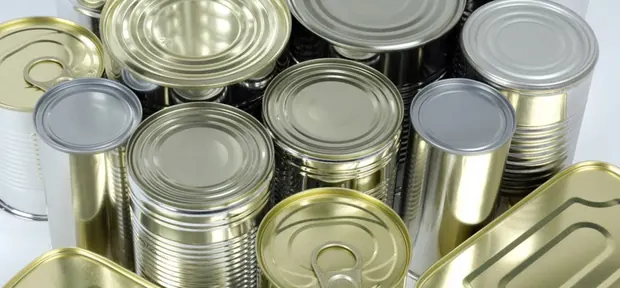
Can makers do not buy steel, they buy a strip that will draw without splitting, take a printed lacquer without blistering and seam
Read moreSend the grade, thickness, width and quantity you need together with your destination port. A cutting list or drawing gets you a firmer number.