
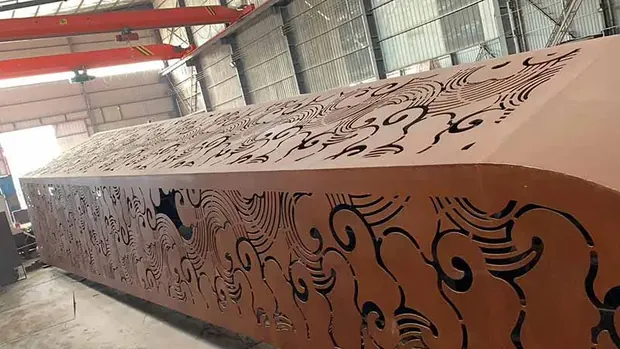
Corten Steel Plate
Atmospheric corrosion resistant plate that builds its own protective rust instead of paint
SpecificationsIndustries
Solutions
Resources
Company
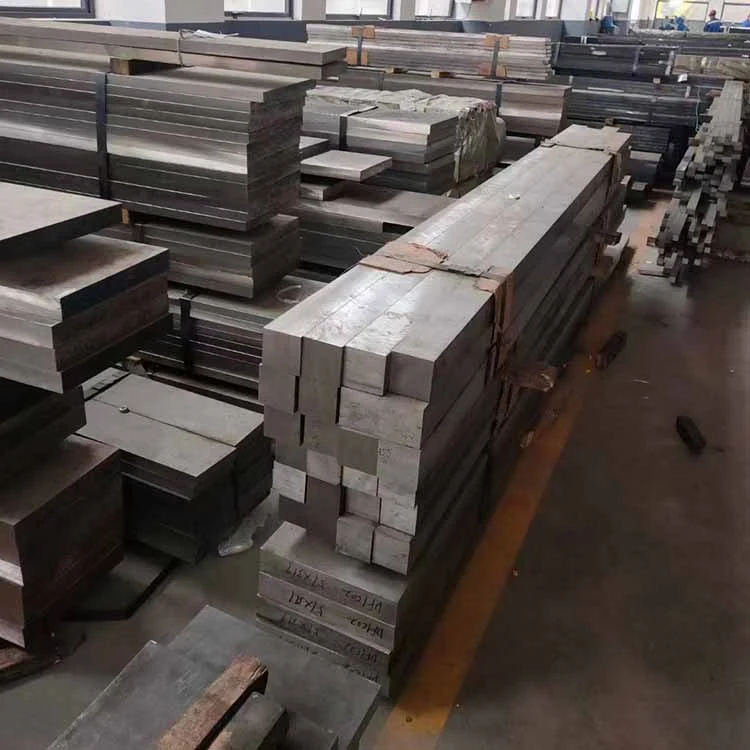
Medium alloy high speed steel supplied against the DIN 1.3343 designation
1.3343 is the conventionally manufactured medium alloy high speed steel that most tool rooms fall back on when a job has no reason to use anything more specialized. Tool grinders, punch and die makers and cutting tool manufacturers call it out on drawings as 1.3343, M2, HS6-5-2, SKH51, S600, P6M5 or W6Cr5Mo4V2 depending on the standard they work to. Buying it already cut from stock in the annealed condition removes the sawing and squaring work that otherwise sits between goods in and the first machining setup. Delivery hardness is at or below 260HB so the blank machines cleanly, and after heat treatment the achievable hardness is up to 65Hrc.
The tungsten molybdenum composition gives a combination of toughness, wear resistance and red hardness rather than pushing one property at the expense of the others. That is what makes it usable across an entire tool room.
Delivery condition hardness is at or below 260HB, so blanks can be sawn, milled and drilled before heat treatment without unusual tooling or feed rates.
Achievable hardness after heat treatment is up to 65Hrc, which is the working range for twist drills, taps, milling cutters and saw blades.
The alloy holds its hardness when the cutting edge heats up, so tools keep cutting during high speed light cut work instead of dulling as the edge softens.
The same bar and plate stock serves cutting tools, cold work punches and dies, so a tool room can carry one high speed steel instead of several.
Material ships as raw stock, milled or ground, so you can skip the squaring operation when the blank is going straight onto a machining center.
Material delivered in the wrong condition forces an annealing cycle before any cutting starts. The delivery hardness here is at or below 260HB so machining can begin as received.
Carbon tool steel softens once the edge runs hot and the cut degrades. The red hardness of this grade keeps the edge working through high speed light cuts.
A drawing calling SKH51 or P6M5 often stalls sourcing. The same steel is supplied under 1.3343, M2, HS6-5-2, S600 and W6Cr5Mo4V2.
Cutting and squaring stock in house consumes saw time and produces offcuts you store. Material is cut to your blank list and can ship milled or ground.
Drill and tap blanks where the flute geometry is ground after hardening and the tool has to hold an edge through a long production run.
Milling cutters, saws and decoiling blades that cut at speed with light chip loads and heat the edge continuously.
Blanking punches, pierce punches and die inserts where wear on the working face decides how often the tool is pulled for regrinding.
Knives and cutting blades for converting and processing lines that run against abrasive stock.
Blank stock held in a maintenance tool room so a worn punch or cutter can be remade without waiting for a mill order.
Values below come from the product data published by Shandong Tianyu Metal Products. Confirm the exact grade and size against your order.
| Product Name | High speed steel |
|---|---|
| Grade | P6M5 M2 W6Cr5Mo4V2 HS6-5-2 SKH51 1.3343 S600 |
| Delivery Hardness | At or below 260HB |
| Hardness After Treatment | At or below 65Hrc |
| Thickness | 0-1000mm |
| Size | Customized size |
| Technique | Annealed quenched and tempered |
| Surface | Raw material milling grinding |
| Chemical Composition | C 0.78-0.88 W 5.50-6.75 Mo 4.5-5.50 Cr 3.75-4.50 V 1.75-2.20 Si 0.20-0.40 Mn 0.15-0.40 Ni and Cu 0.75 P 0.030 S 0.030 |
| Application | Manufacturing various cutting tools |
| Place of Origin | China |
| Processing Service | Bending welding decoiling cutting punching |
| Certificate | Mill test certificate |
| Sample | Available |
| Carbon tool steel | Carbon tool steel loses hardness once the cutting edge heats up, while the red hardness of 1.3343 holds the edge through high speed light cuts. |
|---|---|
| Cemented carbide tooling | Carbide runs faster but chips under interrupted cuts and cannot be reground in a general tool room, whereas 1.3343 blanks are machined and reground with normal equipment. |
| Cobalt bearing high speed steel | Cobalt grades are chosen for the hottest cutting duty, while 1.3343 covers the general range of tools at a lower material cost. |
| Cold work die steel | Cold work die steel suits blanking at ambient temperature, while 1.3343 is the choice where the tool has to cut and generate heat at the edge. |
Achievable hardness after treatment is up to 65Hrc. The material ships at a delivery condition hardness at or below 260HB so it can be machined before hardening.
Yes, they are designations for the same medium alloy tungsten molybdenum high speed steel, along with P6M5, W6Cr5Mo4V2, HS6-5-2 and S600.
Thickness runs from 0 to 1000mm and size is customized. Send your blank list and material is cut before shipment instead of arriving in full lengths.
Yes. Surface is supplied as raw material, milled or ground, so the blank can go straight onto the machine without a squaring operation.
The mill test certificate covers the ordered grade, and the composition ranges are carbon 0.78-0.88, tungsten 5.50-6.75, molybdenum 4.5-5.50, chromium 3.75-4.50 and vanadium 1.75-2.20.
Samples are available. Tell us the section size and surface condition you want to evaluate and we will confirm what can be released.
It is used for cold work punches and dies as well as twist drills, taps, milling cutters, saws and knives, which is why tool rooms keep it as a general purpose stock.
Atmospheric corrosion resistant plate that builds its own protective rust instead of paint
Specifications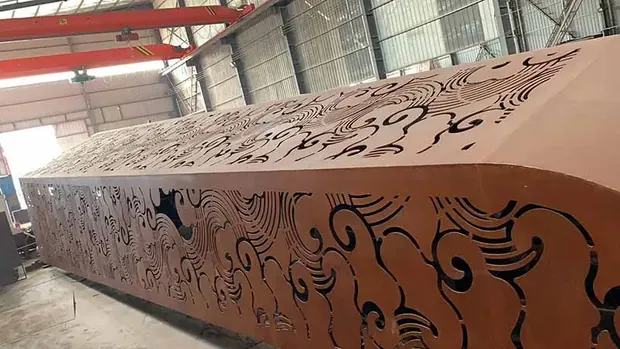
SPA-H grade weathering plate for bare exposed and long recoating interval structures
SpecificationsAtmospheric corrosion resistant plate that forms its own protective rust layer
Specifications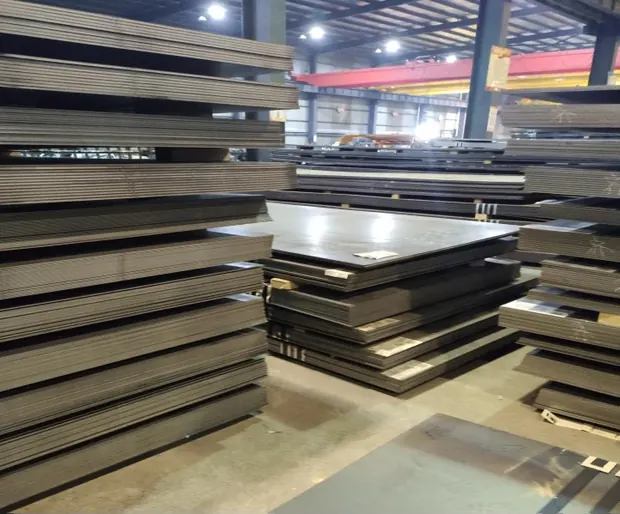
Quenched and tempered 690 MPa plate for boom arms lifting frames and welded structures
Specifications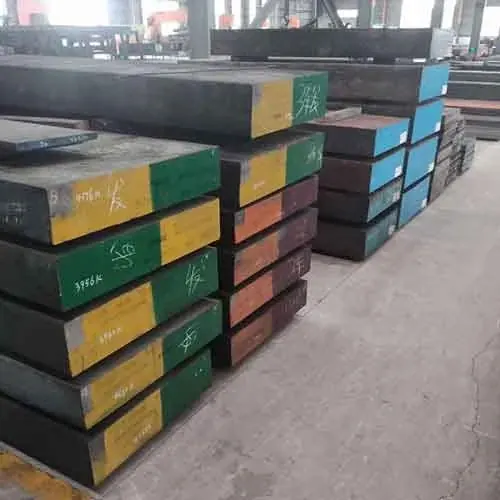
A tool room loses more time waiting for a block than cutting one. Tianyu Metal stocks the four families a die shop actually orders
Read more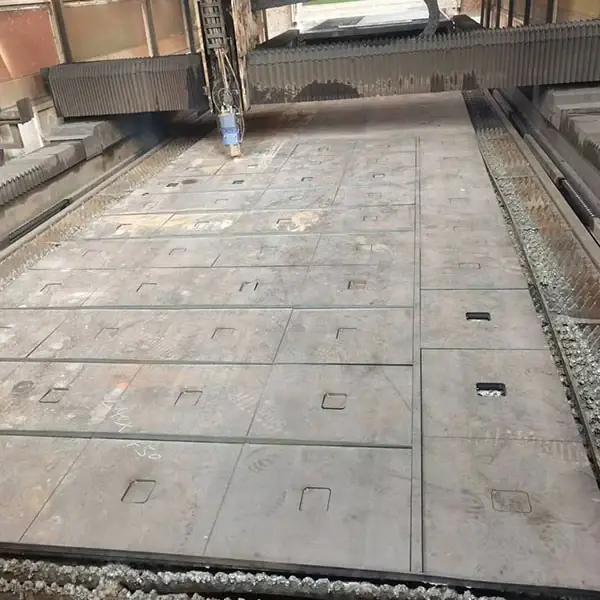
One loader or one tractor needs four different steels and most fabrication shops buy them from four different suppliers. The struc
Read more
Vehicle and trailer components fail on fatigue, not on a single overload, so the grade behind each part matters more than the pric
Read moreSend the grade, thickness, width and quantity you need together with your destination port. A cutting list or drawing gets you a firmer number.